
European intelligence agencies and internal military documents reviewed by the reporting organization say that about 200 Russian service members were secretly trained at Chinese military facilities late last year, and that a portion of those trainees have since been deployed to fight in Ukraine.
The training arrangement was set out in a bilingual Russian-Chinese agreement signed by senior officers in Beijing on July 2, 2025. The document specifies that roughly 200 Russian troops would receive instruction at Chinese military locations including Beijing and the eastern city of Nanjing. The agreement also envisaged hundreds of Chinese personnel attending training in Russia.
Officials from three European intelligence agencies, who agreed to speak on condition of anonymity because of the sensitivity of the information, confirmed that around the number cited in the accord subsequently received training in China.
Beijing's public stance and responses
Requests for comment to the defence ministries of Russia and China about the training were not answered. China’s foreign ministry, however, reiterated the official position on the conflict, saying:
"On the Ukraine crisis, China has consistently maintained an objective and impartial stance and worked to promote peace talks, this is consistent and clear and is witnessed by the international community. Relevant parties should not deliberately stoke confrontation or shift blame."
The intelligence officials said the nature of the training - operational and tactical instruction on weapons and systems - suggests a deeper Chinese involvement in the conflict on the European continent than was previously documented.
Scope and focus of the courses
According to the bilingual training agreement and internal Russian military reports, the curriculum for the Russian trainees included instruction on unmanned aerial vehicles, electronic warfare, army aviation and armoured infantry operations. The agreement contained strict confidentiality clauses, prohibiting media coverage in both countries and forbidding informing third parties about the visits.
Two of the intelligence agencies said that while Chinese troops had been visiting Russia for training since at least 2024, the movement of Russian personnel to China for instruction was a new development.
European intelligence analysts and the documents they reviewed highlighted China’s mature drone industry and advanced training techniques - including flight simulators - as assets that Russia lacks domestically, despite Russia’s extensive combat experience in Ukraine. The People’s Liberation Army, while not engaged in a major war for decades, has expanded significantly in recent years and has developed capabilities that in some areas rival other major militaries.
Who trained and who taught
Two of the intelligence agencies said a significant share of the Russians who went to China were senior military instructors capable of transmitting the acquired knowledge down their chain of command. One agency said it had confirmed the identities of several Russian servicemen who trained in China and subsequently took part in combat operations using drones in Crimea and the Zaporizhzhia regions.
The ranks of those identified ranged from junior sergeant to lieutenant colonel, according to a Russian military document listing servicemen assigned to go to China. The reporting organization was unable to independently verify the later combat involvement of those individuals. One intelligence agency described it as highly probable that many of those who trained in China subsequently went to Ukraine.
Training content described in internal Russian reports
Several internal Russian military reports provided after the training concluded were reviewed by the reporting organization and described four specific courses delivered in China.
- Combined arms course - Shijiazhuang: A report dated December 2025 described a combined arms warfare course for about 50 Russian personnel at the PLA’s Ground Forces Army Infantry Academy branch in Shijiazhuang. The course included instruction on firing 82mm mortars while using unmanned aerial vehicles to spot and identify targets.
- Air defence and counter-drone training - Zhengzhou: Another report detailed air defence training at a PLA facility, including the use of electronic warfare rifles, net-throwing devices and various drones designed to counter incoming unmanned systems. Two officials named Zhengzhou as the likely location of this facility. The equipment described is directly relevant to the battlefield environment in Ukraine.
- Drone and simulator instruction - Yibin: A December 2025 report authored by a Russian major described a drone course at Yibin’s PLA Training Centre for Military Aviation, first brigade. The program featured multimedia briefings, flight simulator sessions and hands-on training with several FPV drone types and two other drone models.
- Explosives and engineering course - Nanjing: A November 2025 report recounted training at the Nanjing University of Military Engineering focused on explosives technology, mine construction, demining operations and the removal of unexploded ordnance and improvised explosive devices. That report included photographs of Russian soldiers in uniform being instructed by Chinese personnel in military dress and shown engineering equipment and mine-sweeping techniques.
The courses covered materiel and tactics that both sides use in the Ukraine conflict. Electronic warfare rifles aim to interfere with enemy drone signals, while nets can be used to physically capture drones as they approach. The reports noted that fibre-optic aerial drones - which connect pilots to their vehicles with fine thread and are resistant to electronic jamming - are in use on the battlefield; such systems typically operate 10 km to 20 km but can in some cases reach up to 40 km (25 miles).
Drone warfare context
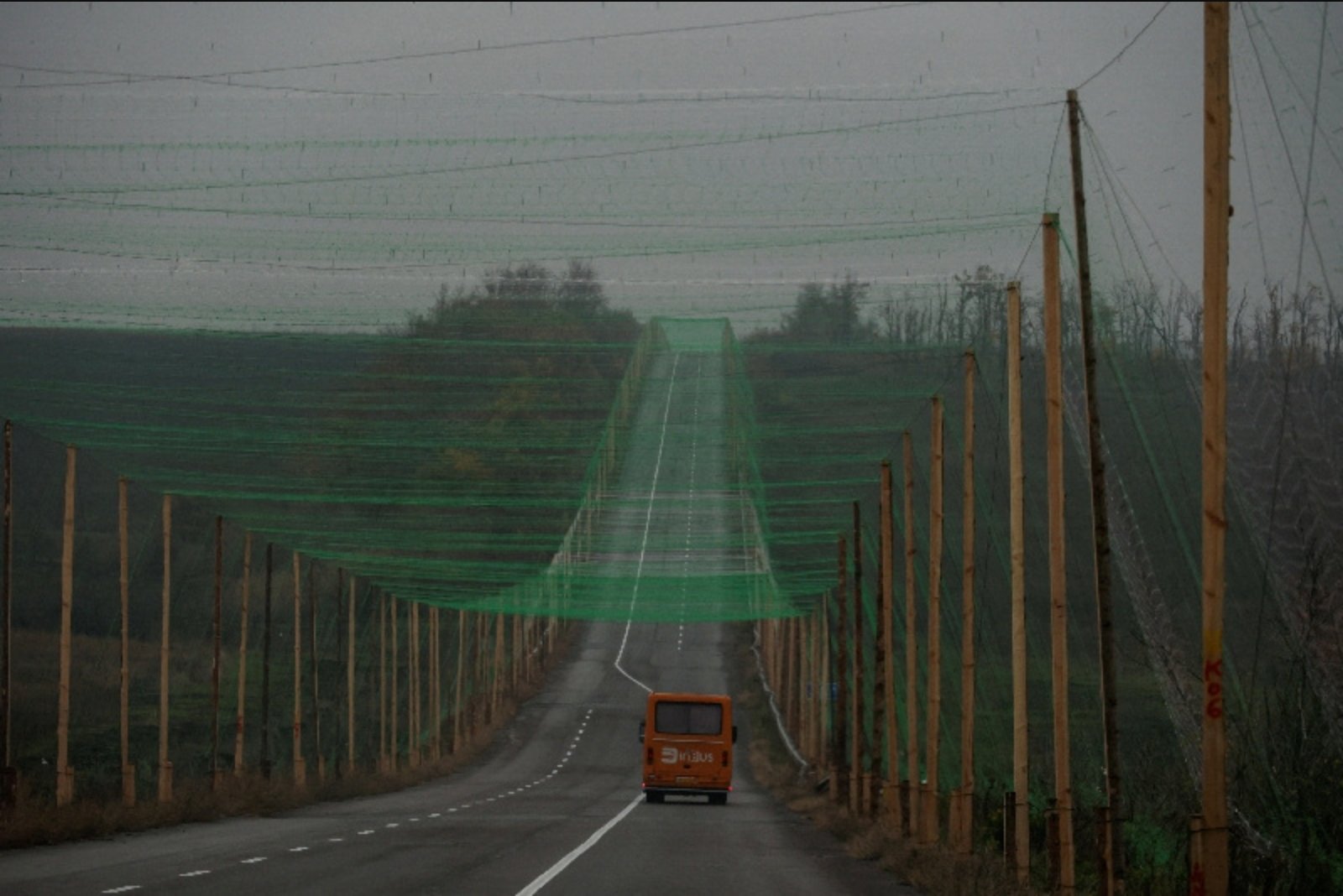
The documents and expert observations included in the reporting underline the centrality of drones to the fighting in Ukraine. Both long-range systems and smaller, pilot-controlled FPV drones armed with explosives have played decisive roles. On front-line battlefields, small strike drones present a hazard to armoured vehicles and infantry alike.
Previous reporting by European officials, as cited in these intelligence assessments, also indicated that experts from Chinese private companies had provided technical development support for Russian attack drone manufacturers. At the time, China’s foreign ministry said it was unaware of the collaboration. The two Chinese companies identified in that prior reporting were sanctioned by the EU the following month.
Political context and recent high-level meetings
European powers, which view Russia as a significant security threat, have been closely monitoring the growing ties between Moscow and Beijing. The two countries declared a "no limits" partnership days before Russia's full-scale invasion of Ukraine in 2022 and have carried out joint exercises intended to improve coordination between their armed forces.
As Western states sought to isolate Russia economically, China provided significant purchases of Russian oil, gas and coal. Chinese leader Xi Jinping was scheduled to host Russian President Vladimir Putin for a visit less than a week after a high-profile visit by the U.S. President. Moscow and Beijing have described Putin's trip - his 25th to China - as evidence of a deepening "all-weather" relationship, even as Western governments urge Beijing to press Moscow to end the war.
Limits of confirmation and ongoing uncertainties
Intelligence agencies involved in the reporting said they had not been able to obtain responses from the Russian and Chinese defence ministries on the details contained in the internal documents. The agencies also emphasized that they spoke on condition of anonymity to discuss sensitive material. The reporting organization was unable to independently confirm the subsequent combat activities of every individual named in the training rosters, though one agency assessed it as highly probable that many of those trained in China had been deployed to Ukraine.
The training agreement’s confidentiality clauses and the prohibition on third-party notification limit transparency and complicate independent verification. These restraints, combined with the absence of official comment from the ministries involved, leave open questions about the full extent and current status of bilateral military exchanges under the accord.
Implications noted by intelligence officials
For European intelligence analysts, the operational-level training provided in China - then applied by Russian personnel in Ukraine - represents a more direct Chinese involvement in military activities on the European continent than what had been publicly acknowledged. The documents and internal Russian reports reviewed by the reporting organization depict a multifaceted training program that included weapons employment, counter-drone measures, flight simulation and explosives handling.
Officials cautioned that while some pieces of evidence - including photographs and personnel lists - point to concrete training events, the confidentiality of the agreement and the inability to secure official responses from the defence ministries mean aspects of the picture remain uncertain.
The reporting organization will continue to seek comment from official sources and to review materials pertinent to these training exchanges.