
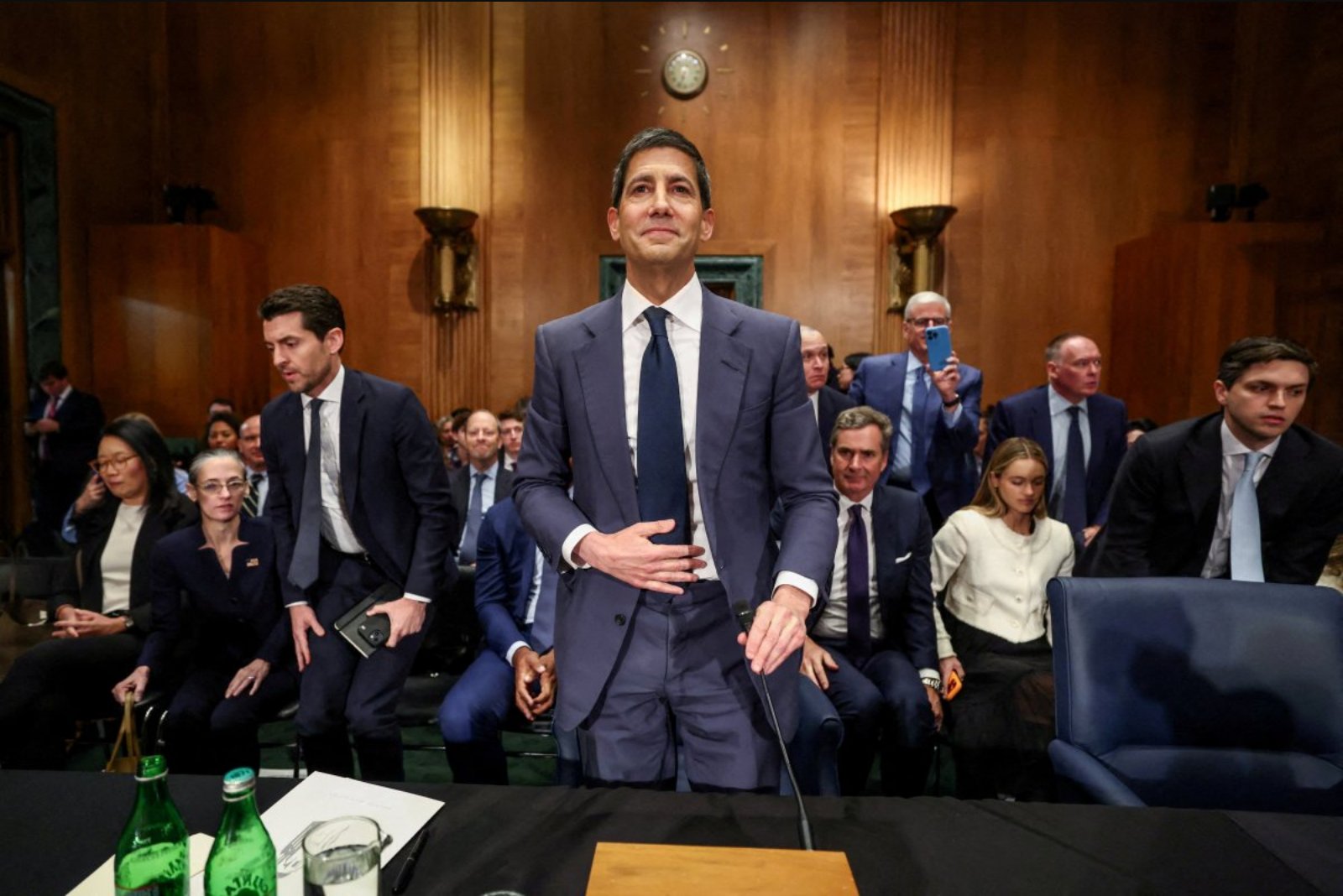
Incoming Federal Reserve Chair nominee Kevin Warsh has stirred unease among his counterparts in other central banks by indicating that the Fed’s independence might not fully cover its crisis-fighting activities beyond U.S. borders. The comments have prompted officials to weigh possible consequences for market stability given the dollar’s preeminent place in global finance.
At his confirmation hearing Warsh - President Donald Trump’s selection for the Fed’s top role - said that the Fed’s independence in setting interest rates does not necessarily extend to all its wider operations, including international financial measures. That distinction has led some officials to question whether the Fed would continue to act swiftly and decisively to supply dollars in a future crisis.
Warsh is expected to be sworn in by the president in the near term, though no date has been announced. In the interim, the Fed board said it had appointed Jerome Powell as chair pro tempore.
On- and off-the-record remarks from more than half a dozen policymakers show that central bankers are watching Warsh’s statements closely and are seeking clarification. For now, most do not expect immediate, sweeping policy shifts - in part because existing Fed liquidity facilities serve to protect the U.S. economy as well as those of global partners.
Still, officials warn that a less dependable Fed could encourage countries to accelerate efforts to move away from the dollar, extending a roughly 15-year decline in the greenback’s share of international markets. In practical terms, there is little that other central banks can do quickly if the Fed were to restrict access to dollars. Even the mere suggestion that swap lines or other liquidity channels might not be readily available could itself provoke market disruption.
"It’s a double-edged sword," said one European Central Bank policymaker, who declined to be named. "The world relies on the dollar and if the dollar is not readily available, everybody pays a price - the U.S. included."
The Fed currently supplies dollars on demand to the European Central Bank and the central banks of Canada, Japan, Britain and Switzerland, against collateral, using standing liquidity arrangements. Other central banks can access dollars through a more burdensome facility. The rationale for these backstops is that foreign commercial banks hold trillions of dollars in U.S. Treasury bonds; market stress could force rapid sales to raise cash, importing instability back into U.S. markets.
Observers note that politicising the provision of dollars would not be without precedent. The Trump administration extended a $20 billion liquidity line to Argentina ahead of last year’s elections, and authorities in Gulf and Asian countries have recently sought dollar support to manage energy shocks and the fallout from the Iran war. South Korean President Lee Jae Myung reportedly raised the issue during a meeting with U.S. Treasury Secretary Scott Bessent this month.
Takahide Kiuchi, an economist at Nomura Research Institute and a former Bank of Japan board member, underscored the cross-border implications of Fed choices. "Warsh could attempt a tightrope of conducting dovish interest rate policy that aligns with Trump’s hopes, while guiding a hawkish balance sheet policy," Kiuchi said. "Any rupture in the U.S. market caused by such Fed moves, coupled with rising oil prices from the Iran war, could further push up 10-year Japanese Government Bond yields. That, in turn, could hurt Japan’s economy and stock prices."
Another source argued the Fed has an incentive to keep dollars flowing because that liquidity helps finance the sizable U.S. budget deficit. If the Fed’s backstop were viewed as less reliable, market demand could ultimately shift toward the euro, the world’s second-most traded currency. The European Central Bank has sought to broaden the euro’s availability and to capture larger market share, but a third senior official said the currency’s institutional architecture is not yet ready to assume a significantly greater role and would require substantial internal reform.
All of the officials who spoke to Reuters agreed that contingency planning could help other central banks adapt to a reduced Fed backstop. Yet they also stressed that in acute crises the Fed remains the practical dollar lender of last resort. "There isn’t much you can do" to fully substitute for that role, said Spyros Andreopoulos, founder of the Thin Ice Macroeconomics consultancy. "With the eurodollar market at 30 trillion dollars, by definition there aren’t enough dollars in the system."
Several contacts suggested Warsh is unlikely to upend the Fed’s crisis toolkit. They pointed to his experience within central banking circles and his familiarity with the demands of financial stress. "His comments were aimed at Trump and not so much at European counterparts," ING economist Carsten Brzeski said. "Warsh is a Fed veteran, he’s a financial crisis veteran, so he’s very well aware of the potential financial stability issues if these swap lines were cut."
There is also an expectation among some officials that the Fed’s internal culture and collective judgement will act as a stabilising force. Warsh will have a single vote once confirmed, and past practice has left the existence of liquidity lines largely unquestioned. "I worked with him during the financial crisis of 2008," Bank of Canada Governor Tiff Macklem said. "I believe that the culture and the comportment of the Fed will continue as it has in the past."
Implications for markets are clear: the Fed’s approach to international liquidity affects currency markets, sovereign bond yields, cross-border bank funding and, indirectly, sectors sensitive to credit conditions and energy prices. Until Warsh clarifies how he envisages the balance between domestic independence and geopolitical coordination in crisis tools, market participants and foreign central banks will remain watchful.