
Summary: SpaceX is due to attempt the first flight of its upgraded Starship V3 and a revised Super Heavy booster in an uncrewed test that also serves as a visible precursor to the firm's planned initial public offering. The launch will exercise new engines, long-duration propulsion systems and staged return-flight maneuvers while deploying test payloads intended to assess heat-shield performance during re-entry.
SpaceX has readied what it describes as an enhanced version of its Starship launch system for a planned uncrewed test flight from its Starbase complex in Texas. The outing is the 12th uncrewed test overall and the debut flight for the so-called Starship V3 configuration, which includes an updated Super Heavy booster and refinements to the upper-stage vehicle.
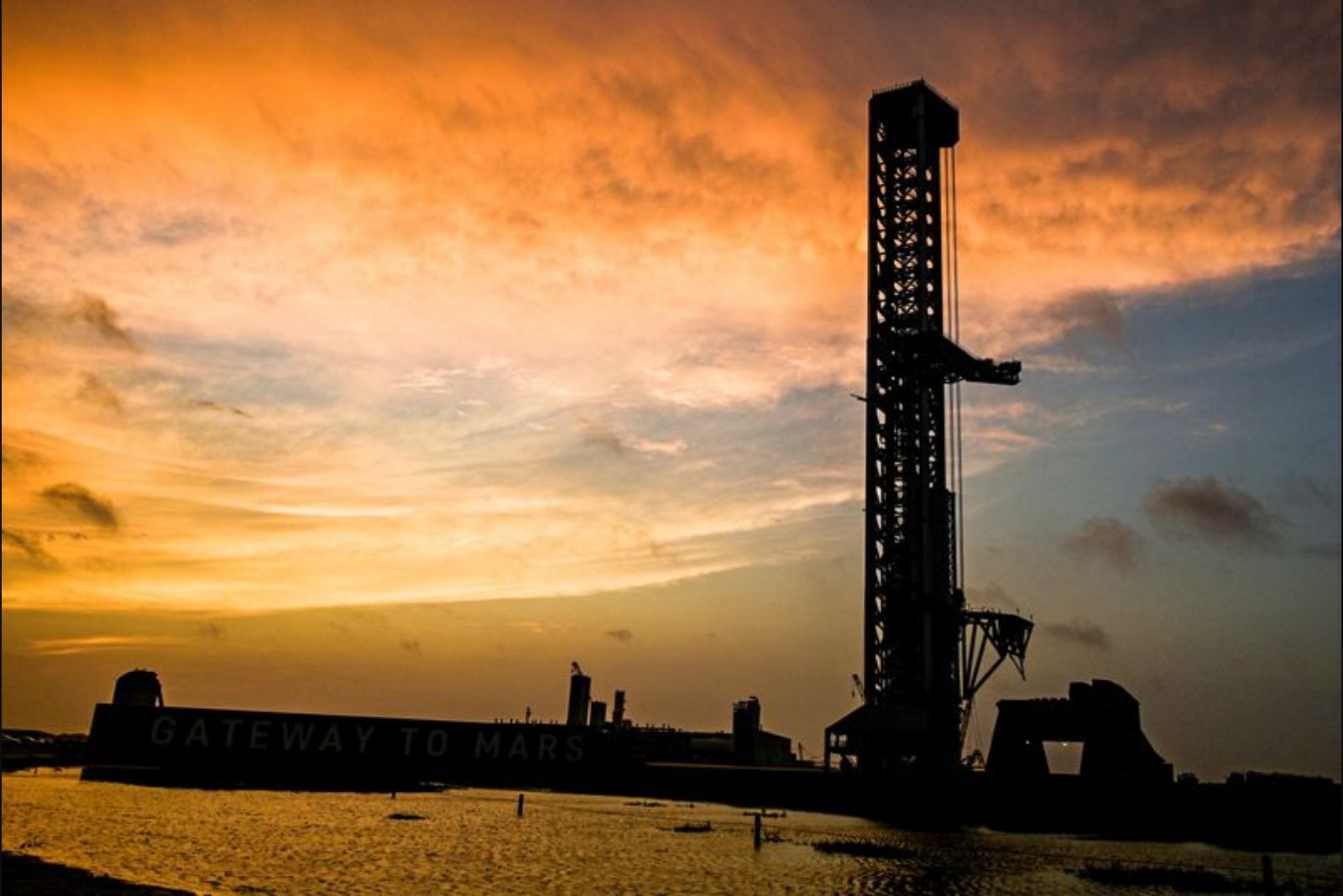
The company scheduled the launch as early as 5:30 p.m. CDT on Wednesday (2230 GMT). The configuration stacks the Starship upper-stage vessel atop the Super Heavy first stage, the full assembly forming the largest and most powerful rocket ever flown, and it will lift off from a new launch pad tailored to the more powerful configuration.
SpaceX has configured the new Super Heavy booster with a reworked set of 33 Raptor engines intended to increase thrust while reducing engine weight. The propulsion suite on the upper-stage Starship has also been revised to support long-duration missions and to enable on-orbit ship-to-ship docking and refueling operations, as well as improved maneuverability.
According to the planned flight profile, the Super Heavy booster is expected to complete return-flight maneuvers and then splash down in the Gulf of Mexico roughly seven minutes after liftoff. SpaceX refers to the planned re-entry of the Starship upper stage as an "exciting landing," with that vehicle anticipated to come down in the Indian Ocean roughly an hour after launch.
For this particular test, SpaceX said it will not attempt to safely land or retrieve either the booster or the Starship upper stage. Nevertheless, engineers will conduct controlled landing burns and other return-flight maneuvers intended to collect data and validate the re-entry and descent sequences that are central to the vehicles' planned reusability.
Payload activities on this flight include the release of 20 Starlink simulators and two actual satellites that have been modified to monitor the Starship's heat shield and relay re-entry telemetry back to operators on the ground. Those measurements are intended to inform future iterations of the vehicle and to gauge survivability and performance during atmospheric return.
Investors and market observers are watching the mission closely because the outcome will serve as a prominent near-term test of SpaceX's technical progress ahead of a planned initial public offering expected next month. The company has articulated broad ambitions that hinge on Starship - from materially lowering launch costs and expanding its Starlink broadband constellation to supporting orbital infrastructure and, ultimately, human missions beyond Earth. Those ambitions are reflected in the firm's targeted IPO valuation of $1.75 trillion.
"For an IPO that is leaning so heavily into narrative and symbolism, we believe this flight is the single most important pre-IPO catalyst remaining on SpaceX's calendar," said Franco Granda, a senior research analyst at PitchBook. The launch therefore functions as both an engineering test and a market signal to potential public investors evaluating the company's trajectory.
SpaceX's approach to development relies on rapid flight testing that pushes spacecraft to operational limits in order to identify failure modes and iterate quickly. That engineering culture, which tolerates higher near-term risk in pursuit of accelerated learning, remains a central tension point for investors who must weigh short-term test risk against the company's longer-term objectives.
Those longer-term objectives include a stated vision of carrying humans to the moon and Mars. Elon Musk previously indicated expectations for Starship to attempt its first uncrewed Mars voyage at the end of 2026. Under planned lunar mission profiles tied to a contract awarded in 2021, multiple Starship tanker flights would be necessary to fuel a single Starship for a moon landing. SpaceX won a more-than-$3 billion contract under NASA's Artemis program to support a crewed return to the lunar surface later this decade.
The company’s plans for Starship also position it at the center of renewed international competition in deep space exploration. The Starship program’s role in Artemis and the broader set of ambitions place it alongside other national plans, including those that aim for crewed lunar landings in the coming decade.
Outcome uncertainty on this launch is therefore consequential across multiple dimensions: it will contribute to assessments of Starship’s technical readiness, inform expectations around commercial launch cadence and costs, and influence investor sentiment in the period immediately preceding SpaceX's public offering. A successful test would strengthen claims that the vehicle is approaching commercial viability after years of iterative development and setbacks. Conversely, unresolved issues during this flight would leave outstanding questions about how quickly the system can transition to routine operations.
Context: The test flight is set against SpaceX's ongoing engineering development cycle, its market-facing narrative ahead of an IPO, and the operational objectives tied to lunar and interplanetary missions specified in contracts and company statements.