
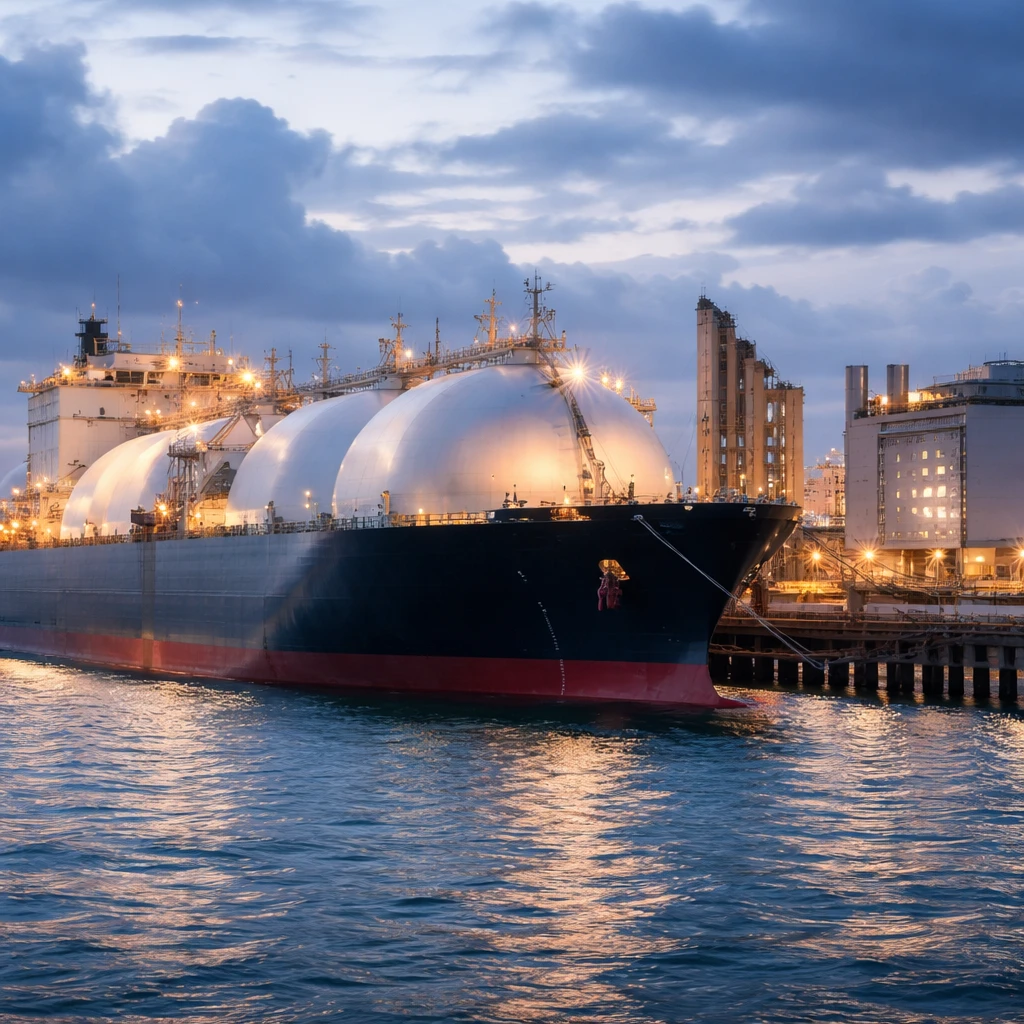
The gas carrier Perle completed delivery of a liquefied natural gas cargo to China on Tuesday after an extended voyage that kept the vessel at sea for nearly six months, according to LSEG ship-tracking data.
Perle berthed at the Beihai LNG terminal in China on Tuesday. The vessel had taken on the cargo from Russia's LNG Portovaya facility on December 8, the tracking information shows.
For context on transit times, a standard LNG shipment from Russia to Asia usually requires up to 45 days depending on the chosen route. In this instance, the voyage lasted considerably longer than the typical window for such deliveries.
LNG Portovaya operates under U.S. sanctions and functions as a loading point for Russia's largest LNG producer, Novatek. The terminal handles cargoes tied to the company's Arctic LNG 2 project, which is also subject to sanctions. The cargo carried by Perle originated at this sanctioned Baltic Sea plant.
This delivery represents the third cargo to reach China from the Portovaya facility since Washington enacted sanctions in February 2025. The first of those sanctioned-plant cargoes reached China in December, according to the same tracking dataset.
When Portovaya began operations, its shipments predominantly flowed to Turkey and Greece. Over time, the facility's destination set has expanded to include additional markets such as China, Spain and Italy.
The extended duration of Perle's voyage stands in contrast to the usual Russia-to-Asia transit expectation and highlights a single delivery that deviated significantly from the standard timetable. Beyond the data on departure, route and arrival, the LSEG tracking records form the basis for the sequence of events described here.
Summary
The Perle arrived at Beihai after loading at Portovaya on December 8 and spending almost half a year at sea. Portovaya is sanctioned and supplies Novatek and Arctic LNG 2 cargoes. This marks the third shipment from the Baltic Sea plant to China since U.S. sanctions in February 2025; the first arrived in December. The plant has shifted from primarily supplying Turkey and Greece to also serving China, Spain and Italy.
Key points
- The Perle docked at Beihai after a voyage of nearly six months, having loaded its cargo on December 8 from LNG Portovaya.
- Normal transit time for a Russian LNG cargo to Asia is typically up to 45 days, making this delivery an outlier in duration.
- Portovaya, under U.S. sanctions, supplies Novatek and handles Arctic LNG 2 cargoes; since the February 2025 sanctions, three cargoes from the plant have reached China, including one in December.
Risks and uncertainties
- Duration of maritime transit - the Perle's nearly six-month voyage deviated sharply from standard Russia-to-Asia transit times, creating uncertainty around shipping schedules for stakeholders in energy and logistics sectors.
- Sanctions-related operational constraints - Portovaya operates under U.S. sanctions, which affects the handling and export of cargoes tied to Novatek and Arctic LNG 2, with implications for market access and contractual performance in gas markets.
- Destination shifts - the plant's expansion of delivery destinations beyond early recipients introduces variability for European and Asian energy buyers as trading patterns evolve.