
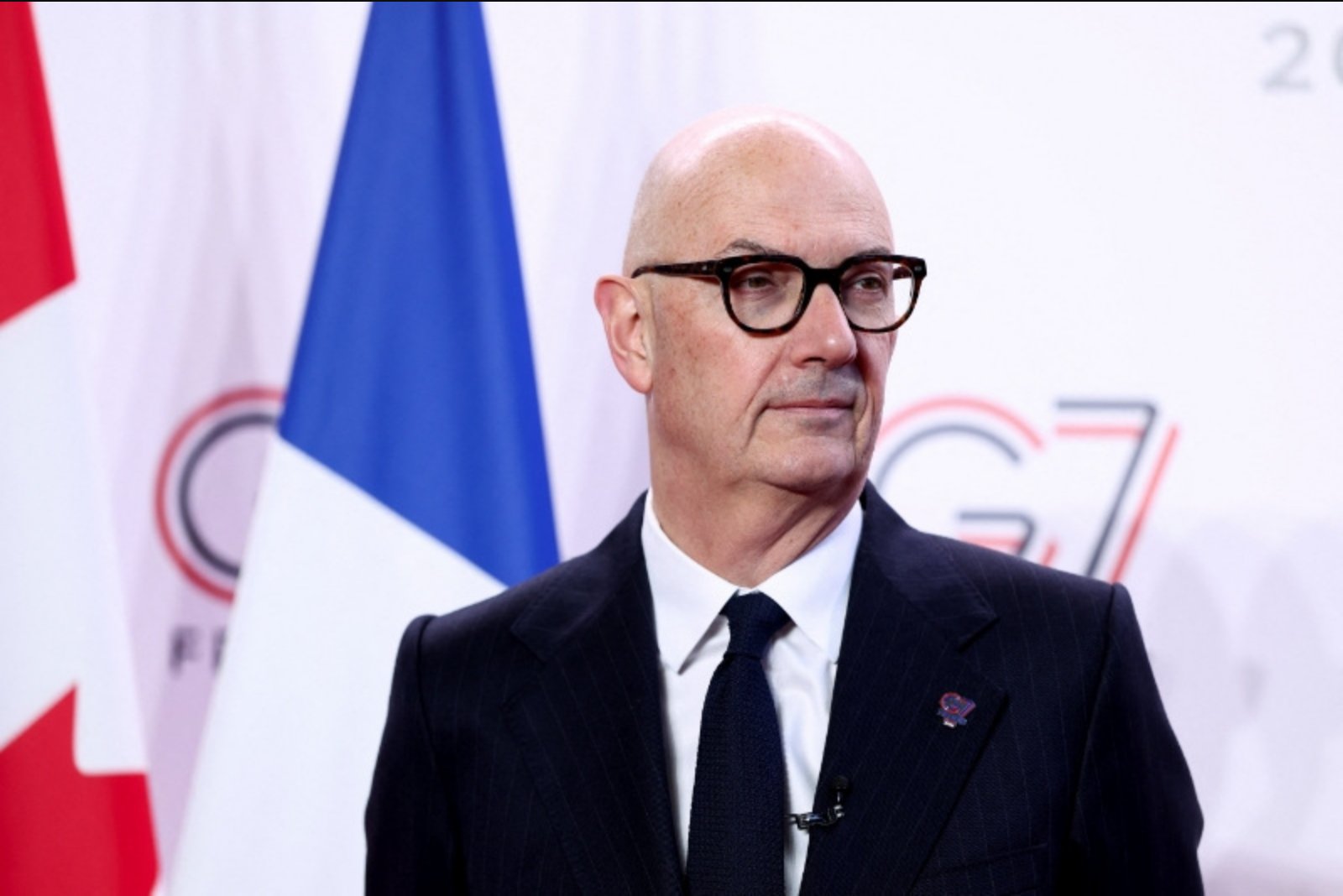
PARIS, May 19 - Finance ministers and central bank governors from the Group of Seven met in Paris for a second day of talks focused on the economic consequences of the Middle East conflict and recent volatility in global bond markets. The meeting, hosted by France, brought in representatives from a range of other countries as the G7 seeks broader partnerships to manage geopolitical and market shocks.
French Finance Minister Roland Lescure used the gathering to call for increased action from the International Monetary Fund and the World Bank to assist nations most exposed to the fallout from the conflict. "We agree on the fact that the IMF and the World Bank have to step up their game for those countries (most vulnerable to the impact of the Middle East conflict) and make sure we help them," Lescure told reporters, adding that shortages of fertiliser would be a notable channel for economic pain.
High-level participants included officials from Qatar and the United Arab Emirates, who Lescure said were attending to discuss the Gulf crisis. Syria and Ukraine joined parts of the discussions, reflecting the G7's focus on stabilising countries it views as central to regional and broader security. Ministers and officials from Brazil, India and South Korea also took part, part of a push to widen international engagement while traditional alliances face fresh strains.
The meeting took place against a backdrop of military and diplomatic developments. U.S. President Donald Trump said on Monday that he had paused a planned attack on Iran after Tehran sent a peace proposal to Washington, and that there was a "very good chance" of reaching a deal to limit Iran's nuclear programme. At the same time, some G7 partners expressed frustration that strikes by the United States and Israel against Iran had been launched without apparent consideration of the likely economic effects, including the potential closure of the Strait of Hormuz - a critical artery for global energy shipments.
Beyond immediate conflict-related risks, ministers discussed structural and strategic economic issues. Lescure said the agenda addressed diversification of supplies for rare earths and other critical minerals and tackling global imbalances - priorities promoted by France during its G7 presidency. He outlined a concern that persistent imbalances are fuelling trade tensions and could produce a disorderly adjustment in financial markets, citing a pattern of China under-consuming, the United States over-consuming and Europe under-investing.
German Finance Minister Lars Klingbeil underscored a competitive impulse in industrial policy, warning that "We see how others are changing the rules, and I have no desire for us to end up being the fools," and advocating for Europe to adopt local content requirements to defend its interests.
On the subject of critical minerals and rare earths, G7 officials are coordinating efforts intended to reduce dependence on China, which currently dominates many supply chains for technologies including electric vehicles, renewable energy systems and defence equipment. European Economic Commissioner Valdis Dombrovskis said progress was being made on raw materials partnerships but cautioned that such shifts are not immediate. "That requires time and adequate preparation," he told reporters.
Dombrovskis also addressed the continued need for pressure on Russia amid ongoing sanctions dynamics. He referenced a U.S. announcement extending a 30-day waiver that permits purchases of Russian seaborne oil to help "energy-vulnerable" countries, and said from the European Union's perspective it was not the moment to ease pressure on Russia. He noted U.S. Treasury Secretary Scott Bessent had been "reassuring" that the waiver would be temporary, and observed that the measure represented a second extension.
Ministers used the Paris meeting to consider the cross-cutting economic channels through which regional conflict and geopolitical shifts can affect markets: energy supply routes, commodity prices, financial market volatility and critical inputs for modern industrial sectors. The presence of non-G7 governments reflected a desire to coordinate responses that span regions and to broaden the set of partners engaged on trade, investment and security-related economic issues.
Discussions on diversifying supplies for strategic raw materials were tied directly to concerns about technology supply chains. Officials emphasised the importance of building alternative sources and partnerships for rare earths and critical minerals used in electric vehicles, clean energy technologies and defence systems, while acknowledging that establishing such supply chains will take time and careful planning.
The Paris sessions illustrate the balancing act confronting the G7: responding to immediate shocks from the Middle East while advancing longer-term strategies to reduce vulnerabilities in resources and address macroeconomic imbalances. Delegates left the meeting with a clearer sense of priorities - support for vulnerable countries, coordination on critical mineral supply, and maintaining pressure on Russia - even as implementation challenges and geopolitical risks remain.
Summary
G7 finance ministers and central bank governors met in Paris to evaluate economic fallout from the Middle East conflict and market volatility. France urged the IMF and World Bank to increase support for vulnerable countries, participants discussed diversifying critical mineral supplies and debated the policy response to ongoing tensions with Russia.
Key points
- France pressed the IMF and World Bank to boost assistance to countries most at risk from the Middle East conflict, citing fertiliser shortages as a key vulnerability.
- G7 and invited partners are coordinating efforts to diversify supplies of rare earths and critical minerals to reduce reliance on dominant suppliers and protect technology supply chains.
- Officials discussed maintaining pressure on Russia even as the U.S. extended a temporary waiver allowing purchases of Russian seaborne oil for energy-vulnerable countries.
Risks and uncertainties
- Disruption of energy routes such as a possible closure of the Strait of Hormuz - this affects energy markets and sectors dependent on stable oil shipments.
- Market volatility from geopolitical shocks - bond markets and commodity prices could remain unstable while conflict and sanctions dynamics evolve.
- Transitioning critical mineral supply chains will take time and preparation - delays or insufficient coordination could prolong dependency risks for industries like electric vehicles and renewable energy.