
Summary: President Donald Trump has publicly thrown his weight behind Ed Gallrein, a former Navy SEAL, in Tuesday's Republican primary in Kentucky, seeking to unseat Representative Thomas Massie, a vocal critic within the party. The contest has become a national focal point, marked by unusually large spending, a clear generational split among voters, and questions about whether Republicans can defy Trump without political cost. Outside groups aligned with pro-Israel interests and a Trump-supporting super PAC have poured money into the campaign, while public polling shows the race remains tight as Election Day approaches.
Trump's intervention in the Kentucky primary is part of a broader pattern of the former president backing challengers to Republicans he sees as disloyal. In a post on his social platform, Truth Social, Trump labeled Massie "the worst and most unreliable Republican Congressman in the history of our Country," and urged voters to "vote the bum out." The endorsement of Gallrein and the accompanying message underscore a punitive approach to intra-party dissent.
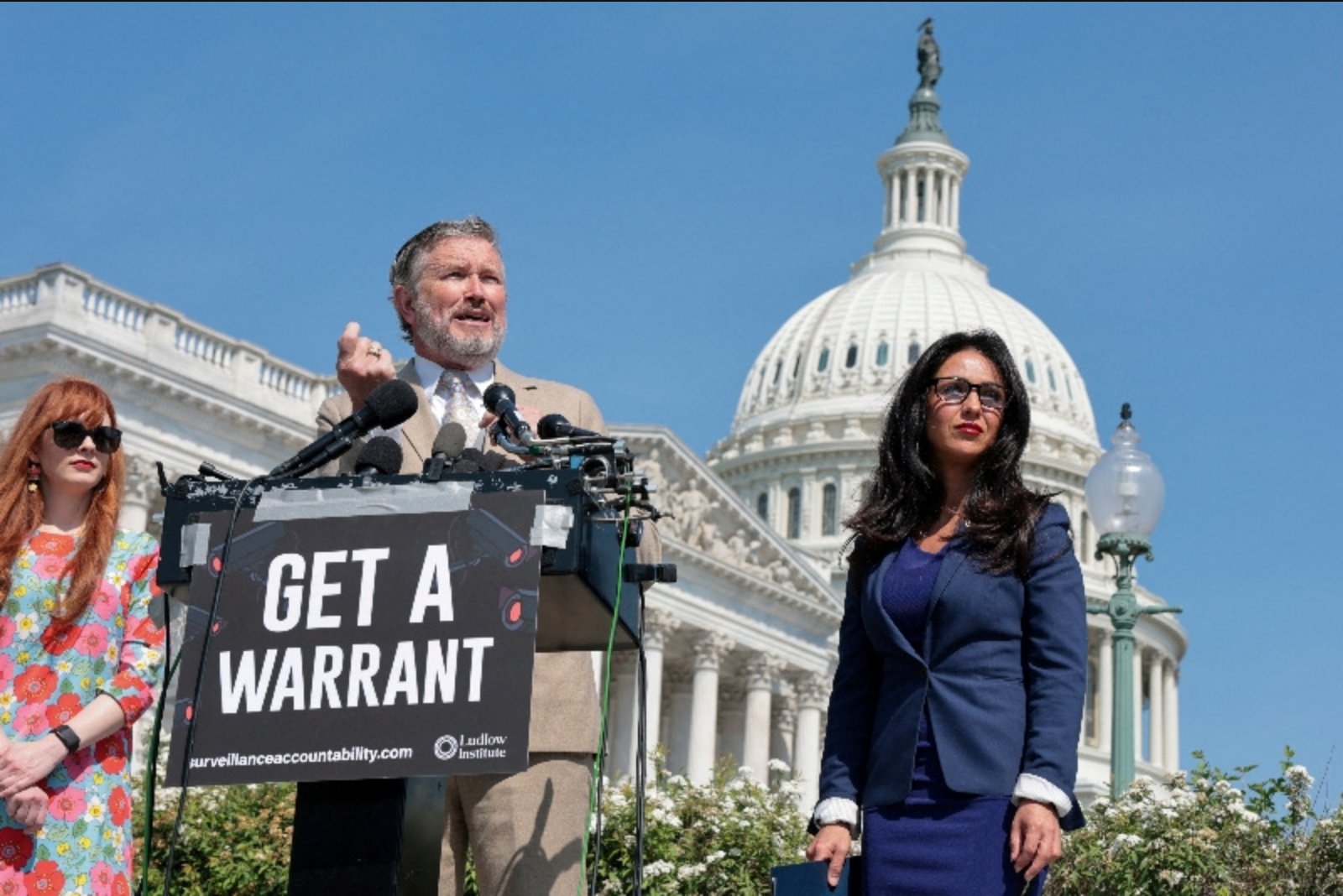
Massie has drawn Trump's displeasure for several public actions. He led an effort to release files related to the late sex offender Jeffrey Epstein and has criticized U.S. policy toward the Iran war. He has also voted against U.S. aid to Israel, a stance that has triggered heavy spending from pro-Israel organizations. Massie, who casts himself as a libertarian-leaning lawmaker and a frequent critic of party leadership, says his average donation is under $94 and that roughly 33,000 donors nationwide have contributed to his campaign.
The Republican contest in Kentucky's 4th District - which encompasses suburbs of Louisville, the Kentucky portion of the Cincinnati metro area, and rural counties edging into Appalachia - has drawn extraordinary attention and resources. Tracking firm AdImpact reports the race has attracted more than $30 million in ad spending, while combined spending in the contest has been reported at $32 million, eclipsing the $25 million spent in a recent notable House primary challenge in 2024. The scale of spending makes this one of the most expensive House primaries in U.S. history.
Outside groups have focused significant resources to unseat Massie following his votes on Israel. The Republican Jewish Coalition and the American Israel Public Affairs Committee are among organizations spending heavily to support Massie's opponent. Additional millions have arrived from a Trump-aligned super PAC funded by pro-Israel donors, including hedge fund manager Paul Singer and casino magnate Miriam Adelson.
Public polling indicates a competitive race. A Quantus Insights survey conducted May 11 to 12 of 908 voters showed Gallrein with 48.3% support compared with 43.1% for Massie. A separate Big Data Poll of 518 registered Republicans released on a Friday shortly before the primary found Massie narrowly ahead by a single percentage point. Both polls reveal a pronounced generational divide: voters younger than 45 are largely backing Massie, while Gallrein is prevailing among older voters, especially those over 65.
Gallrein's campaign emphasizes loyalty to Trump, presenting the challenger as a reliable member of the team who would support the former president's agenda. Massie, in contrast, has pointed out that he votes with Trump roughly 90% of the time, even as his high-profile departures from party orthodoxy have placed him at odds with the president and other party leaders.
Political analysts see the outcome as telling for the Republican Party ahead of the November midterms. Stephen Voss, a political science professor at the University of Kentucky, framed the contest as "a battle between ideological purity and party unity" in a conservative district where Trump remains highly popular. He said a Massie victory would signal that Republicans can challenge Trump and still succeed if they present a clear alternative vision. Conversely, a loss for Massie would reinforce Trump's control over the party's core supporters and likely intimidate other Republicans contemplating dissent.
The Kentucky race is part of a broader primary day that includes contests in Alabama, Georgia, Idaho, Oregon, and Pennsylvania. Observers say results from these races will help define the terrain for November, when Democrats are aiming to regain House control and make inroads in the Senate despite the electoral hurdles posed by redistricting. In Georgia, Republicans will select a nominee to challenge Democratic Senator Jon Ossoff and will also narrow a crowded field for the race to succeed term-limited Governor Brian Kemp, where Trump-backed Lieutenant Governor Burt Jones is among the leading contenders facing Democrats that include former Atlanta Mayor Keisha Lance Bottoms. Meanwhile in Kentucky, Republicans are also voting to pick a nominee to replace Senate leader Mitch McConnell, with U.S. Representative Andy Barr - who has secured Trump's endorsement - and Attorney General Daniel Cameron among the top contenders.
Trump's push to purge critics has seen recent successes. In Louisiana, Senator Bill Cassidy lost his primary after being targeted over his 2021 impeachment conviction vote against Trump, becoming the first sitting U.S. senator to lose renomination since 2012. Earlier, Trump-backed challengers unseated at least five incumbents in Indiana state senate primaries on May 5 after those senators opposed the former president's redistricting efforts. Those results have been cited as examples of Trump's willingness to use endorsements and support to reshape Republican ranks.
Local party officials describe the contest in stark terms. Shane Noem, chairman of the Republican Party in Kenton County - which sits inside the district - said the race has crystallized into a straightforward choice for voters: a contest framed as Trump versus Massie. The high levels of outside spending, the generational split among likely voters, and the political implications for Republican unity combine to make the Kentucky primary the marquee race of the day.
As primary returns arrive, the result in Kentucky will be watched for what it suggests about the party's tolerance for internal dissent and for signals it may send to lawmakers who have diverged from Trump's preferences. The stakes extend beyond a single House seat: the outcome may shape strategic calculations for both incumbents and challengers nationwide as the party prepares for the general election in November.
Reporting detail: All figures, quotes and references in this article are drawn from public statements, campaign reporting, polling data cited, and spending tracking noted by campaign and monitoring organizations as described above.