
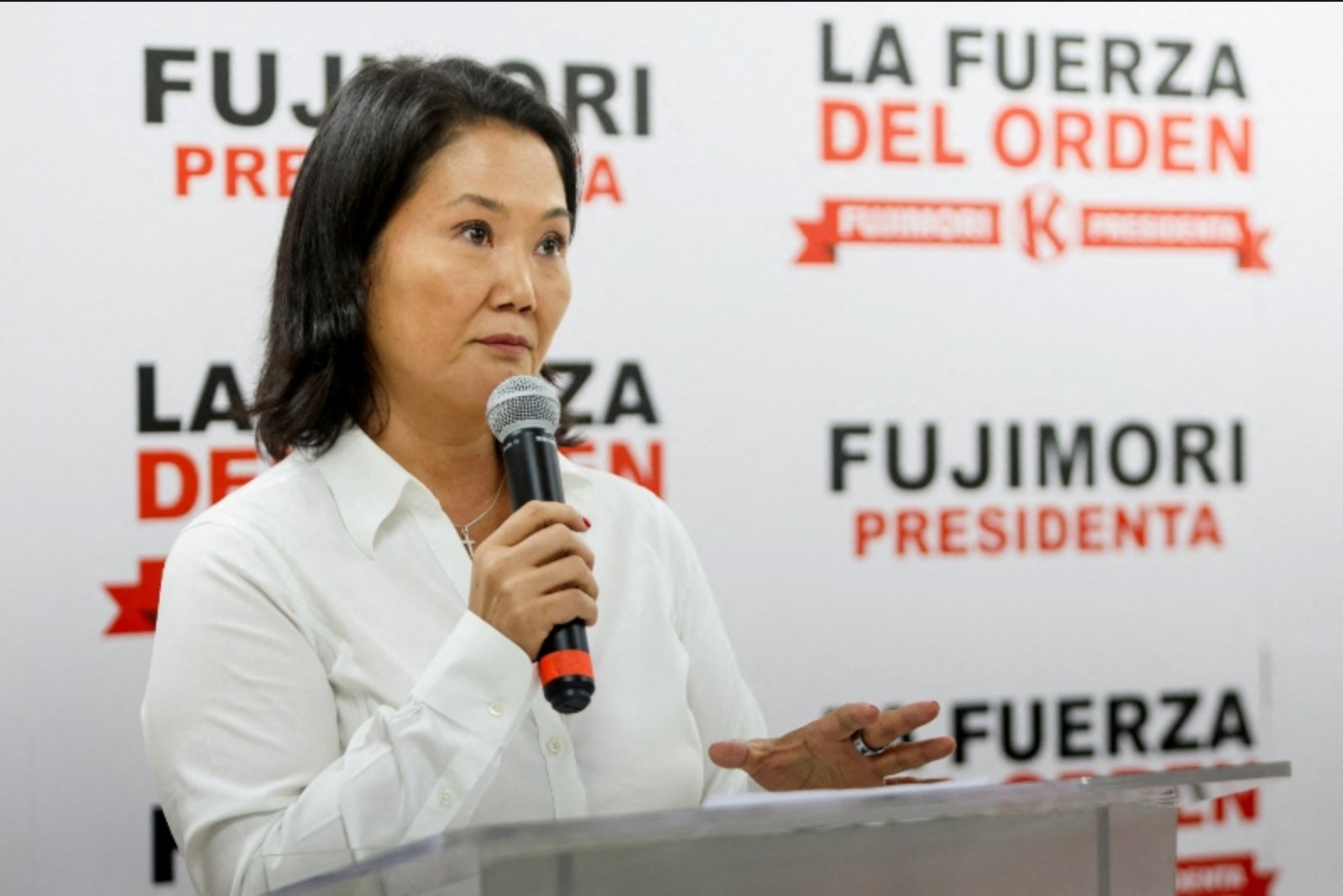
As Peru moves toward a presidential runoff, Keiko Fujimori is emphasizing a law-and-order approach that ties her campaign to the presidency held by her father in the 1990s. After previously seeking distance from the polarizing figure of Alberto Fujimori, who died in 2024 following a conviction for human rights abuses and other crimes, Keiko Fujimori has turned increasingly to his record as a central element of her appeal.
In recent weeks the conservative candidate has explicitly pledged a suite of hardline security measures: tougher anti-terrorism legislation, an expanded role for the military, and the use of intelligence services and special forces to wage what she calls a "frontal war" on crime and extortion. Before casting her ballot in the first round on April 12, she visited her father’s grave, a move that signals the degree to which his memory has become a campaign asset.
Her running mate, Luis Galarreta, described that legacy succinctly in an interview, saying: "There is a deep collective memory of Fujimorismo. What was done in the 1990s - the rescue of Peru - still matters." That framing highlights the campaign’s calculation that memories of the elder Fujimori’s approach to public security and economic stabilization will resonate with voters alarmed by present-day crime trends.
Crime, extortion and local experiences
Security concerns are at the forefront of voter priorities this year in Peru, mirroring a broader regional pattern in Latin America where surges in organized crime have increased support for candidates with hardline positions. In Ventanilla, a densely populated suburb north of Lima near the port of Callao, residents described a daily reality of robberies, extortion and violent incidents.
People living in a low-income settlement established during Alberto Fujimori’s administration reported that criminal groups demand payments from the smallest local businesses. "Extortion is being carried out against everyone," said Rosa Rengifo Zegarra, 39, pointing to widespread petty levies such as a request for 10 soles a day from a small ceviche vendor. Community members also recounted daytime shootings, disappearances, and frequent robberies at gunpoint.
Those local accounts are reflected in national statistics: extortion cases reported to police increased by roughly 20% last year, and homicide rates in the Lima region rose from 9 per 100,000 people in 2021 to 23.1 per 100,000 in 2025. The spike in lethal violence and in extortion complaints has translated into palpable anxiety for small-business owners and householders. "You can no longer even think about having a business that operates," said Pilar Cardenas Lopez, 49, who runs a community food kitchen. "Once they see that you have something, that’s it."
For many families the day-to-day choices they make have shifted because of fear. Zegarra said her 17-year-old daughter often comes home late from dance practice, and the risks in public spaces are a constant source of concern: "You worry. One thing is that they snatch the phone - another is that they take her."
Drivers of criminal expansion and limits on state response
Analysts point to a mix of expanding organized crime, the growth of illegal activities such as informal gold mining, and weakened state institutions as key drivers behind the recent rise in violence. Transnational groups such as Tren de Aragua have made inroads, while illegal gold mining has been singled out as a significant accelerant of criminality in certain regions.
At the same time, long-running political instability, corruption and legal changes have eroded prosecutors’ capacity to investigate and bring organized crime to account, according to observers cited in reporting from the field. Governments have repeatedly resorted to states of emergency and targeted crackdowns, but analysts and residents say those measures have not addressed the structural drivers of criminal expansion.
Stories from Ventanilla capture the limited effectiveness of episodic enforcement actions. One resident, Teresa Cardenas, gestured toward a nearby store and recounted: "On that corner, at the store, they killed someone." Another block over a young man reportedly disappeared, she said, underscoring how violent incidents are woven into daily life in some neighborhoods.
Political calculus and electoral positioning
Keiko Fujimori advanced to the runoff after securing roughly 17% of the national vote in a first round that left the field fragmented; she will face left-leaning congressman Roberto Sanchez on June 7. In Ventanilla she received around 22% of the vote in the April first round, the highest share attained by any candidate in that district. An Ipsos poll published on April 26 placed Fujimori and Sanchez tied at 38% each ahead of the runoff.
For Fujimori, invoking her father’s record functions as both an appeal to memory and a concrete policy platform centered on security. Yet analysts caution that leaning on the Fujimori name carries risks. Historian and political analyst Daniel Parodi noted that "Anti-Fujimorismo is the reason Keiko Fujimori has fallen just short of the presidency three times." The historical rejection of Fujimorismo may be softening for some voters, but it remains a potential barrier.
Eileen Gavin of consultancy Verisk Maplecroft described the candidate’s security-first message as a "double-edged sword." While a portion of the electorate may respond positively to promises of forceful action against criminal networks, other voters expect renewed commitments to the rule of law and strengthening of democratic institutions as part of any comprehensive solution. "Commitments to those areas have been sorely lacking in Fujimorismo," Gavin added.
Local memory and the politics of place
The settlement where many interviewees live bears the name Keiko Sofia Fujimori - a reminder of how political legacies can be etched into landscapes. In the 1990s, families without housing were relocated to barren sand hills north of Lima; one section was named for Alberto Fujimori’s daughter after she served as his nominated first lady. Residents recounted how the area originally lacked basic infrastructure: "There was no electricity, no water - just sand," said a long-time resident recalling the arrival in 1995.
Some older inhabitants remember visits and social programs from the elder Fujimori’s presidency. Yet those same residents point out that the daughter after whom part of the settlement is named has not personally visited the area. "I’ve been here 27 years, and she has not come personally - not at all," said Cardenas Lopez.
Still, Keiko Fujimori retains supporters in Ventanilla who are motivated not only by security promises but also by the prospect of financial assistance should she win. Local accounts suggested that pledges of cash bonuses and other support form part of the candidate’s connective tissue with poorer communities, and these promises likely contributed to her leading vote share in the district during the first round.
What voters face ahead of the runoff
With the runoff approaching, voters in neighborhoods like Ventanilla are weighing immediate safety concerns against broader questions about governance and rule of law. The campaign’s tilt toward invoking the Fujimori era underscores how memories of past approaches to security and economic stabilization are being mobilized to address present anxieties.
At the same time, the unresolved questions about how to remedy institutional weaknesses that have allowed criminal groups to expand remain salient. Periodic states of emergency and forceful crackdowns have so far not delivered a durable solution, according to analysts and local residents. That dynamic will be central to how the runoff debate unfolds in the weeks before June 7.