
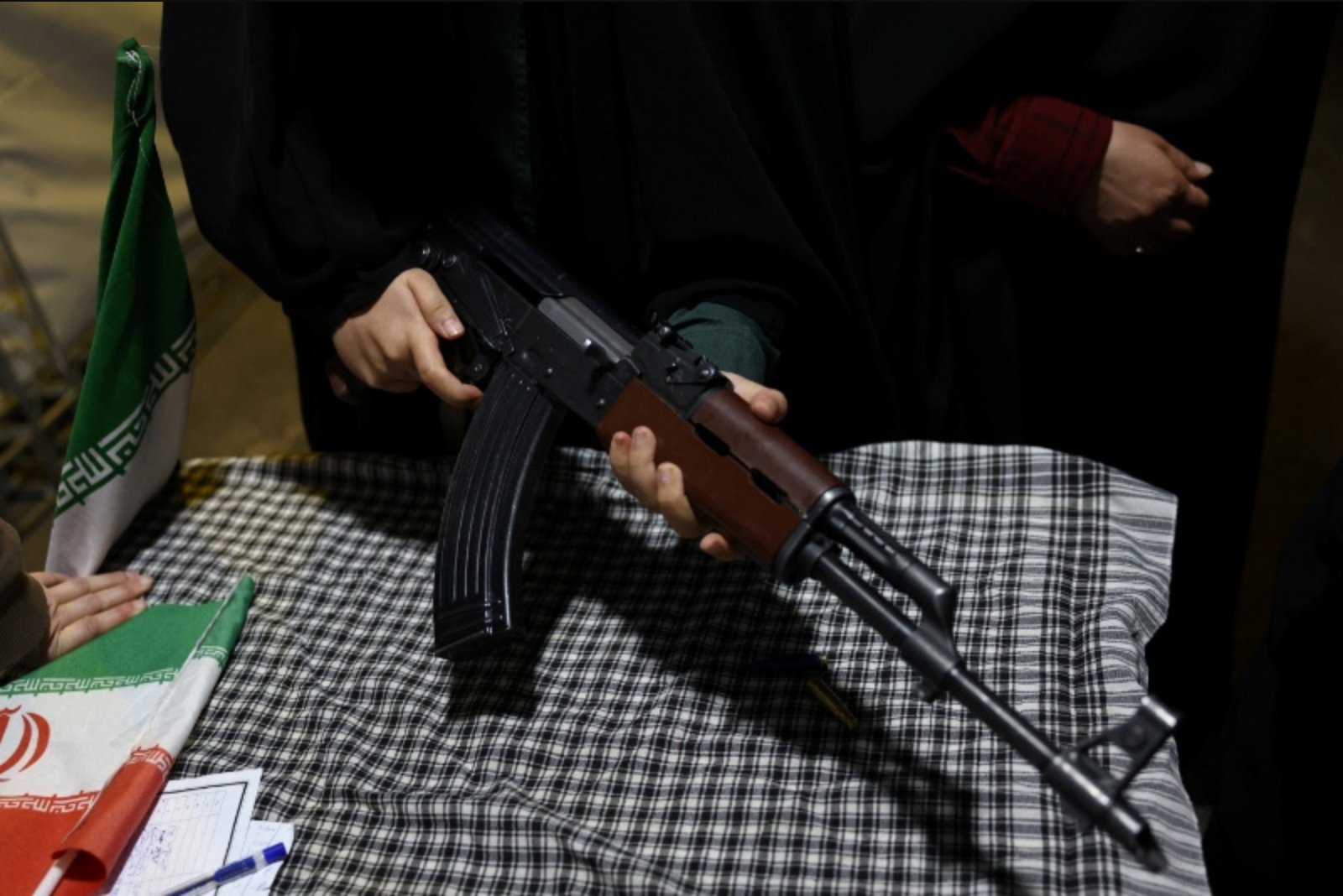
DUBAI, May 19 - Tehran has presented a new peace proposal to the United States that, according to Iranian state media, would require an end to hostilities across all fronts - including in Lebanon - the withdrawal of U.S. forces from positions close to Iran, and reparations for destruction inflicted during the U.S.-Israeli military campaign.
Deputy Foreign Minister Kazem Gharibabadi, speaking in Tehran and cited by the IRNA news agency, outlined additional elements Iran says are part of the offer: an end to U.S. sanctions, the release of frozen Iranian funds and the removal of a U.S. marine blockade on Iranian waters. The published description of the terms appears largely consistent with an earlier Iranian offer that U.S. President Donald Trump publicly dismissed last week as "garbage."
Trump said on Monday he had put on hold a planned resumption of attacks on Iran after receiving a fresh proposal from Tehran, and that there was now a "very good chance" of negotiating a deal to limit Iran’s nuclear programme. A White House pause came amid U.S. efforts to secure an agreement that would reopen the Strait of Hormuz, a vital transit route for global shipments of oil and other commodities - an objective Trump has repeatedly said he wants to achieve while also threatening heavy strikes on Iran if a deal were not reached.
Reporting suggested uncertainty about whether preparations had been made for renewed strikes that would mark a resumption of the war President Trump initiated in late February; that could not be independently determined. In a social media post, Trump said leaders of Qatar, Saudi Arabia and the United Arab Emirates requested that he delay any attack because "a Deal will be made, which will be very acceptable to the United States of America, as well as all Countries in the Middle East, and beyond."
When addressing reporters later on Monday, Trump said the United States would be satisfied with an agreement that assured Iran would not obtain a nuclear weapon. "There seems to be a very good chance that they can work something out. If we can do that without bombing the hell out of them, I would be very happy," he said.
A Pakistani source confirmed that Islamabad, which hosted the only round of peace talks last month and has been a conduit for messages between the parties, transmitted the Iranian proposal to Washington. The Pakistani source cautioned that both sides had been shifting their positions, saying: "We don’t have much time."
Mixed signals have emerged around the negotiating table. While neither side has publicly confirmed any concessions in talks that have been stalled for a month, a senior Iranian official indicated on Monday that Washington may be softening some demands. That official said the United States had agreed to release one quarter of Iran’s frozen funds - described as amounting to tens of billions of dollars - held in foreign banks. Iran, the official said, wants all of the assets released. The same source added that the U.S. had shown more flexibility about allowing Iran to continue certain peaceful nuclear activities under oversight by the International Atomic Energy Agency.
The U.S. government has not publicly acknowledged agreeing to those terms. A U.S. official, speaking on condition of anonymity, denied a report by Iran’s Tasnim news agency that Washington had agreed to waive oil sanctions on Iran while negotiations were under way.
The U.S.-Israeli bombing campaign inflicted heavy casualties in Iran before it was suspended in a ceasefire in early April, killing thousands of people, according to the account contained in the Iranian reports. Israel has been reported to have killed thousands more and displaced hundreds of thousands of people in Lebanon after invading in pursuit of the Iran-backed Hezbollah militia. Iranian retaliatory strikes on Israel and neighbouring Gulf states have also killed dozens of people.
The ceasefire from the early-April pause has largely held, though there have been recent launches of drones from Iraq toward Gulf countries, including Saudi Arabia and Kuwait, operations that Iranian officials and their allies appear to have been involved in.
President Trump and Israeli Prime Minister Benjamin Netanyahu have said the war was launched to counter Iran’s backing of regional militias, to dismantle its nuclear programme, to destroy its missile capabilities, and to foster conditions that could lead to regime change in Iran. Despite those objectives, the conflict has not eliminated Iran’s stockpile of near-weapons-grade enriched uranium, nor has it removed Iran’s capacity to threaten neighbouring states with missiles, drones and proxy forces.
Domestically, Iran’s clerical leadership - which faced a mass uprising earlier in the year - reportedly endured the superpower offensive without showing signs of organised internal opposition.
What should investors own right now? The original report included a section noting that better investment decisions start with higher-quality data and that relying purely on instinct can produce costly mistakes or analysis paralysis. It described a product that combines institutional-grade data with AI-powered insights to help identify potential investments; the promotional passage asked which investments were leading in 2026 and referenced a limited-time offer. Those lines were part of the text provided with the coverage.
The proposal Tehran says it has presented to Washington contains multiple political and economic components - an end to fighting across several theatres, a U.S. troop pullback, compensation for wartime damage, the lifting of sanctions and the release of funds frozen overseas - elements that, if accepted, would have broad regional and market implications. At present, both sides have offered mixed indications about concessions, and U.S. officials have publicly denied agreeing to some elements reported by Iran.