
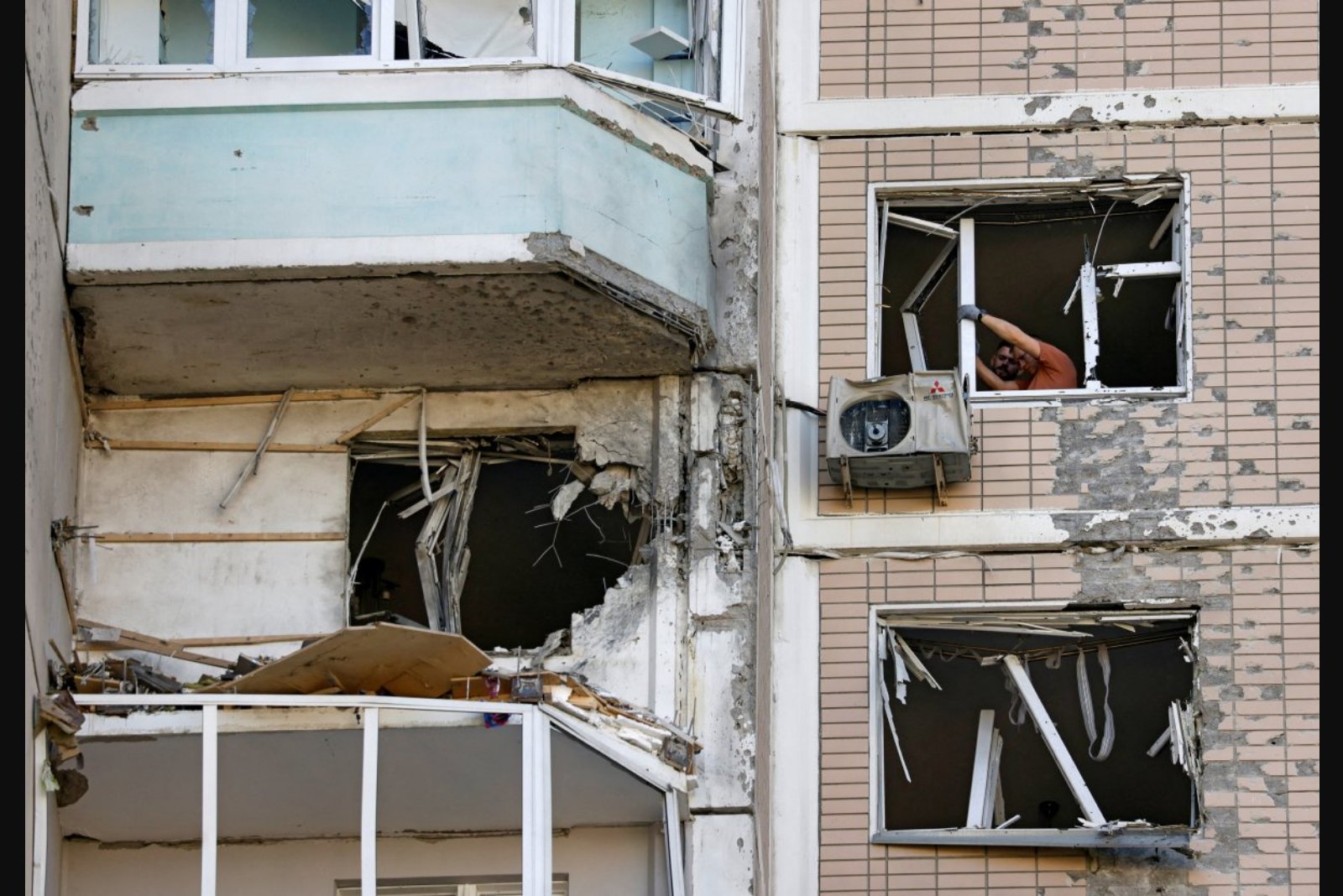
Russian air strikes in the pre-dawn hours on Tuesday inflicted damage on port infrastructure in Izmail, authorities in the city said, while Russian officials reported intercepting four drones bound for Moscow.
Izmail, which hosts Ukraine's largest port on the Danube River and is regularly targeted for its strategic significance, suffered damage to port facilities, local officials wrote on Telegram. The post added that nearly all aerial attack weapons had been destroyed and that "fortunately, there were no casualties or significant destruction." Accompanying images and video posted to the same channel showed firemen combating a blaze at a building with windows blown out.
In the northeastern city of Kharkiv, Mayor Ihor Terekhov reported on Telegram that two people were rescued following a Russian drone strike and that one person may still be trapped under rubble. The municipality did not provide further detail on the condition of the rescued individuals or the person possibly trapped.
Efforts to negotiate an end to the war that began with Russia's 2022 invasion remain stalled, and both sides continue to exchange accusations related to attacks on military, civilian and energy infrastructure. Each side denies intentionally targeting civilians.
In Russia, Moscow Mayor Sergei Sobyanin said on Telegram that four drones headed for the capital had been downed and that emergency services were deployed, without offering additional detail. His statement followed what Russian officials characterized as a heavy Ukrainian drone attack on Moscow over the preceding weekend.
Russian strikes responding to that attack struck the Ukrainian cities of Odesa and Dnipro with missile and drone strikes, authorities said, damaging residential buildings and injuring dozens of people. The cycle of actions and reprisals has extended along Russia's border regions: the Kursk operational headquarters reported on Telegram that a woman died and two people were injured after a Ukrainian attack on Monday evening.
Regional authorities also reported drone attacks in Russia's southern Rostov region and in Yaroslavl, northeast of Moscow. Yaroslavl governor Mikhail Yevrayev cautioned drivers traveling toward the capital about the threat of drone strikes; the governor noted that Yaroslavl is home to oil refining infrastructure.
On the economic front, Ukrainian President Volodymyr Zelenskiy wrote on X overnight that Russian refining capacity has fallen by 10% over recent months and that oil wells have been shut. Zelenskiy commented that "(Russian President Vladimir) Putin has, of course, built a war chest - but certainly not enough to fight indefinitely," framing these energy disruptions as part of Ukraine's efforts to reduce Russian energy revenues.
The pattern of reciprocal strikes, reported damage to transport and refining infrastructure, and claims of disrupted energy production highlight the multiple dimensions of the conflict - military, humanitarian and economic - now playing out in interconnected urban and industrial targets.
Reporting on the incidents relied on statements posted by local and regional officials on Telegram and comments by national leaders on social platforms. Many details, including the full extent of structural damage and an exact tally of casualties, remain limited in the available official communications.