
Summary
U.S. officials have reduced expectations that a trade agreement with Canada will be reached before new tariffs take effect. People familiar with the discussions said private signals from Washington put the probability of a deal at no better than a coin flip as a midnight deadline approaches for the imposition of 50% tariffs on a large volume of Canadian goods.
Negotiations and timing
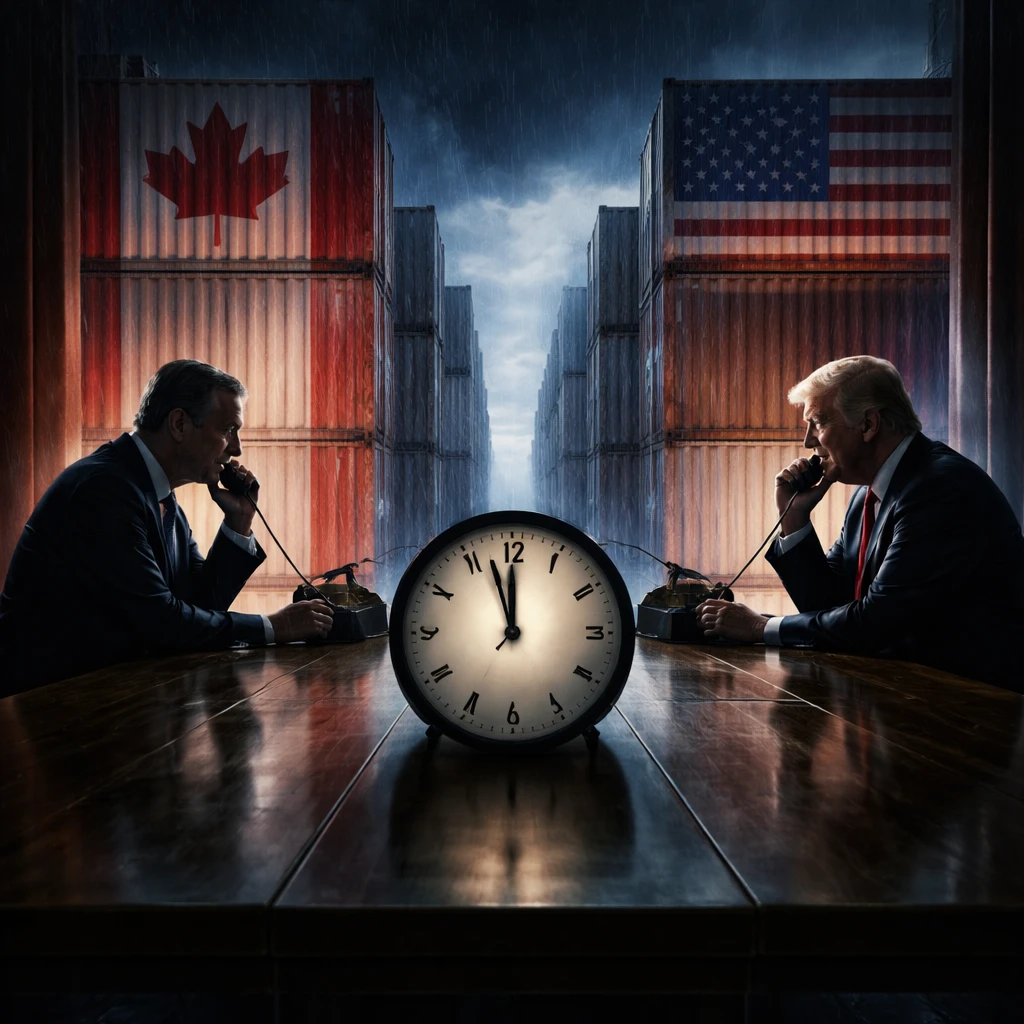
According to sources close to the talks, U.S. negotiators have presented what they consider to be their best offer to Canadian counterparts. A final attempt to bridge differences is expected to take place via a scheduled telephone conversation between President Donald Trump and Prime Minister Mark Carney, a call that U.S. officials regard as unlikely to produce an agreement.
Earlier contacts included a phone call between the two leaders on Monday. The fresh call on Tuesday is described as a last effort ahead of the midnight cutoff that would begin the 50% tariffs on billions of dollars of Canadian goods.
Signals and strategic posture
It remains unclear whether the cautious tone from U.S. officials reflects the substantive state of negotiations or is intended as a bargaining posture. The sources who characterized the odds as akin to a coin flip were speaking privately about ongoing discussions.
Canadian response and consequences
Canadian officials have warned that implementation of Section 338 tariffs would provoke a public reaction in Canada and would effectively end Prime Minister Mark Carney's ability to negotiate concessions. Ottawa has also signaled it will keep all options on the table to respond to any new U.S. tariffs, including trade retaliation.
Possible procedural steps
The U.S. retains the option of delaying the duties to allow more time for talks, though the sources did not indicate whether such a delay is likely. The planned conversation between the two leaders is intended as an opportunity to avert the duty imposition, but U.S. officials continue to view that outcome as improbable.
Key points
- U.S. officials privately assess the chance of a deal as no better than a coin flip ahead of a midnight deadline for 50% tariffs.
- President Trump and Prime Minister Mark Carney held a call on Monday and are scheduled to speak again on Tuesday in a final push.
- Canada warns that enacting Section 338 tariffs would trigger public backlash and limit its negotiating flexibility, and Ottawa says it may retaliate.
Implications
The standoff centers on the potential rapid implementation of sweeping duties and the diplomatic effort to forestall them. How talks proceed - and whether any procedural delay is used to buy time - will determine whether the tariffs take effect as scheduled.