
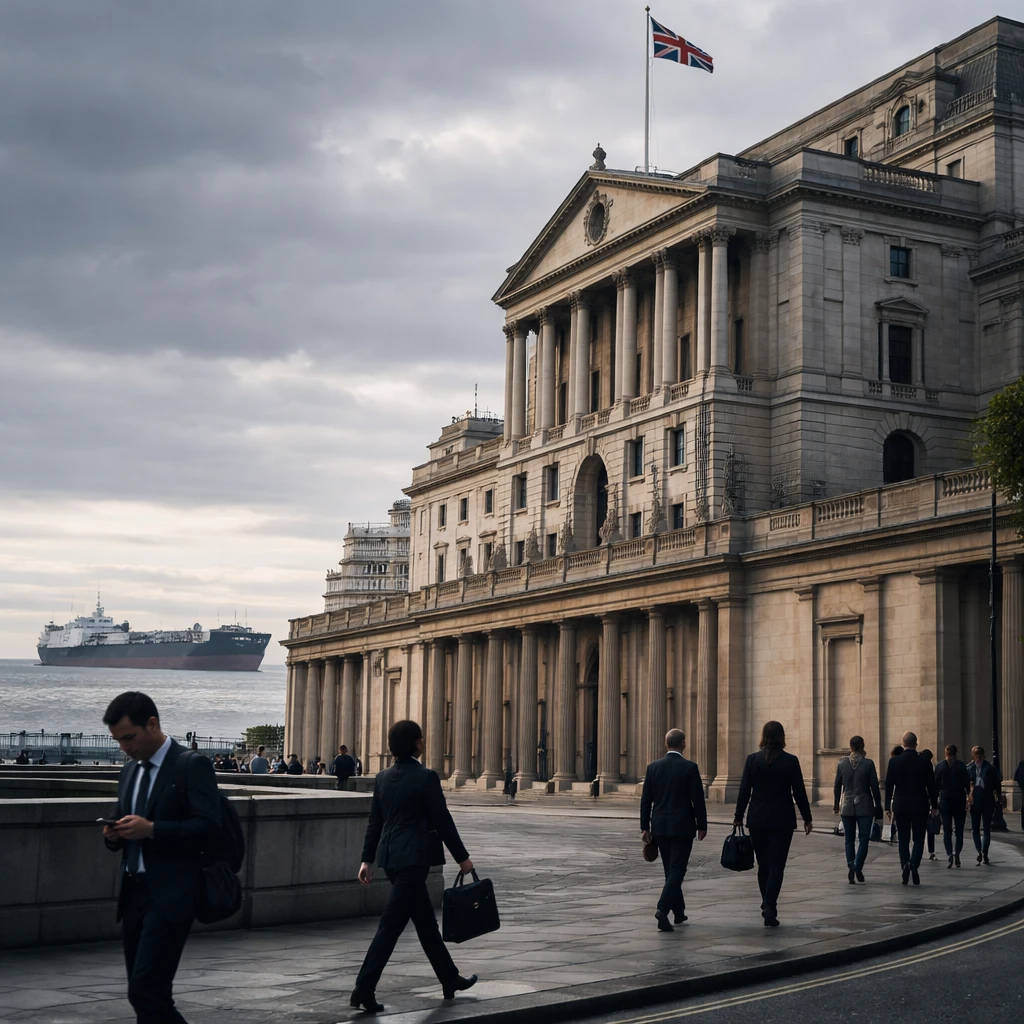
The Bank of England is widely expected to leave its policy rate at 3.75% for the rest of this year, according to a recent poll of economists. Respondents in the survey reiterated a stance that has held since late February amid geopolitical tensions in the Middle East, citing a UK economy that has so far shown resilience with little sign that higher energy costs have spilled broadly into consumer prices and wages.
In the July Monetary Policy Committee (MPC) meeting three of the nine members voted for an immediate rise in Bank Rate to 4.0% - up from two votes for a hike at the prior meeting. Nonetheless, the broader view among forecasters remains that policymakers will stand pat through year-end.
A separate poll taken ahead of official data due on Wednesday indicated inflation likely rose to 2.9% in July from 2.6% in June. The central bank's own quarterly projections point to inflation moving above 3% later in the year. Despite those upside pressures, the survey found that 56 of 64 economists expect the MPC to keep the rate unchanged at 3.75% this year - roughly 88% of respondents. That proportion has risen from 83% in the prior month.
The poll was conducted between August 13 and August 18. No respondent in the survey forecasted a change at the next MPC meeting in September. Still, market pricing continues to reflect some uncertainty: financial markets are assigning probability to a quarter-point rate increase by the end of the year.
Energy costs remain on watch. Brent crude is trading at about $91 a barrel, roughly 25% higher than pre-war levels, with the Strait of Hormuz still closed and constraining a key shipping route for Middle Eastern oil. Economists note that a sharp rebound in energy prices would alter the policy calculus.
"A big rebound in energy prices would certainly change things. But the real game changer for the MPC, I think, is around second-round effects," said Elizabeth Martins, UK economist at HSBC.
Recent labour market data signalled weak hiring and subdued pay growth, readings that policymakers consider within an acceptable range. That softness in labour market pressures is viewed by many economists as a dampener on the risk that higher fuel and gas costs will feed into broader wage and price dynamics.
"This data, we think, is in line with the BoE's read of the labour market - loose and as such a firm barrier to second-round effects from the energy shock," wrote Bruna Skarica, chief UK economist at Morgan Stanley. "With that, the core of the MPC can continue to signal that the anticipated inflation overshoot stemming from fuel and gas prices is unlikely to extend beyond the policy-relevant (18-24-month) horizon."
Looking further ahead, the surveyed economists expect inflation to remain above the Bank of England's 2% target into late next year. A narrow majority of respondents nevertheless forecast at least one cut in Bank Rate by the middle of 2027.
Growth projections drawn from the survey indicate the UK economy will expand by an average of 1.1% in 2026 and 1.2% in 2027, before picking up to 1.5% in 2028.
Context for markets and sectors
- Monetary policy - The expectation that the MPC will hold rates supports a status quo scenario for borrowing costs through year-end.
- Energy markets - Elevated crude prices and disruptions to shipping routes remain a pivot for inflation risks.
- Labour and consumer sectors - Soft hiring and modest pay growth have so far limited second-round inflation pressures, shaping policymakers' inclination to wait.