
Overview
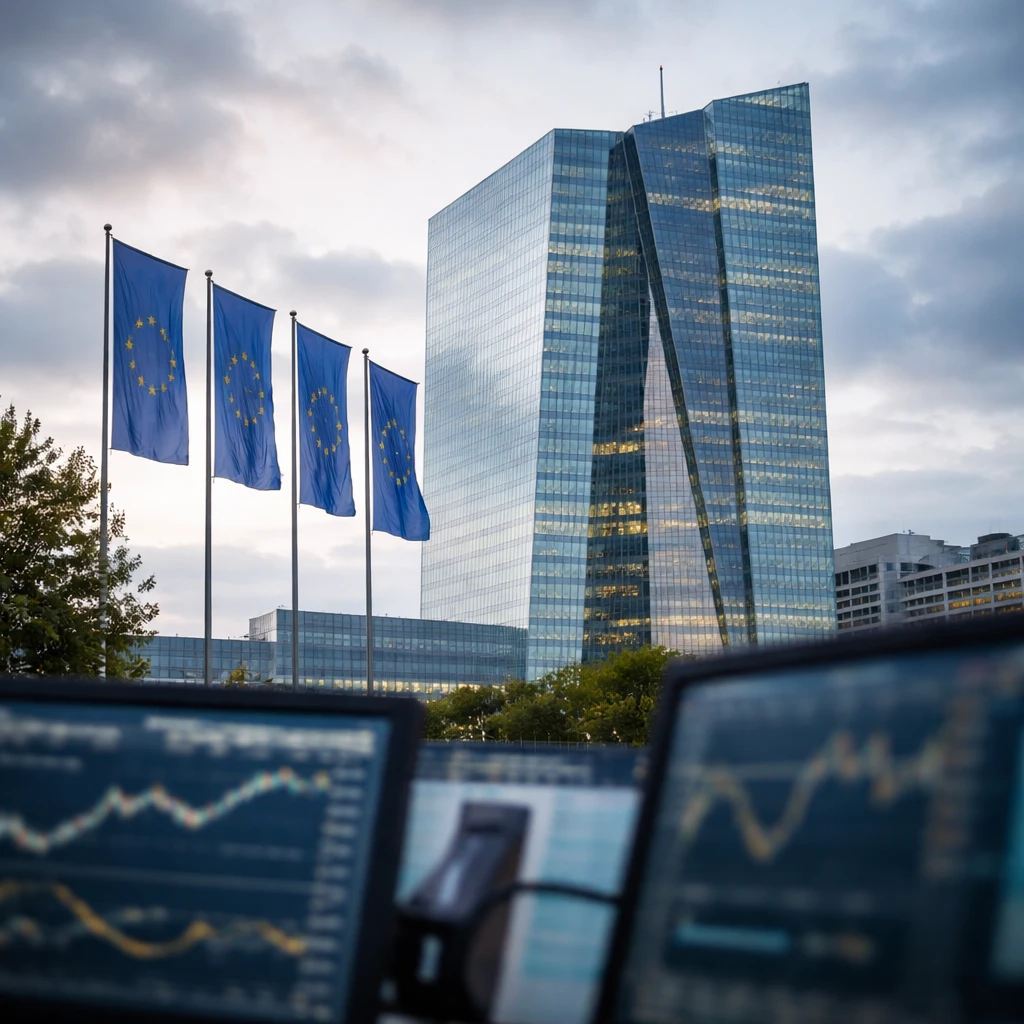
European Central Bank vice president Luis de Guindos on Tuesday called for prudence in any future adjustments to interest rates, saying the institution must keep a "cool head" while geopolitical uncertainty persists. His remarks came after headline inflation climbed to 2.6% in the wake of the US-Iran war and follow the ECB's decision to leave rates unchanged at its March meeting, where the bank upgraded its inflation projections and trimmed its growth outlook.
Inflation and projections
De Guindos noted that while headline inflation has recently surged to 2.6%, core inflation eased further to 2.3% in March, drawing nearer to the ECB's 2% objective. He said ECB projections indicate that the current inflation spike is likely to be temporary, but emphasized that the path depends on how long the conflict endures.
To prevent a temporary energy price shock from seeding broader price and wage pressures, the ECB will adhere to a data-dependent, meeting-by-meeting policy approach. That framework is intended to limit the risk of second-round effects such as a wage-price spiral.
Financial stability concerns
De Guindos identified private credit as one of several financial stability risks, alongside high valuations in markets and loose fiscal policy in certain countries. The ECB plans to publish its Financial Stability Review in late May, providing a more comprehensive assessment of these vulnerabilities.
Markets and policy outlook
Market-implied probabilities currently put the chance of a rate increase at 16% for April and 63% for June. Barclays, by contrast, anticipates 25 basis point rate hikes at both the April and June meetings, which would lift the deposit rate to 2.5%.
Eurozone GDP growth is projected at 0.9% in 2026. De Guindos warned that raising rates into an economic slowdown could deepen the negative impact on activity and raise the risk of tipping the economy into recession.
Contingent scenarios and guidance
The duration of the Middle East conflict is the central uncertainty shaping the ECB's near-term choices. De Guindos said that if the war were resolved by June, the ECB would likely hold rates steady until September while gathering additional data. The bank is not offering explicit forward guidance and will determine the appropriate policy stance on a meeting-by-meeting basis, weighing incoming data and all available information.