
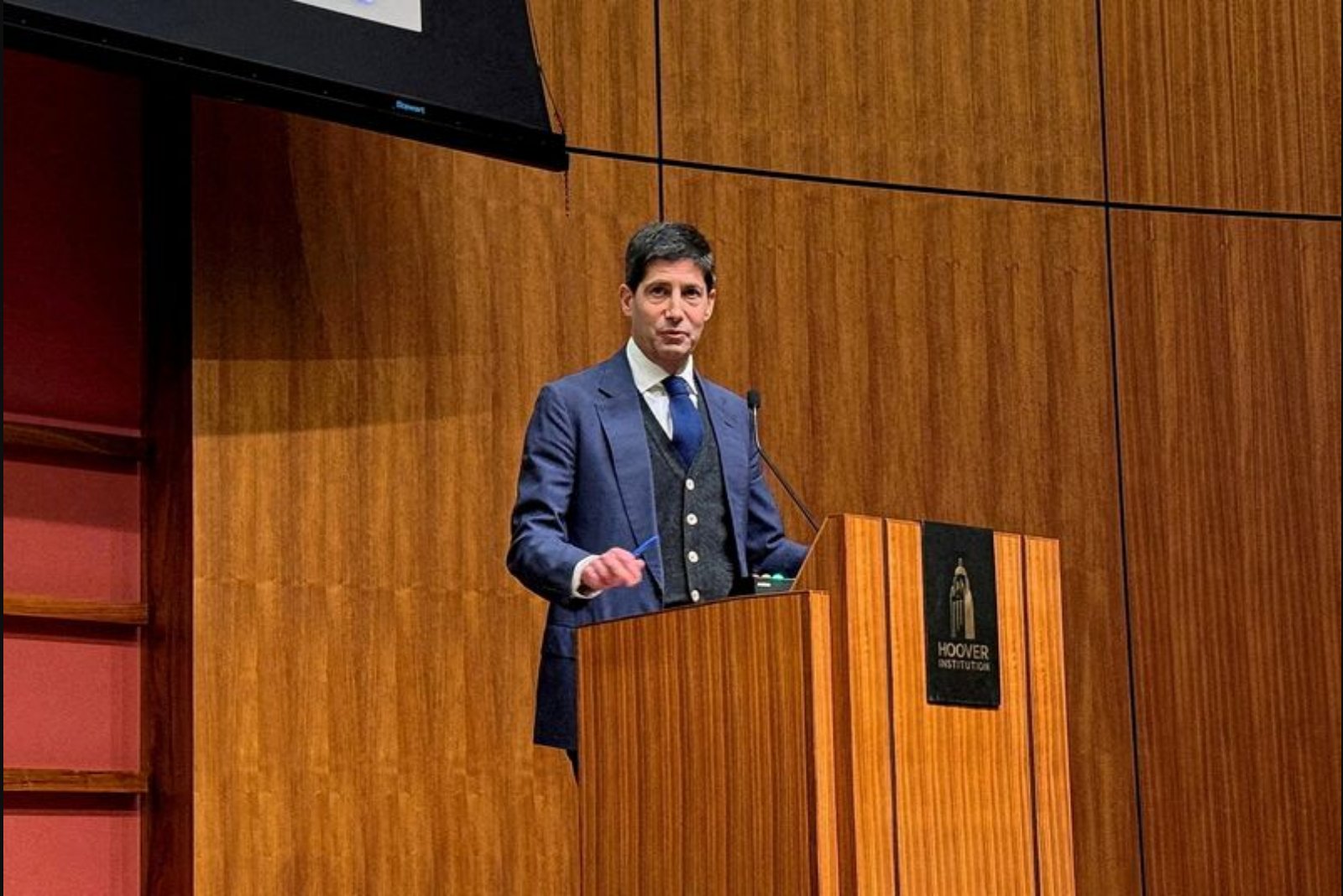
Former Federal Reserve Governor Kevin Warsh is set to appear before the Senate Banking Committee on Tuesday as he seeks confirmation to lead the U.S. central bank, a process that remains entangled in controversy surrounding a criminal probe of current Fed Chair Jerome Powell.
The hearing, scheduled to begin at 10 a.m. EDT (1400 GMT), will open with an on-the-record statement from Warsh, who was nominated by President Donald Trump to replace Powell. Committee members will proceed to questioning that could determine whether they recommend the 56-year-old financier for a seat on the Board of Governors and for a four-year term as head of the central bank.
In an opening statement circulated to the media on Monday, Warsh said he would make interest rate decisions "strictly independent" of political concerns or the remarks of elected officials. He also argued the central bank must be more "reform-oriented" and pledged to collaborate "with the administration and Congress on non-monetary matters that are part of the Fed’s remit."
"Monetary policy independence is essential," Warsh said in his written remarks, words that arrive alongside public comments from the president that he would not nominate someone who did not intend to lower borrowing costs. Warsh has contended that rate cuts are justified on the grounds that technological changes brought about by artificial intelligence will increase productivity. Other central bankers, according to the materials circulated around the hearing, have acknowledged that such productivity gains may materialize over time but cautioned they do not necessarily make immediate rate reductions appropriate while inflation remains stubbornly above the Fed’s 2% objective.
Republican Senator Tim Scott, who leads the Senate Banking Committee, intends to frame the hearing around the issue of affordability, a committee spokesperson said. That focus reflects the committee’s role in scrutinizing the Fed’s record on keeping inflation near its stated target. The Fed has failed to meet its 2% inflation goal for more than five years, initially due to the shock of the COVID-19 pandemic and more recently influenced by administration tariffs and elevated oil prices tied to the war in the Middle East. Those factors are likely to be prominent in committee exchanges, and they represent politically sensitive concerns for Republican lawmakers approaching the midterm elections in November.
Despite broad interest in the hearing itself, the schedule for committee and full Senate votes remains unclear. Republican Senator Thom Tillis, a member of the Banking Committee, has announced he will hold up Warsh’s confirmation until the U.S. Justice Department abandons a probe of Chair Powell that Tillis has described as frivolous and as part of an effort by the president to pressure the Fed to lower interest rates or force Powell’s resignation.
The standoff has raised the possibility that Powell could remain in place even after his formal term as Fed chief expires on May 15. The timing of the Fed’s policy meeting next week could mark Powell’s final decision as chair, but the dispute over the probe clouds that outcome.
U.S. Attorney for the District of Columbia Jeanine Pirro, identified in documents distributed around the hearing as an ally of the president, appears unlikely to drop the investigation into Powell, and the president has not been pressing her to do so. That posture means the administration may have to live with the current chair for an extended period or else attempt to trigger a legal contest by selecting a temporary replacement from among the other six Fed governors.
Historically, when a confirmed successor is not in place, the central bank has appointed an internal "pro tem" Fed chief. Powell’s tenure as a Fed governor runs through 2028, meaning he could remain an influential policymaker even if Warsh wins confirmation. The president has said he might still dismiss Powell if he refuses to vacate his governor’s seat, a step that would likely prompt a legal challenge similar to the one that followed a previous attempt to remove a governor.
The current sequence of events is unprecedented in recent Fed history, where transitions in leadership have typically been handled collegially. Lawmakers on the committee are expected to press Warsh on how he would manage a fraught handoff and run a complex institution that extends far beyond a Washington-based board.
Warsh, who has substantially increased his family’s wealth in the 15 years since departing the Fed’s board, will have an opportunity during the hearing to translate his long-standing critiques of the Fed and its leadership into concrete plans for altering monetary policy or reorganizing how the system operates. The Federal Reserve’s responsibilities encompass a Washington-based board and staff, roughly a dozen regional Federal Reserve banks, and tens of thousands of employees system-wide. Those duties span setting interest rates, operating the payments system, supervising and regulating banks, administering swap lines with foreign central banks, and conducting research on topics as varied as cryptocurrencies and rural health.
Warsh has been an outspoken critic of Chair Powell, and the hearing provides a forum to elaborate on how his criticisms would inform his management style and policy priorities. "The Fed must stay in its lane," he said in his opening statement, echoing a conservative view that the central bank should avoid engagement on topics such as climate change, economic equity, or fiscal policy commentary.
Republicans have generally been supportive of Warsh’s nomination, including some lawmakers who have been close to the administration. At the same time, the confirmation path is complicated by the position of Senator Tillis, who reserves his support pending the outcome of the Powell probe.
Democrats on the committee have indicated they will raise a range of concerns. These include Warsh’s role at the Fed during the 2007-2009 financial crisis and questions surrounding his recent financial disclosures. Those disclosures reportedly show Warsh has committed to divest portions of a portfolio valued at more than $100 million rather than providing full line-item detail on the assets he holds. Members of the committee have suggested they will seek clarification on both his past policymaking role and the scale and structure of his personal financial interests.
As Warsh takes the witness chair, senators will probe not only his policy prescriptions but also how he plans to lead a decentralized and multifaceted institution amid an unusually charged political and legal backdrop. The outcome of the hearing and subsequent procedural votes will determine whether he can assume the top job at the Fed or whether the central bank will navigate an extended period of divided governance.