
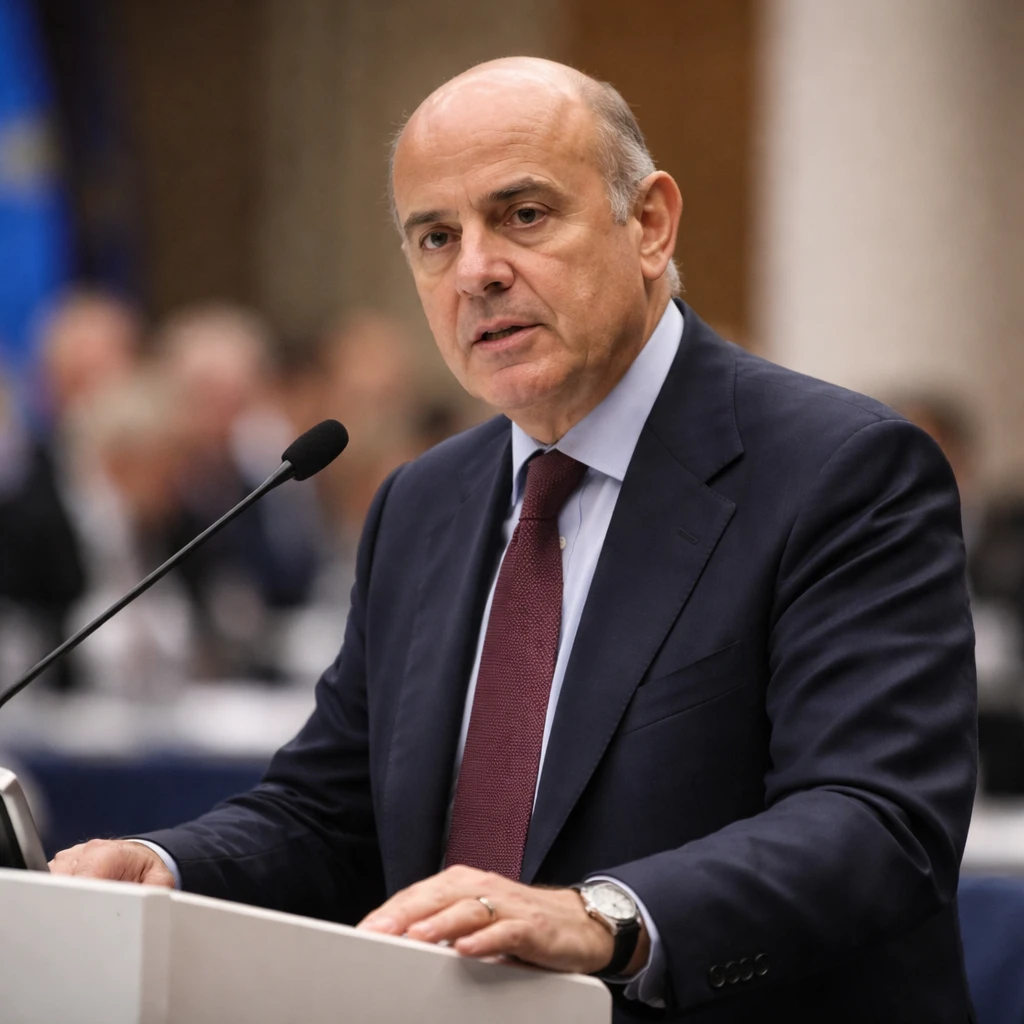
European Central Bank Vice-President Luis de Guindos said policymakers must be cautious when considering interest-rate moves because of the large unknowns tied to the war in Iran. His remarks come as the ECB prepares for a policy meeting scheduled for next week.
De Guindos noted that senior officials, including President Christine Lagarde earlier this week, have signalled there is insufficient evidence at present to lift rates in response to an uptick in inflation driven by higher energy costs. He urged a measured approach, focusing on whether gains in oil and gas prices are starting to push up prices more broadly across the economy.
"I believe we need to be cautious, keep a cool head and analyse the data in a context of tremendous uncertainty," de Guindos said at an event in Spain.
He characterised the current path of energy prices as sitting between the ECB’s baseline forecast - which assumes only a transitory increase in inflation - and a downside scenario in which oil and gas cause larger and more persistent spillovers to the wider price environment.
Separately, de Guindos highlighted three potential sources of financial-stability risk within the euro area: elevated market valuations, loose fiscal policies in some member states, and strains in private credit. He raised those risks as part of his wider commentary on the economic outlook and the prudence required in setting monetary policy amid external shocks.
De Guindos is due to present the final Financial Stability Review of his mandate on May 27. He will step down from the ECB board at the end of that month.
Context and implications
With a policy meeting imminent, de Guindos’ emphasis on data-dependent caution underscores the ECB’s need to weigh energy-driven price moves against the risk of longer-lasting inflationary effects. His financial-stability concerns point to potential vulnerabilities in markets, fiscal positions, and private lending that could affect the transmission of policy decisions.