
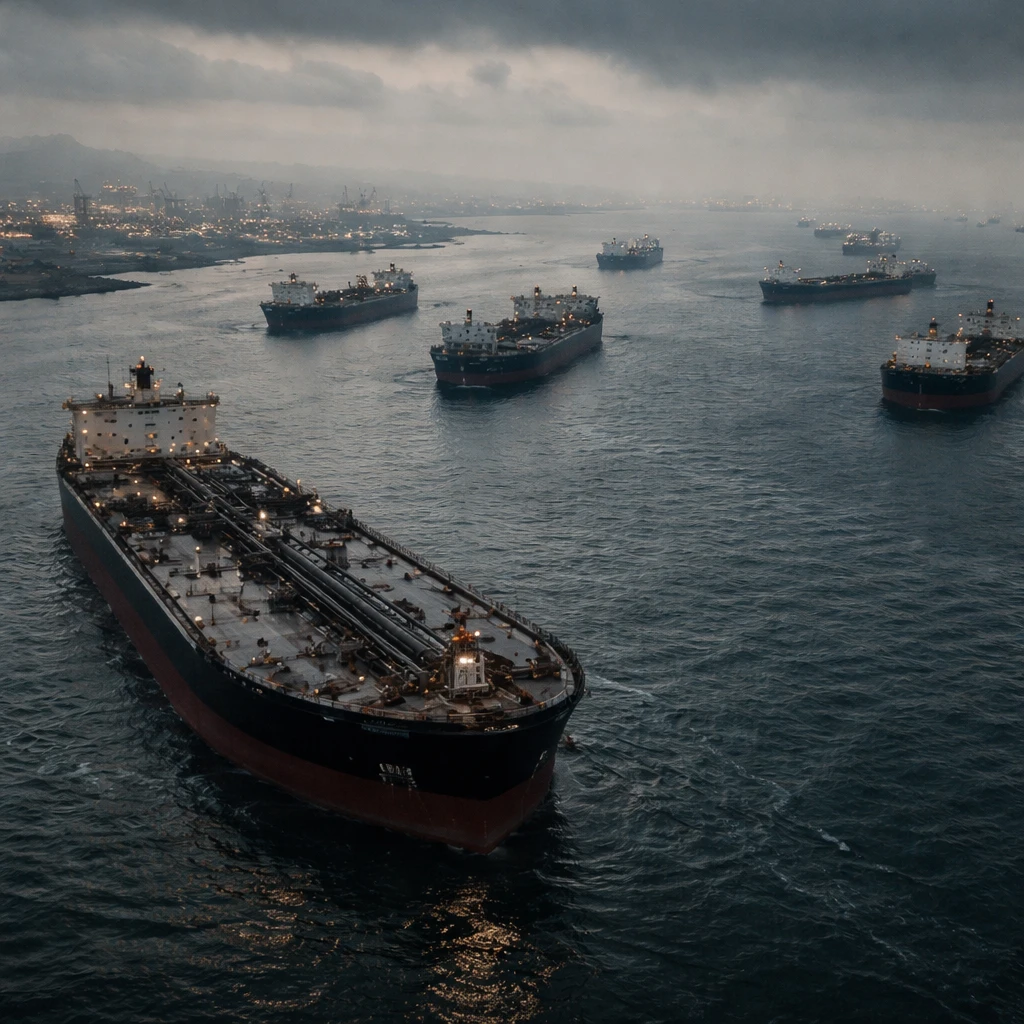
Top independent oil traders have concluded that demand destruction caused by the Iran war is likely to intensify, potentially doubling to roughly 5 million barrels a day next month, according to their public statements and industry commentary.
Gunvor Group said on Tuesday the reduction in consumption could reach 5 million barrels daily in May, which it noted is about 5% of world supplies, and warned that a continued closure of the Strait of Hormuz for three months could precipitate a global recession. Trafigura Group said the demand reductions, which are largely visible today in Asia, will extend to other regions as global prices adjust.
Russell Hardy, chief executive officer of Vitol Group, estimated that the conflict has already removed about 4 million barrels a day of demand. He said that number is likely to increase if the situation endures and echoed Gunvor's caution over possible recessionary consequences if disruptions persist.
The International Energy Agency reports that since the Iran war began at the end of February, crude oil and refined product shipments from the Persian Gulf have been reduced by about 13 million barrels a day. Traders and industry observers say this drop in physical flows has pushed up the cost of actual cargoes and refined products such as jet fuel and diesel, even as futures benchmarks have remained relatively muted.
Trafigura's chief economist, Saad Rahim, addressed the dynamics at the FT Commodities Global Summit in Lausanne, saying: "Demand destruction is happening in places that are not visible pricing centers." He added that "people are underestimating that loss of supply, that then has to be met with some loss of demand somewhere else." Rahim warned that the current adjustments are already under way and that, "if this continues it has to get larger and larger," calling the situation "a critical inflection point."
Concrete examples of the demand response are already apparent. Petrochemical producers in China, Japan and South Korea have scaled back operations, cutting output of plastics used in a wide range of manufactured goods. Airlines from Vietnam to the Netherlands are cancelling flights or preparing contingency measures. Across Southeast Asia, harvest-ready rice fields are reportedly being left fallow as the cost of fuel and fertilizer rises.
Traders emphasize that while some contract and futures markets have not fully reflected the scale of physical shortages, the immediate effect is visible in higher prices for delivered fuels and cargoes. They caution that as these physical price pressures transmit through global markets, demand losses that are currently regional may become more widespread.
Key points
- Demand destruction could reach roughly 5 million barrels per day in May, about 5% of global supplies.
- Supply cuts from the Persian Gulf since late February are estimated at about 13 million barrels per day, and physical fuel costs have surged while futures remain subdued.
- Sectoral impacts include reduced petrochemical output, airline route cancellations, and agricultural disruptions in Southeast Asia.
Risks and uncertainties
- Prolonged closure of the Strait of Hormuz for three months - traders warn this could trigger a global recession.
- Further spread of demand destruction beyond Asia as global prices and supply adjustments transmit to other regions.
- Mismatch between surged physical fuel prices and relatively subdued futures benchmarks, creating market distortions that could deepen supply-demand imbalances.
This article presents the assessments and figures provided by major oil trading firms, industry chiefs and the International Energy Agency without additional commentary.