
China’s official press on Tuesday signalled that Beijing could attach political strings to energy assistance for the Philippines, framing Manila’s request for emergency supplies as inconsistent with its participation in large-scale military drills with the United States and other partners.
An editorial in the ruling Communist Party’s People’s Daily, published under the pen name "Zhong Sheng" - a signature used to express senior foreign policy views - ran under the headline "The Philippines should create conditions for deepening cooperation." The commentary accused Philippine policymakers of acting opportunistically by asking for urgent supplies just days before hosting the annual manoeuvres.
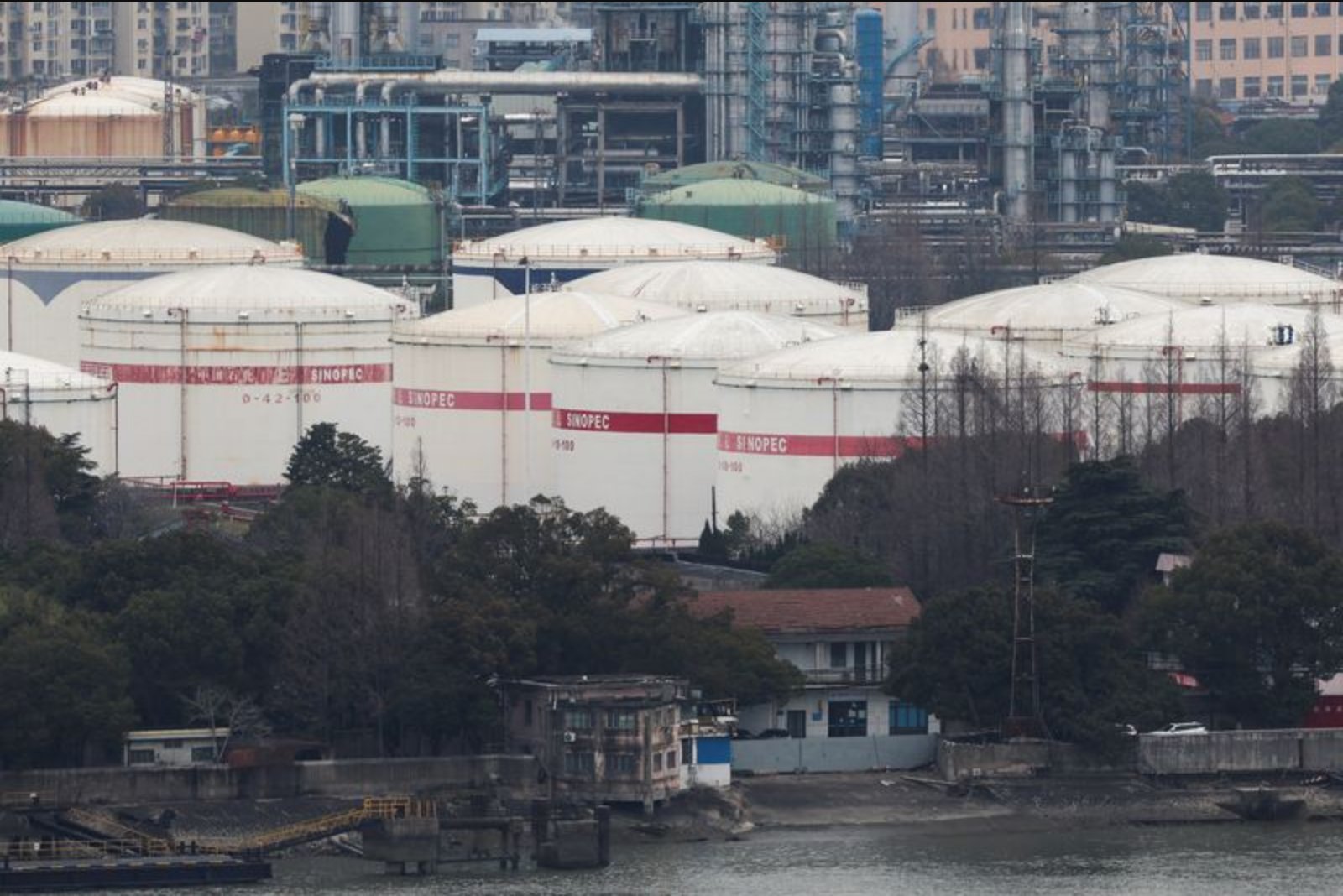
The article stressed China’s capacity in strategic energy reserves, noting that Beijing holds the world’s largest strategic oil inventories, and pointed to its role as a major regional fuel supplier and the world’s second-largest fertiliser exporter. It said Beijing had honoured fertiliser contracts with the Philippines despite an export ban announced in March, and observed Manila’s concurrent interest in opening talks on oil and gas supplies.
At the heart of the editorial was a broader critique of Philippine policy. "These blatantly contradictory words and deeds expose the opportunistic nature of Philippine politicians," it said, adding: "How can (the Philippines) justify acting with complete disregard for the interests of its neighbours and yet expect them to come to its aid in a critical moment?" The piece urged Manila to "create the right conditions" to allow two-way cooperation to deepen.
Analysts view the commentary as evidence that Beijing could increasingly use supply assistance as a lever in diplomatic disputes - a tactic already seen in how China has handled critical minerals exports to Japan. The People’s Daily linked its grievances to the ongoing deterioration in ties between China and the Philippines over overlapping claims in the South China Sea, with particular focus on the contested Second Thomas Shoal.
Second Thomas Shoal, where the Philippines grounded a warship in 1999 and continues to conduct supply missions to personnel aboard, sits within Manila’s 200-nautical-mile exclusive economic zone and is roughly 1,300 km from mainland China. The editorial mapped those tensions onto recent trade and export actions, including reductions in exports of refined fuels to neighbouring countries amid reports in March that Beijing had ordered a ban on fuel exports to prioritise domestic supply.
Eric Olander, co-founder of the China-Global South Project, described the column as reflecting an implied quid pro quo - though not an explicit linking of energy aid to political pre-conditions. "What I saw more was the critique of the Philippines being ungrateful," he said, adding that the Philippines appeared to seek economic emergency relief from China even as it engaged in activities Beijing views as provocative.
China has also been reported to offer energy stability to Taiwan in recent diplomacy, telling Taipei that energy assurances could be available if it accepted Beijing’s rule - a move critics said pointed to Beijing’s willingness to trade supply assurances for political concessions.
The timing of the People’s Daily editorial coincides with the start of Balikatan, the annual Philippine-US joint exercises, which are scheduled to run until May 8. This year’s drills involve more than 17,000 troops and include partners Australia, Canada, France and New Zealand. Maritime strike exercises will be held on Itbayat, the northernmost Philippine island about 155 km from Taiwan, while counter-landing live-fire drills are set for Zambales province on the South China Sea, about 230 km from the Scarborough Shoal that China controls.
Ruby Osman, senior policy adviser at the Tony Blair Institute, said recent energy shocks have validated China’s earlier strategy of stockpiling reserves and strengthened Beijing’s capacity to resist U.S. pressure, making Chinese leadership more confident in leveraging strategic stocks in geopolitical disputes. She cautioned, however, that a comparative advantage in energy reserves does not equate to full energy security for China. "China is still burning through strategic reserves they’d rather not have to, with limited say in the length and scale of the disruption," she said.
The People’s Daily commentary reiterated China’s comparative strengths in energy and fertiliser supply and highlighted Beijing’s decision to fulfil fertiliser contracts with the Philippines despite an export restriction. It also noted Manila’s expressed interest in talks on oil and gas, juxtaposing that with Manila’s participation in substantial multinational military exercises that Beijing criticised in the editorial.
The editorial's tone and the examples raised by analysts underscore a broader trend in which Beijing’s control over certain supply chains and strategic stockpiles can be deployed as diplomatic tools. The commentary's language framed Manila’s actions as inconsistent and urged a recalibration of Philippine conduct to enable closer bilateral cooperation.
Contextual takeaways
- The People’s Daily editorial used public state media to question the Philippines’ simultaneous requests for supplies and participation in large military drills.
- China emphasised its strategic oil stocks and recent export behaviour, including a March export ban on fuels aimed at prioritising domestic needs while honouring specific fertiliser contracts with the Philippines.
- The Balikatan exercises involve multiple partners and include operations near sensitive maritime features and Taiwan, factors Beijing highlighted as sources of grievance.