
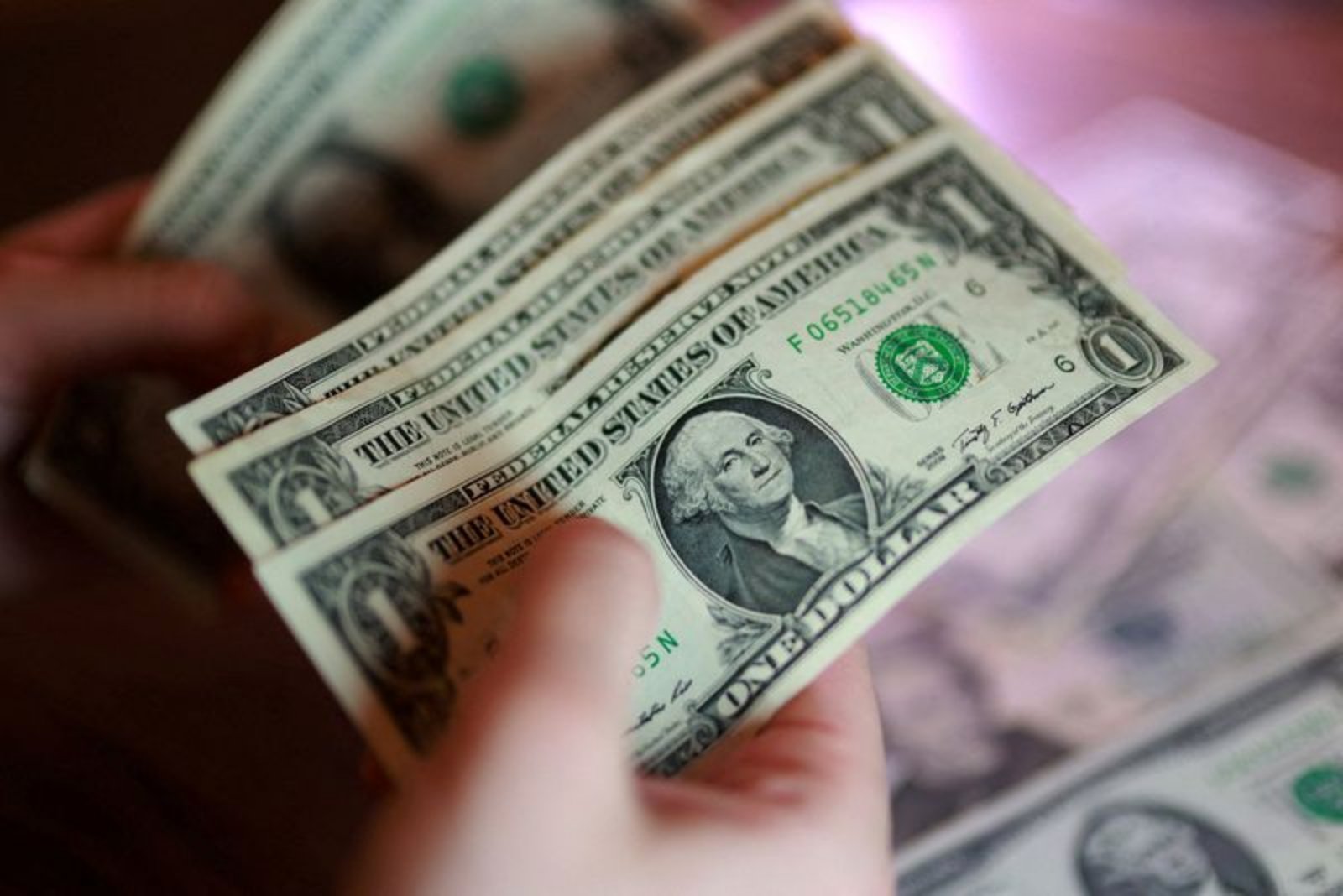
The U.S. dollar edged higher on Tuesday after slipping the previous session, with investors remaining cautious as talks related to Iran continued to inject uncertainty into markets.
U.S. officials said they were confident negotiations with Iran would proceed in Pakistan, but significant obstacles persisted as the two-week ceasefire approached its potential end. The ceasefire was announced by U.S. President Donald Trump on April 7; while he has not disclosed an exact hour for its termination, April 21 would represent the two-week mark, which could fall on Tuesday evening in the United States and Wednesday morning in Iran.
Iran’s armed forces warned they stood ready to deliver an "immediate and decisive response" to any renewed hostile actions by adversaries, leaving markets sensitive to the possibility of a deterioration in the situation.
On the data front for currencies, the dollar index - which tracks the greenback against a basket of major currencies including the yen and the euro - was up 0.15% at 98.24 after a 0.2% decline on Monday. Market participants have generally treated the Iran conflict as a support for the dollar via safe-haven flows, while higher Brent crude futures have pressured the euro and the yen because both regions are major net importers of oil.
"This binary backdrop of geopolitical risk is keeping a tight grip on forex and as long as talks are happening then the U.S. dollar should be on the backfoot," said Paul Mackel, global head of forex research at HSBC, referring to the conflicting signals over de-escalation. "The opposite should also hold true."
Beyond geopolitics, investors were also focused on the confirmation hearing in the U.S. Senate for Kevin Warsh, President Trump’s nominee for chair of the Federal Reserve. The session is expected to probe key areas such as the likely direction of monetary policy, the Fed’s institutional independence and the management of its balance sheet - all of which could influence market positioning.
"Given the audience, it seems reasonable that Warsh may not sound overly dovish versus what is priced in our view, leaving aside his long-term view that AI productivity gains could support lower rates," HSBC’s Mackel added.
Currency-specific moves varied. The euro traded at $1.1782, down about 0.2% on the day. The single currency has been sensitive to energy-price swings, particularly in natural gas: when gas prices spike, the euro has tended to weaken, and it has recovered when gas eased. Futures for TRPC Natural Gas reached $68.20 on March 19 - their highest level since January 19 - and have subsequently retreated to roughly $39.
The euro has nevertheless recovered ground since touching $1.1409 on March 16, a level that was the currency’s weakest since August 2025. Traders continue to price in roughly two European Central Bank rate hikes by year-end, although ECB President Christine Lagarde has said policymakers need more information before drawing firm conclusions on policy. Analysts currently expect the ECB to hold rates steady this month.
The Japanese yen remained near 158.80 per dollar, roughly unchanged, and continued to hover close to the 160-per-dollar threshold that many market participants see as the crucial line for potential intervention. Sources familiar with the Bank of Japan’s thinking told reporters that the BOJ is likely to refrain from raising interest rates at next week’s meeting, citing continued uncertainty about Japan’s economic and price outlook amid fading prospects of a near-term end to the Middle East conflict.
A commodity-linked currency moved in the opposite direction: the New Zealand dollar traded at $0.5911, up 0.3%. New Zealand’s annual inflation rate held steady at 3.1% in the first quarter - a level above the central bank’s target range - which heightens the probability of additional rate hikes by the Reserve Bank of New Zealand later this year.
Market watchers were also preparing for U.S. retail sales data for March due later in the day, with analysts forecasting a robust 1.4% month-on-month increase. That release is likely to influence near-term risk sentiment and could feed back into currency moves if it alters expectations for U.S. growth and monetary policy.
With geopolitical developments, commodity-price dynamics and central bank signals all in play, currency markets remained on edge as participants weighed a narrow set of cross-currents. The combination of a looming ceasefire deadline, energy-price volatility and upcoming central bank-related events left traders inclined to favor safe-haven positioning while also monitoring data that could shift expectations for policy trajectories across major economies.