
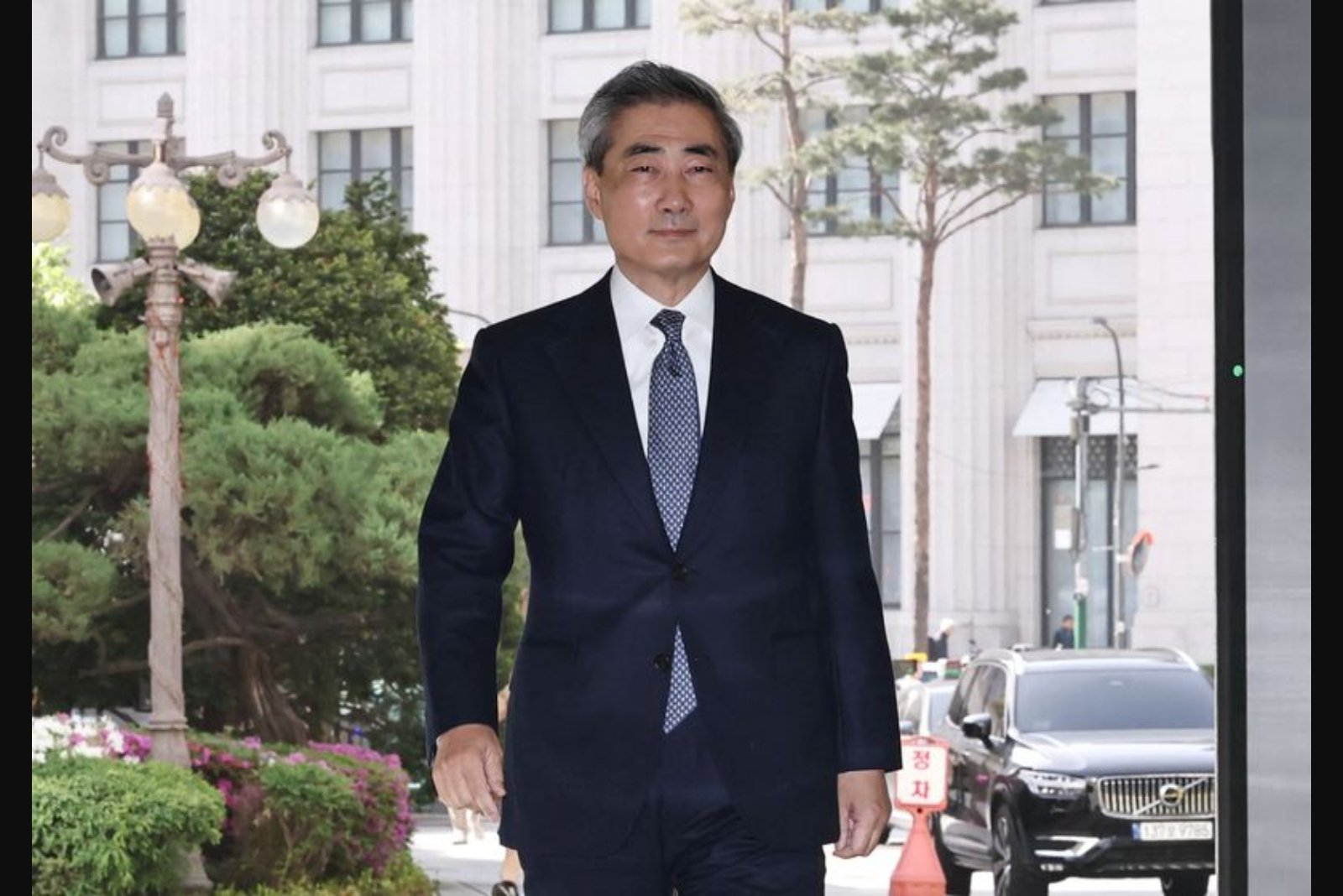
Shin Hyun Song assumed leadership of the Bank of Korea this week with an assertive objective: to expand the won's use beyond Korea's borders without triggering disruptive swings in capital flows. The 66-year-old economist, who gained international recognition for predicting the 2008 global financial crisis well ahead of its eruption, is advocating a rebuilt framework that would roll back some of the protections that have insulated the won - a defensive structure he helped fashion during his prior stint advising the presidency in 2010.
Shin framed the ambition in his inauguration remarks, stating that "the internationalisation of the Korean won is an important task in building a currency infrastructure befitting the status of our economy." He outlined practical steps the central bank plans to pursue in coordination with the government: pushing for round-the-clock trading in the foreign exchange market and establishing an offshore won settlement system. Together, these measures are intended to make the won more convenient to use for cross-border transactions and investment.
The initiative dovetails with President Lee Jae Myung's stated drive to reform South Korean markets and to secure an upgrade to MSCI's developed-market index. Yet advancing the won's international role could also mean loosening some of the limits that currently govern offshore won trading among non-residents - controls that were originally put in place to blunt speculative pressures on the currency.
Timing of the campaign to expand the won's footprint is politically and economically sensitive. The currency is trading at about 1,500 to the dollar, a level not seen in roughly 17 years. At the same time, rising oil prices are contributing to inflationary pressure, and the country faces a gradual demographic contraction that is eroding the size of the labour force. Those conditions complicate any effort to liberalise capital and currency arrangements.
"Even China is struggling to internationalise the yuan. So realistically it would be a challenging goal," said Chang Jaechul, an economist at Pinnacle Economic Research Institute. He added that Shin's considerable network of international contacts is a major asset in pursuing a globally oriented strategy for the won.
Shin's global credentials are central to his plan. He has spent over four decades overseas since 1968, and his academic path took him through Oxford and Princeton. He later worked for more than a decade at the Bank for International Settlements in Basel, where he advised central bankers on issues of financial stability and systemic risk.
His standing among peers is reflected in the words of the Governor of the Reserve Bank of Australia, Michele Bullock, who noted having known and worked closely with Shin across BIS and other international forums. She described him as having a "calm, quiet authority that carries real weight in discussions."
Domestically and in academic circles, Shin has long been a prominent figure. Sohn Byungdoo, former chairman of the Korea Exchange, recalled first meeting Shin in the late 1990s when Shin was a doctoral student at Brown University. Sohn said Shin was unusual at the time for an Asian economist commanding attention in global macroeconomics, calling him "something of a celebrity in the academic world." Sohn later collaborated with Shin on rules for capital flow controls.
For international audiences, one memorable contribution was Shin's use of a metaphor drawn from London's Millennium Bridge to explain systemic risk. He argued that the bridge's swaying was not the result of a single person's reckless action but rather the synchronized, rational responses of many people attempting to steady themselves - a dynamic that, in his view, amplified instability and foreshadowed broader systemic vulnerabilities that underpinned the financial crisis.
Shin's long residence abroad has invited scrutiny at home, including questions about significant overseas asset acquisitions. He has defended those holdings as a natural consequence of a life and career largely spent overseas.
Stephen Morris, an economist at the Massachusetts Institute of Technology, recalled Shin's cultural and professional duality from their time together in Princeton. Morris said Shin consistently identified as Korean, remaining integrated with Korean academics while also active in international economic circles, including taking him to a Korean restaurant in Princeton called Nassau Sushi.
Shin's earlier return to Seoul in late 2009, at the request of former President Lee Myung-bak, placed him at the centre of Korea's response to the global financial crisis. Sohn said Shin "played a pivotal role" in restoring calm during that period, helping to position South Korea as a model for macro-prudential policy in the view of the International Monetary Fund.
There is an additional personal and historical note to Shin's appointment. He joins the Bank of Korea where his late father, Shin Byung-hwa, once worked. In 1957, Shin Byung-hwa helped account for Korea's first post-war foreign currency reserves, a sum reported at less than $207 million. Those reserves have since expanded roughly 2,000-fold to make South Korea's holdings the world's 12th largest as of March this year.
The juxtaposition is striking: the architect of much of Korea's financial defences now holds responsibility for calibrating how much of that protection can be relaxed in pursuit of a more internationally used currency. The policy challenge is to make the won more accessible and attractive outside Korea while avoiding the capital flow volatility and instability that the existing framework was designed to prevent.
As Shin begins his term, markets and policymakers will be watching how the central bank balances the dual objectives of opening Korea's currency and preserving financial stability amid a weak exchange rate, inflationary pressures from higher oil, and a shrinking workforce.