
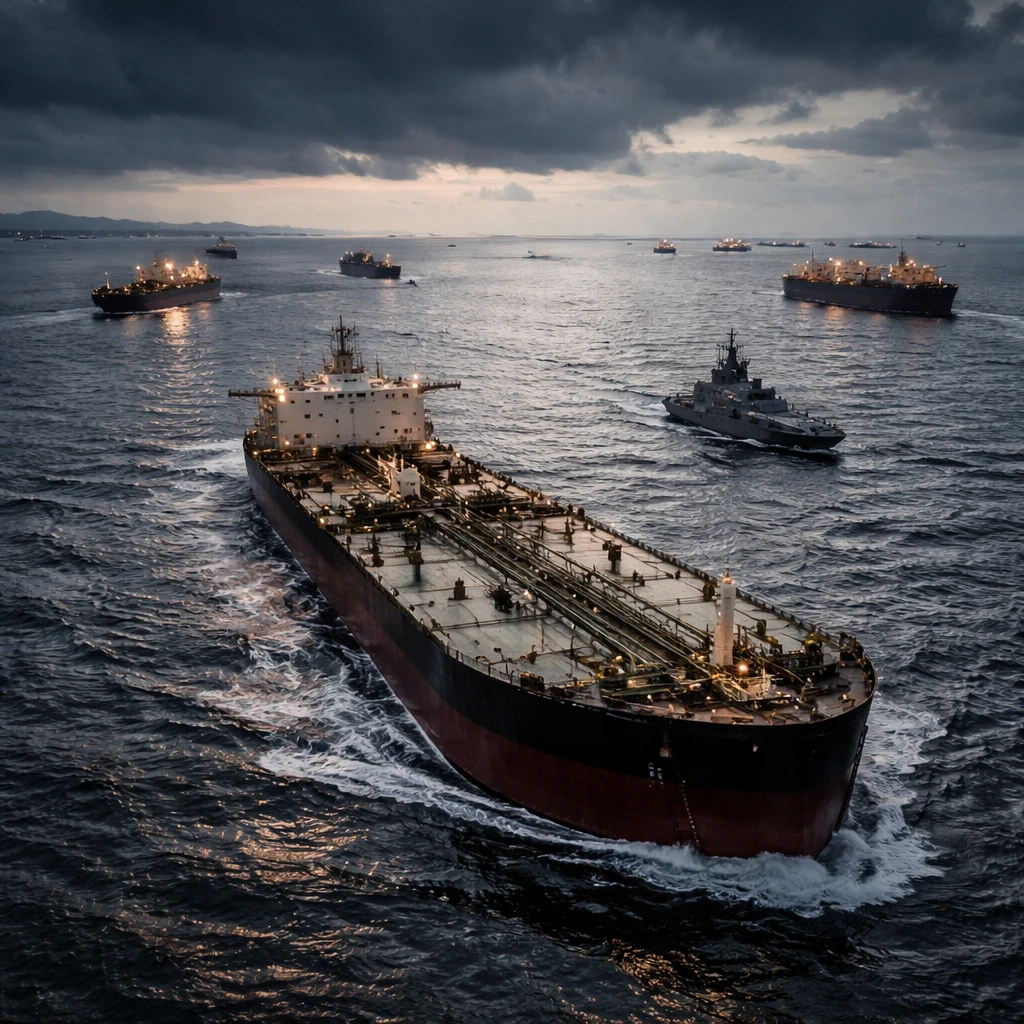
Oil markets moved quickly higher in early Asian trading after reports that U.S. forces had captured an Iranian cargo vessel and Tehran reimposed a closure of the Strait of Hormuz following a short-lived reopening over the weekend.
Brent crude initially surged as much as 7% to $97.50 a barrel before trading at $95.71 a barrel by 18:56 ET (22:56 GMT). The price action reflected concerns about potential interruptions to flows through the strait, a critical chokepoint for global oil shipments.
Operational and political developments
U.S. President Donald Trump said the military fired on an Iranian-flagged cargo ship that allegedly attempted to breach a U.S. blockade, and that the vessel had been seized. Iranian state media described the U.S. action as provocative and reported that Tehran vowed retaliation.
The sequence of events followed a volatile weekend in which Tehran briefly reopened the Strait of Hormuz only to close it again within 24 hours. Earlier in the sequence, oil prices had plunged more than 9% on Friday after Iran initially signaled the reopening. Over the weekend, Iranian forces fired on multiple vessels attempting to transit the channel.
Negotiations and wider conflict context
The recent incidents have heightened tensions and cast doubt on whether additional peace talks are feasible before a two-week ceasefire expires on April 21. President Trump said U.S. envoys were due in Islamabad on Monday evening for further discussions, while Iranian state media reported that Tehran had rejected additional peace talks.
The broader conflict environment remains acute: the U.S.-Israel war on Iran has entered its eighth consecutive week. The weekend's developments provided limited indication of immediate de-escalation.
Market implications
Persistent disruptions to oil flows through the Strait of Hormuz are expected to keep crude prices supported in the near term. The channel accounts for roughly a fifth of global oil consumption, so interruptions there have direct implications for pricing and supply security.
Oil had climbed to nearly $120 a barrel at the start of the conflict, before giving back much of those gains in the previous two weeks after President Trump highlighted the prospect of peace talks. Last weekend's negotiations produced little progress, and it remains unclear whether further meetings between Washington and Tehran will occur.
Summary of current state: Renewed closure of the Strait of Hormuz and the U.S. seizure of an Iranian-flagged cargo ship have sent crude prices higher and increased uncertainty about near-term oil flows. Diplomatic efforts have produced limited results and the ceasefire timeline presents a near-term constraint on prospects for de-escalation.