
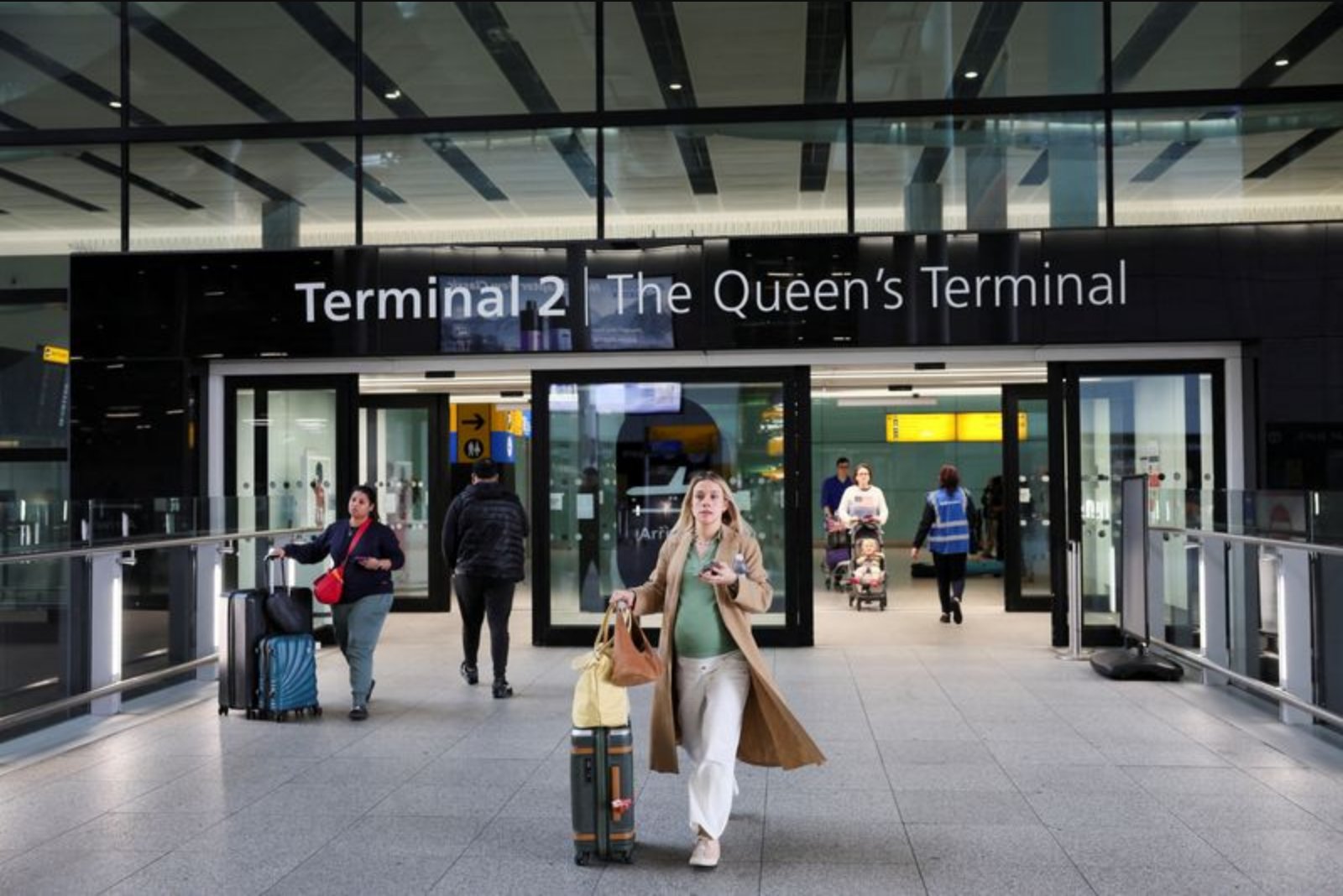
Several leading Asian airlines disclosed marked growth in passenger demand on routes to Europe in March as travellers rerouted around Middle Eastern hubs disrupted by regional conflict. The trend prompted airlines to reassign capacity and mount additional flights to meet increased long-haul bookings transiting through Asian gateways, even while jet fuel prices doubled.
Cathay Pacific said it responded to an "upsurge in market demand" by adding flights and capacity to Europe in March and April so that passengers could choose alternative routings. "We have ... mounted additional flights and capacity to Europe in March and April to cater for an upsurge in market demand as passengers prioritised alternative routings," Cathay Chief Customer and Commercial Officer Lavinia Lau said. The carrier expects strong demand to continue through April, supported by Easter travel and higher long-haul bookings that transit through Hong Kong.
Singapore Airlines reported the largest regional improvement, with European load factors rising to 93.5% in March from 79.7% a year earlier. The carrier attributed the jump partly to spillover Europe-bound traffic as available seats through Middle East hubs fell.
Before the conflict, data compiled by aviation analytics firm Cirium showed that Emirates, Qatar Airways and Etihad together handled roughly one-third of passenger traffic between Europe and Asia, and carried more than half of passengers flying from Europe to Australia, New Zealand and Pacific Islands. The disruption reduced that flow and redirected traffic toward Asian gateways.
Although the three major Gulf carriers have been gradually restoring services, flight-tracking data from Flightradar24 indicate they have each reached at least 60% of their pre-conflict flight numbers. Restoring schedules has not erased all challenges: Australia issued warnings advising citizens not to travel to or change planes in the Gulf, which can leave travellers without travel insurance coverage for those itineraries.
That warning, together with traveller risk aversion, has raised the price for itineraries that avoid the Gulf. Google Travel pricing data show that for economy-class return travel between Sydney and London leaving next Saturday, the cheapest option via the Middle East is Etihad through Abu Dhabi at A$1,861 - equivalent to $1,333.59. Avoiding the Middle East, the lowest one-stop fares are A$3,144 on United Airlines via San Francisco and A$3,901 on Thai Airways via Bangkok.
Bank of America analysts noted in a recent note that tight pricing and share gains on Asia-Europe routes could persist for 6-12 months even after the conflict ends, citing forward booking lags and sustained traveller caution.
Korean Air said its estimated first-quarter results showed a strong European performance, with operating income rising 47.3% to 517 billion won - about $349.38 million. The Seoul-based carrier attributed part of that improvement to increased demand between Europe and Asia related to the Middle East war, with European passenger revenue up 18% from a year earlier. Korean Air expects continued transit demand from reduced capacity offered by Middle East carriers.
Qantas has also adjusted its network to capture displaced passengers, reallocating capacity from U.S. and domestic services to expand flights to Paris and Rome. "Qantas continues to see strong demand for international travel to Europe as customers seek alternative routes," the Australian airline said.
Operationally, Airservices Australia reported that Australia-Middle East traffic in March fell 77% year-on-year as services were rerouted via other cities. The agency said Asian gateways such as Singapore, Kuala Lumpur, Hong Kong, Tokyo, and Seoul are capturing a large portion of the displaced demand and could emerge as alternative hubs and travel destinations.
The shift has several moving parts: airlines are redeploying capacity to match demand patterns; passengers are factoring in travel advisories and insurance coverage when choosing itineraries; and pricing dynamics are tightening on routes that benefit from displaced volumes. At the same time, carriers face higher unit costs from a doubling in jet fuel prices, which could pressure margins even as revenues from Europe-bound services improve.
Exchange-rate figures cited in company statements were provided as context: $1 equals 1,479.7600 South Korean won and $1 equals 1.3955 Australian dollars.
Context and implications
Airlines with hubs in Asia have benefited from rerouting preferences while Gulf carriers work to restore pre-conflict capacity levels. This realignment has produced near-term revenue gains and higher load factors for carriers that have been able to shift aircraft and seats toward Europe-bound services. However, the combined effect of elevated jet fuel costs and the need to reconfigure networks presents a mixed operating picture.