
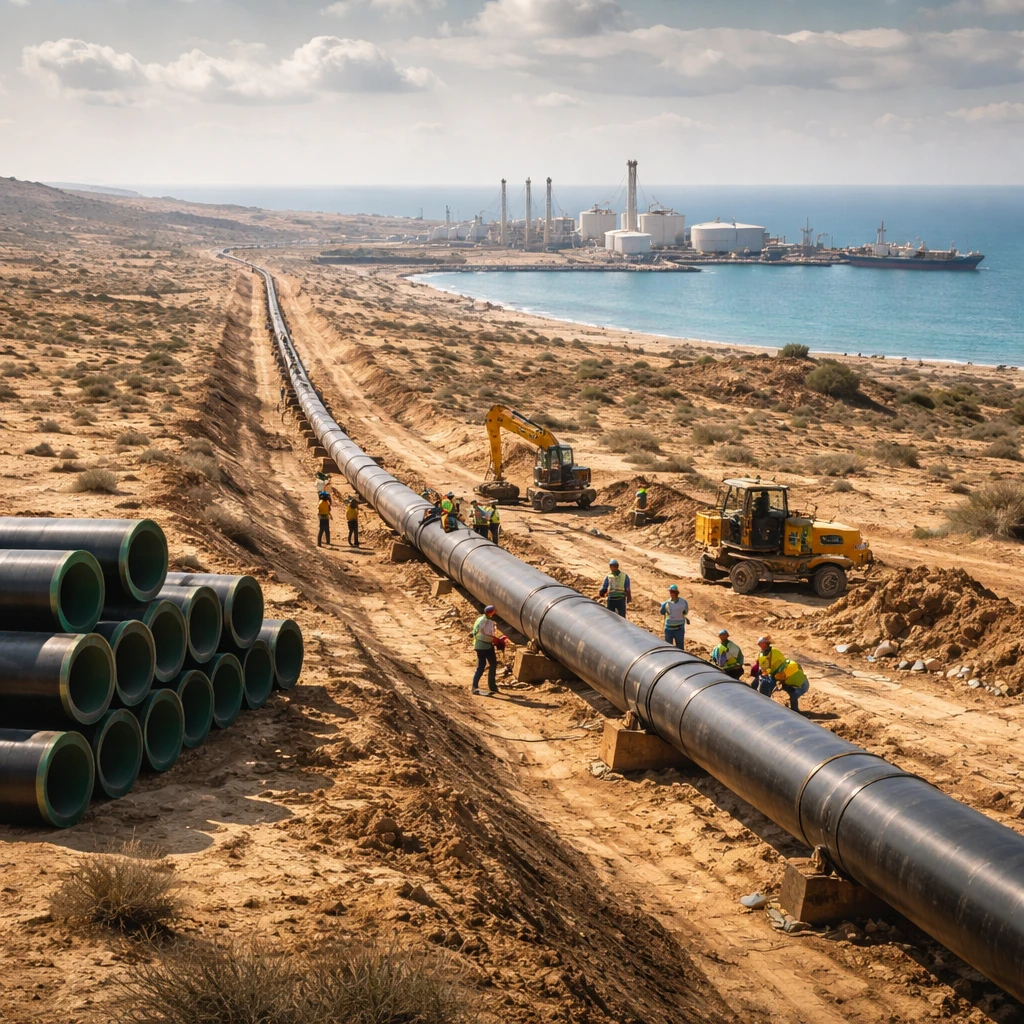
International Energy Agency Executive Director Fatih Birol has called for a new oil pipeline linking Iraq’s southern Basra producing region to Turkey’s Mediterranean export terminal in Ceyhan, arguing the project would provide a permanent alternative to the increasingly unreliable Strait of Hormuz.
Birol made the recommendation in an interview with the Turkish newspaper Hürriyet, saying "The vase has been broken once, and it’s very difficult to fix," a remark that stressed the depth of the disruption affecting seaborne energy flows through the Gulf.
Currently, roughly 90% of Iraq’s oil exports depend on transit via the Strait of Hormuz. That concentration of flows has left Iraqi output vulnerable to episodic restrictions on navigation, which Birol said has elevated the merits of a land-based export route to Turkey.
Why Birol sees the pipeline as strategic
Birol framed a Basra-Ceyhan pipeline not merely as an infrastructure undertaking but as a strategic asset. He asserted the link would strengthen supply security for Europe, offer Iraq and Turkey an alternative export corridor and reduce reliance on maritime transit that has shown growing volatility.
The case for the pipeline comes as existing regional transit alternatives face pressure. The U.S.-backed India-Middle East-Europe Economic Corridor (IMEC) has effectively stalled, and instability in the Red Sea has added further strain to regional shipping routes. In that environment, Turkey has been cast as an increasingly viable conduit for moving Persian Gulf energy toward European markets.
Political and financial considerations
Birol acknowledged the project would require a firm political accord between Ankara and Baghdad to proceed. He described the current regional environment as making the timing "exactly right" for pursuing the pipeline, while also noting Europe could play a role in financing what is typically the most challenging aspect of cross-border energy infrastructure.
Financing support from European partners was offered as a potential way to overcome the capital hurdle that often stalls multinational pipeline projects, according to Birol’s comments.
Immediate context - maritime volatility
The appeal for a land-based export route is reinforced by continuing instability in the Strait of Hormuz. As of Saturday, the situation remained fluid: Iran re-imposed restrictions on commercial shipping less than a day after declaring the channel open. The renewed volatility has already forced liquefied natural gas tankers to divert, highlighting the operational disruptions affecting energy shipments.
Birol characterized the Basra-Ceyhan proposal as a "strategic project" addressing a market that can no longer assume stability in Persian Gulf maritime logistics.