
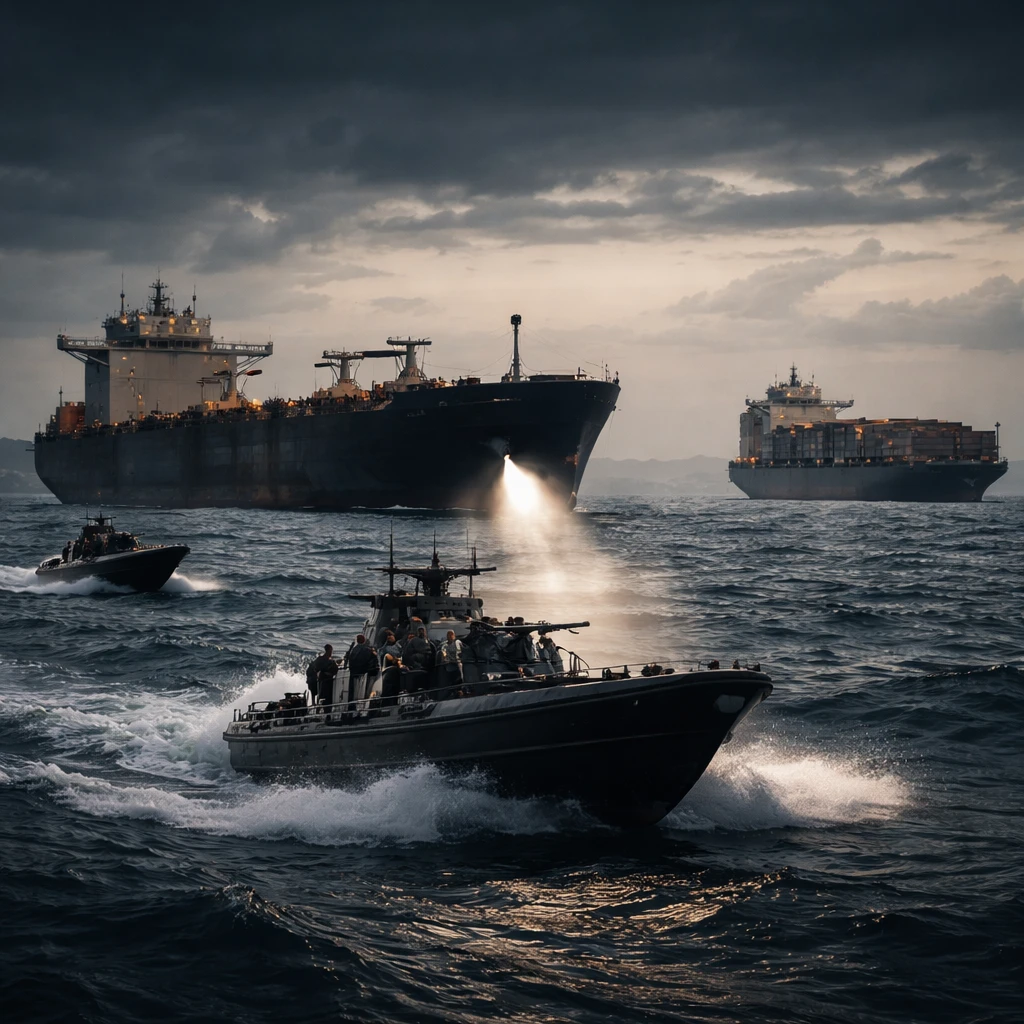
Iran’s military wing moved to re-seal the Strait of Hormuz hours after Tehran’s diplomatic lead said the crucial oil transit route had been reopened, in a public display of intra-state disagreement that has immediate implications for energy markets and global shipping.
Foreign Minister Abbas Araghchi, described in reports as a relative pragmatist, declared the waterway "completely open" earlier in the day in what appeared to be a conciliatory gesture amid a U.S.-brokered cease-fire. Within hours, however, the Islamic Revolutionary Guard Corps (IRGC) intervened to reverse that decision.
According to accounts of the incident, Revolutionary Guard gunboats fired on commercial vessels near the Omani coast and broadcast radio warnings that effectively barred unauthorized traffic from transiting the strait. Those actions underscore a widening division between Iran’s diplomatic apparatus and its influential military faction.
Analysts cited the episode as illustrative of a deeper challenge: "The West often acts as if Iran is a country with a clear chain of command," when, as the incident demonstrated, the military faction retains substantial control over strategic assets and can act independently of civilian leadership.
The confrontation further highlights the fragile state of negotiations and the tenuous prospects for a lasting diplomatic resolution. Araghchi’s earlier statement appeared intended to signal openness to compromise under the framework of a U.S.-brokered cease-fire, but the IRGC’s actions undercut that messaging in real time.
"Because the main arbitrator is gone, the fight between different factions has started," said Saeid Golkar, an expert in Iran’s security services at the University of Tennessee at Chattanooga.
Observers link the recent assertiveness of hard-line elements to fractures within Iran’s governance following the death of Supreme Leader Ayatollah Ali Khamenei. Those fractures, described by some as part of a "mosaic defense" approach, have given room for military commanders to operate with broader autonomy.
The immediate economic consequence is heightened uncertainty for energy markets and investors. With the Strait of Hormuz temporarily closed by IRGC actions and U.S. naval blockades reported to remain in effect, operators and trading desks face an ambiguous outlook for crude and shipping flows.
As IRGC commanders act independently and, according to reports, sometimes to exact revenge for wartime losses, the likelihood that diplomatic achievements will hold against on-the-ground realities appears diminished. The public contradiction between Tehran’s diplomats and its military leaders makes it harder to translate negotiated agreements into sustained, stable outcomes.
Implications: The incident underlines the difficulty of securing a definitive end to the conflict when key state actors send conflicting signals. Energy, shipping and investor confidence are the sectors most directly affected by the renewed closure.