
World April 19, 2026 12:37 AM

Major Blaze Razes Some 200 Homes in Sabah Water Village, Forcing Hundreds to Flee

Strong winds and close-set wooden stilt houses accelerated spread; federal government mobilizes basic aid and temporary relocations

By Caleb Monroe
Major Blaze Razes Some 200 Homes in Sabah Water Village, Forcing Hundreds to Flee

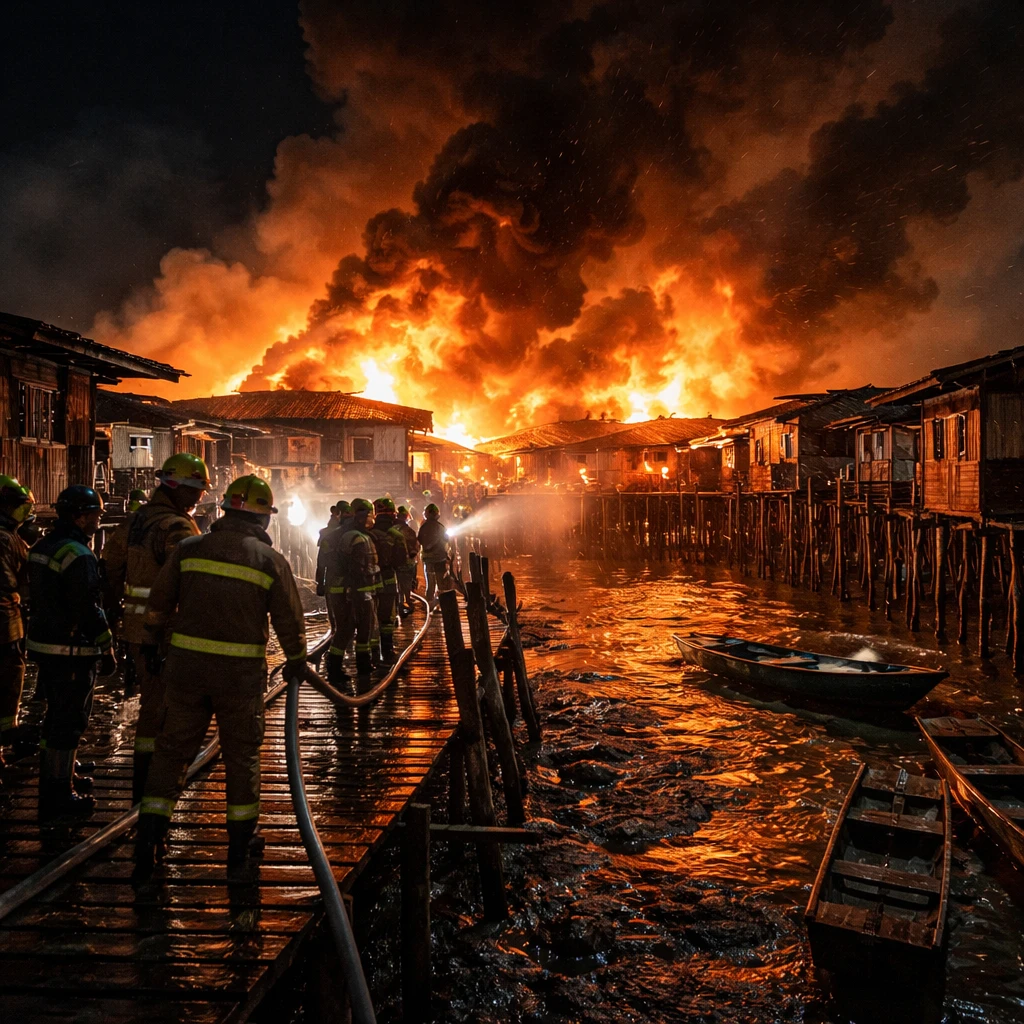
A fire in a coastal water village in Sabah's Sandakan district destroyed roughly 200 houses in the early hours of April 19, displacing about 445 people registered at a temporary relief centre. Authorities cited strong winds, tightly packed wooden stilt homes and low tide hampering access to open water as key factors in the blaze's rapid spread. The federal government is coordinating with state authorities to deliver immediate assistance and temporary housing.

Key Points

  • Around 200 wooden stilt houses in a coastal water village in Sandakan district, Sabah, were destroyed by a fire that authorities were alerted to at about 1.32 a.m. (1732 GMT) on April 19.
  • About 445 people have been registered as displaced at a temporary relief centre, according to unofficial figures cited by state media.
  • Operational challenges cited by authorities included strong winds, the close proximity of houses which sped the fire's spread, and low tide conditions that hampered access to open water for firefighting efforts - affecting emergency response and local housing stability.

KUALA LUMPUR, April 19 - A large fire swept through a coastal community in Sabah's Sandakan district in the early hours of Sunday, destroying around 200 houses and displacing hundreds, state media reported.

Officials were alerted to the blaze at approximately 1.32 a.m. (1732 GMT), the district's fire and rescue chief, Jimmy Lagung, was quoted as saying. He attributed the rapid spread of the flames to a combination of strong winds and the close proximity of the dwellings.

"Strong winds and the close proximity of the houses caused the fire to spread rapidly, while low tide conditions also made it difficult to obtain an open water source," Lagung said.

The fire erupted in one of Sabah's so-called water villages - coastal settlements where wooden houses are built on stilts over the water. These villages are home to some of Malaysia's most economically vulnerable communities and include many stateless and indigenous residents.

Bernama cited provisional figures from a temporary relief centre in Sandakan indicating that roughly 445 people have been displaced so far. The figure reflects people who have registered at that centre and was described as unofficial.

Malaysia's Prime Minister, Anwar Ibrahim, said the federal government is coordinating with Sabah authorities to provide basic assistance and temporary relocation for those affected. In a Facebook post, the prime minister emphasized immediate safety and relief efforts.

"The priority now is the safety of the victims and immediate assistance on the ground," he said.

Local fire officials highlighted operational challenges during the response, noting in particular that low tide limited access to open water sources that might otherwise have been used to fight the flames. The structural characteristics of the water village - wooden stilt houses situated close together - were identified as contributing to how quickly the fire moved through the community.

Relief efforts are underway with federal and Sabah authorities coordinating to deliver urgent support and temporary shelter. Information on longer-term housing solutions, repair needs, and the full scale of damage remains limited to the details provided by authorities and relief centres at this stage.


Location: Sandakan district, Sabah state, Malaysia.

Time reported: Around 1.32 a.m. (1732 GMT) on April 19.

Estimated impact: Approximately 200 homes destroyed; about 445 people registered at a temporary relief centre as displaced.

Risks

  • Rapid fire spread due to strong winds and densely packed wooden houses increases the difficulty of containment and amplifies immediate humanitarian needs - impacting emergency services and housing sectors.
  • Low tide conditions limited access to open water sources for firefighting, posing a risk to timely suppression efforts and contributing to further property loss - affecting local disaster response capacity.
  • Displacement of hundreds of residents, including stateless and indigenous community members, raises short-term needs for shelter and basic assistance, with potential strains on local relief resources and social services.

More from World

Allies Warn Rapid US–Iran Framework Could Produce Fragile, Technically Deadlocked Outcome Apr 19, 2026 Tens of Thousands Assemble Near Luanda as Pope Leo Holds Mass in Kilamba Apr 19, 2026 Rat Poison Detected in HiPP Baby Food Jar in Austria, Police Say Apr 19, 2026 Lukashenko Signals Readiness to Meet Trump After Negotiations Yield 'Big Deal' Apr 19, 2026 Former Australian soldier publicly rejects war crime charges, vows to clear name Apr 19, 2026