
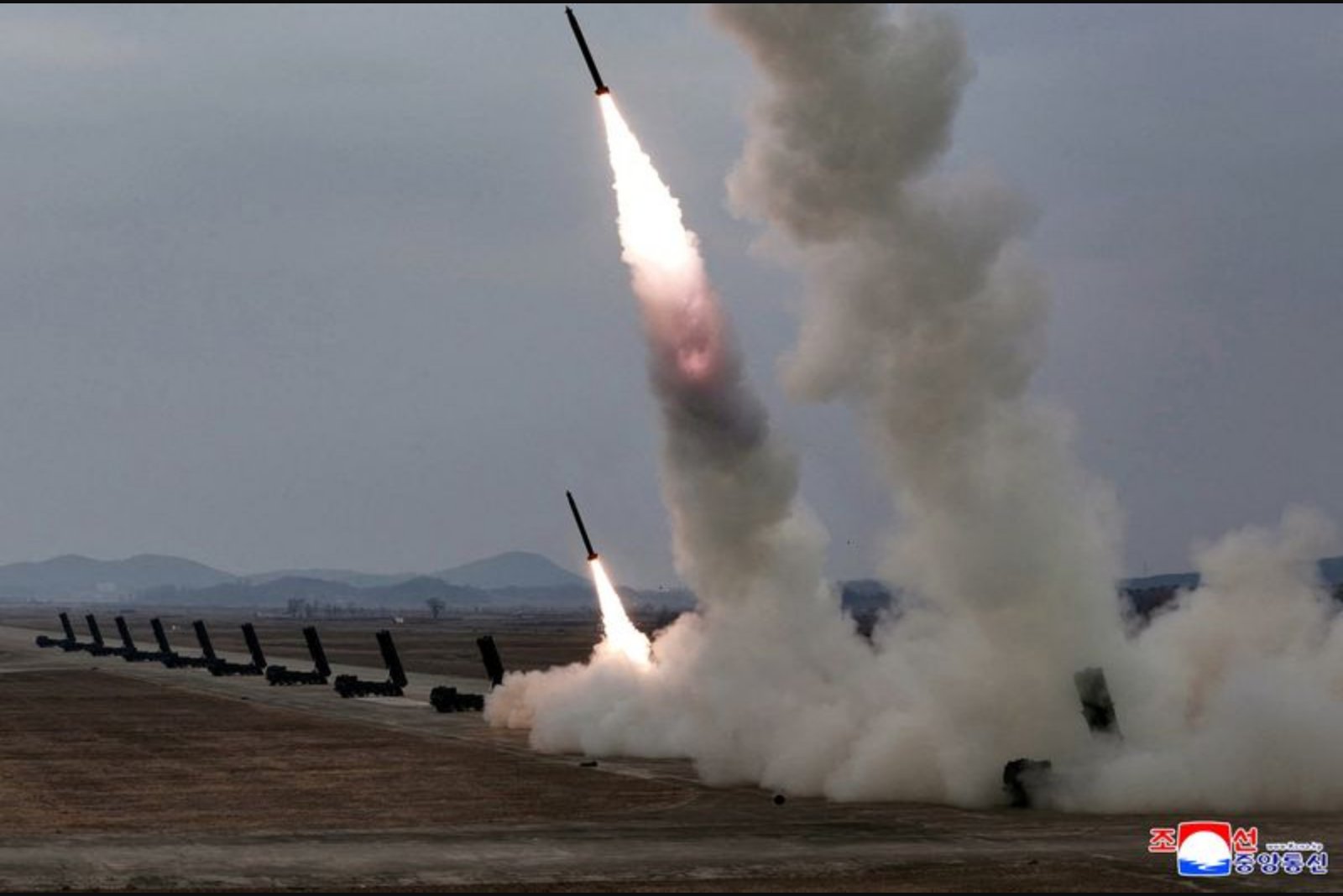
SEOUL, April 19 - South Korea and Japan said that North Korea fired multiple ballistic missiles toward the sea off its east coast on Sunday, in the latest episode of weapons tests aimed at accelerating the country’s military development.
South Korea’s military reported the missiles were launched near the city of Sinpo at around 6:10 a.m. in a formal statement. Japan’s government said on social media that the ballistic missiles are believed to have fallen near the east coast of the Korean Peninsula, and that no incursion into Japan’s exclusive economic zone has been confirmed.
Authorities in Seoul moved quickly after the launches. South Korea’s presidential office convened an emergency security meeting, media reports said, reflecting heightened concern among officials over the rhythm of recent North Korean tests.
The launches represent the North’s seventh ballistic missile test of the year and its fourth this month. Such tests violate U.N. Security Council resolutions against the North’s missile programme. Pyongyang rejects the U.N. ban and says it infringes its sovereign right to self-defense.
Commenting on the wider strategic context, Lim Eul-chul, a professor at Kyungnam University, said: "As the U.S. is focused on Iran, the North sees this as a golden time to upgrade their nuclear power and missile capability."
The timing of this round of launches coincides with diplomatic preparations between China and the United States. China and the U.S. are preparing for a summit in mid-May where U.S. President Donald Trump and Chinese President Xi Jinping are expected to discuss North Korea, according to available accounts.
Separately, International Atomic Energy Agency chief Rafael Grossi said on Wednesday that North Korea has made "very serious" advances in its abilities to turn out nuclear weapons, including the probable addition of a new uranium enrichment facility.
In late March, North Korean leader Kim Jong Un declared that Pyongyang’s status as a nuclear-armed state was irreversible and said expanding a "self-defensive nuclear deterrent" was essential to national security.
Context and implications
The reported launches increase pressure on regional security arrangements and complicate diplomatic efforts aimed at curbing Pyongyang’s weapons programmes. The immediate security responses by Seoul and monitoring by Tokyo reflect concern about potential escalation and the proximity of tests to international maritime zones.
At present, Japanese authorities have not confirmed any entry of debris into Japan’s exclusive economic zone, and both Seoul and Tokyo continue to monitor the situation.