
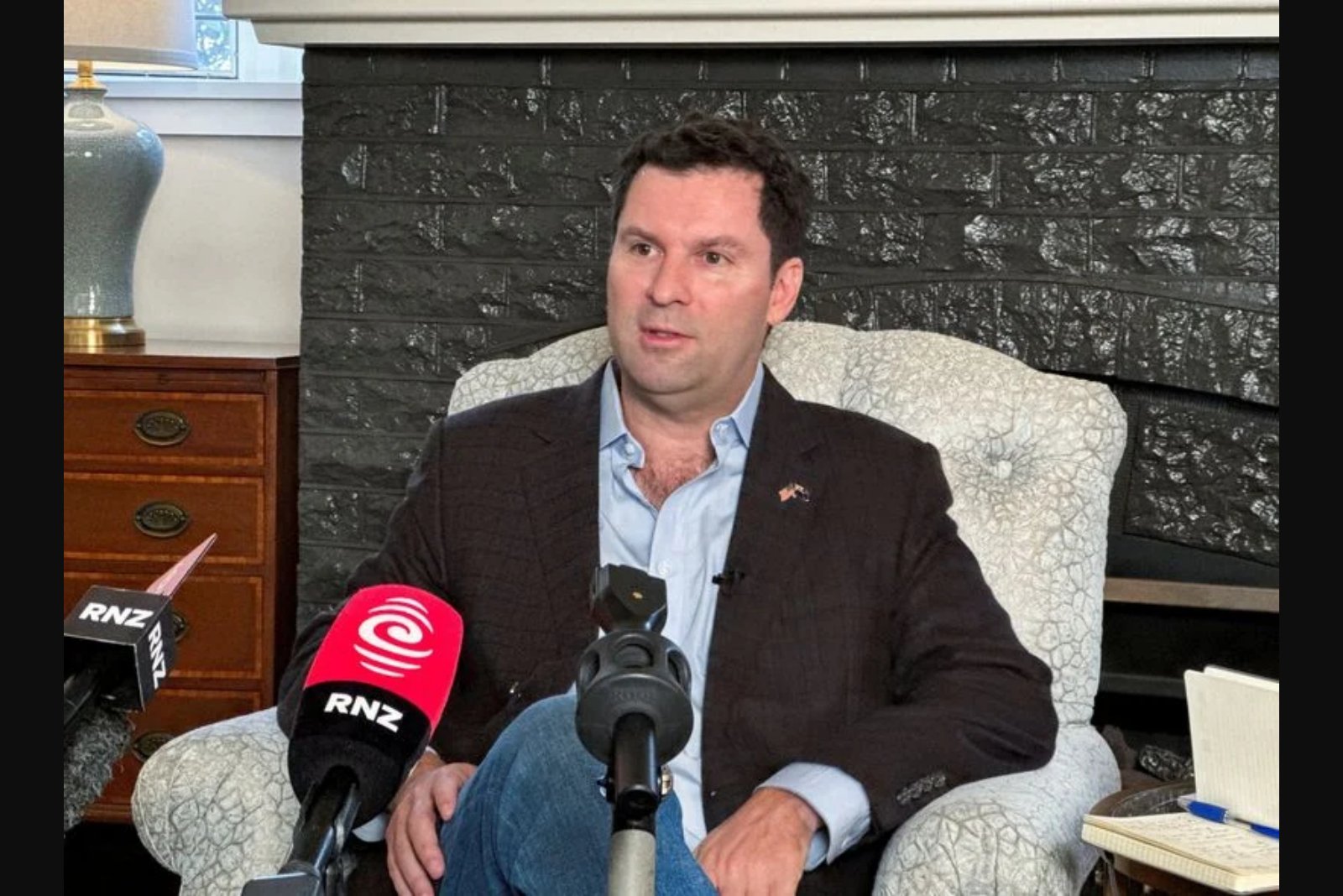
The United States' newly installed ambassador to New Zealand and several Pacific island nations said this week that ensuring access to seabed minerals in the Cook Islands has risen to the top of his diplomatic agenda.
Speaking at a press conference, Jared Novelly - the U.S. ambassador accredited to New Zealand, the Cook Islands, Niue and Samoa - described how critical minerals surged in priority in recent months. Novelly said that when he received briefings in October and November of last year the topic was relatively minor, but by February and March of this year it had advanced to what he described as "either 1A or 1B" on his list of priorities.
Washington has placed securing critical minerals at a strategic level as part of its effort to reduce dependence on supply chains dominated by China and to support defence and clean-energy industries. The Cook Islands' maritime zones contain deposits of polymetallic nodules - mineral-rich formations sought after for batteries and other technologies. The Cook Islands government has permitted exploration activities in these waters but has not authorised commercial extraction.
In February, the United States and the Cook Islands signed a non-binding framework on critical minerals research and supply-chain security that explicitly includes deep-sea minerals within Cook Islands waters. The Cook Islands has also agreed an exploration and research arrangement with China.
Novelly, described as a Missouri businessman and sports team owner and serving as the inaugural U.S. ambassador to the Cook Islands, said he plans to spend time in the country and intends to introduce U.S. companies that could assist with extracting the minerals. A request for comment to the Cook Islands government did not receive an immediate reply.
Alongside commercial and research initiatives, Novelly used the platform to caution Pacific island states about the potential downsides of deepening ties with Beijing. He said, "China has made no bones about they want a base in the Pacific, they want an expanded presence there," and urged island nations to recognise "what a debt trap is" and to be aware that "there can be strings attached."
The ambassador observed that China has in recent years become a significant actor in the Pacific through development finance and investments in ports, airports and telecommunications, while also seeking a larger role in military, policing, digital connectivity and media. He noted that China maintains its relationships are based on mutual respect and focused on delivering benefits for Pacific peoples.
Novelly also said he is exploring avenues to strengthen Pacific economies beyond traditional aid channels, including measures to reduce the cost of remittances sent to island communities.
Novelly arrived in New Zealand earlier this week and presented his diplomatic credentials to the governor-general on Wednesday. He then hosted the embassy's annual July 4 reception. While affirming that Washington respects New Zealand's role in the South Pacific and values defence cooperation, he said allied partners must increase their spending on security. He framed this as mutual responsibility, saying, "It’s important that you care as much about your defence as we care about your defence."
The ambassador's arrival comes at a time of shifting public sentiment in New Zealand. A June survey by the Asia New Zealand Foundation found that, for the first time in a decade, New Zealanders view Washington as more of a threat than China. Novelly said that perception has not matched his personal experience during visits, noting there seems to be "a very friendly camaraderie that occurs between folks from the U.S. and Kiwis."
On New Zealand's long-standing nuclear-free policy - which restricts visits by nuclear-powered or nuclear-armed vessels - Novelly said any decision on changing the policy rests with Wellington. Nevertheless, he expressed a desire to see a U.S. aircraft carrier visit Auckland harbour, stating, "I would really like the opportunity to work with New Zealand on that."
The ambassador's comments underscore Washington's dual-track approach in the Pacific: advancing strategic access to critical resources and strengthening security relationships, while also urging caution about influence stemming from other major powers. How these priorities will translate into concrete projects, timelines and outcomes in the Cook Islands and across the region was not detailed in the remarks.