
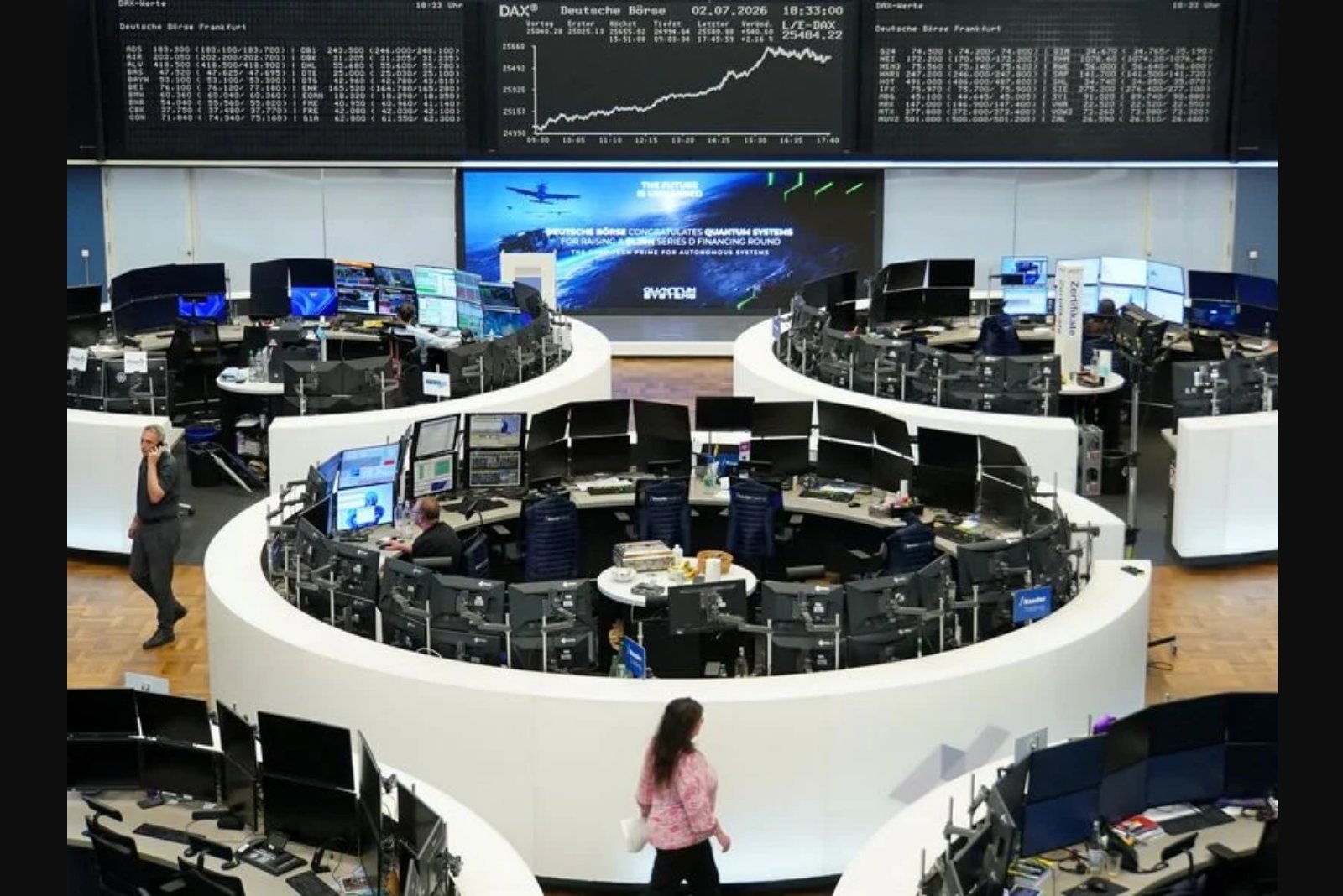
Global stocks were set to finish the week with their strongest performance since early May after a batch of regional purchasing managers' readings suggested a pickup in activity in parts of Asia. The MSCI All-Country World Index advanced 1.7% for the week as PMI prints from China, Japan, Australia and Singapore on Friday indicated solid expansion across the region.
Those PMI signals helped shore up investor confidence following a tepid US jobs report on Thursday that dampened expectations of an imminent interest-rate increase from the Federal Reserve. The softer labour-market data appeared to reduce near-term tightening bets, supporting risk assets into the end of the trading week.
Asia-Pacific markets outside Japan recovered from mid-week losses after a mixed session in the United States. MSCI’s broad index for the region climbed 1.1%, snapping a two-day slide, with South Korea’s Kospi among the stronger performers. Early European futures pushed higher: pan-region contracts rose about 0.3%, German DAX futures gained 0.5% and FTSE futures added 0.2%. S&P 500 e-mini futures were up roughly 0.3% in early trade.
Market moves were uneven within sectors. Tech hardware names retreated after pressure on US chipmakers, with chip-related weakness spilling over into some equipment suppliers. Separately, Meta shares moved notably lower amid internal remarks from the company’s leadership acknowledging that development of AI agents had not progressed as quickly as expected, according to a recording of the town hall. That acknowledgement weighed on investor sentiment toward parts of the broader technology complex.
On the currency front, the US dollar traded near 161.125 yen and was broadly flat against the yen as the greenback gave up earlier gains. Market participants noted thinner liquidity heading into a US holiday on Friday, and traders remained attentive to the potential for intervention in the yen - a factor that contributed to muted dollar strength.
Additional market indicators printed across European and global calendars that could influence prices include a range of services PMIs: France and Germany are due to report S&P services PMI readings for June, alongside the euro zone's final S&P services PMI and the UK's S&P Global services PMI. France will also publish industrial output for May. The UK is scheduled to conduct short-dated government debt auctions covering one-, three- and six-month bills.
Beyond macro data, lighter headline flow included a consumer-focused item touching on celebrity rumours that appeared in tabloid coverage, with reports speculating that a high-profile couple may have married privately. While such stories attract retail attention, they are peripheral to the primary drivers of market movement this week.
Overall, the week closed with equities recovering from a mid-week pullback as Asian activity gauges signalled expansion and US labour data reduced the immediacy of further rate action from the Fed. Market participants will be watching the upcoming services PMIs and UK debt supply for fresh directional cues.
Key points
- MSCI All-Country World Index rose 1.7% for the week after PMI data from China, Japan, Australia and Singapore pointed to regional expansion - sectors affected include broad equities and cyclical industries.
- Softer US jobs data tempered expectations of an immediate Federal Reserve rate hike, supporting risk assets - this has implications for interest-rate sensitive sectors such as real estate and infrastructure.
- Technology names felt pressure after chipmaker weakness and a disclosed slowdown in AI agent progress at a major social-media company - the tech and semiconductor sectors were the most directly impacted.
Risks and uncertainties
- Progress on AI development at major tech firms may lag expectations, creating downside risk for technology and related hardware stocks.
- Thin liquidity around US holidays and the prospect of currency intervention could increase volatility in FX markets, notably USD/JPY, affecting exporters and dollar-hedged assets.
- Upcoming services PMIs and domestic debt auctions in Europe and the UK could introduce fresh volatility if readings deviate from current expectations, impacting sovereign debt markets and rate-sensitive sectors.