
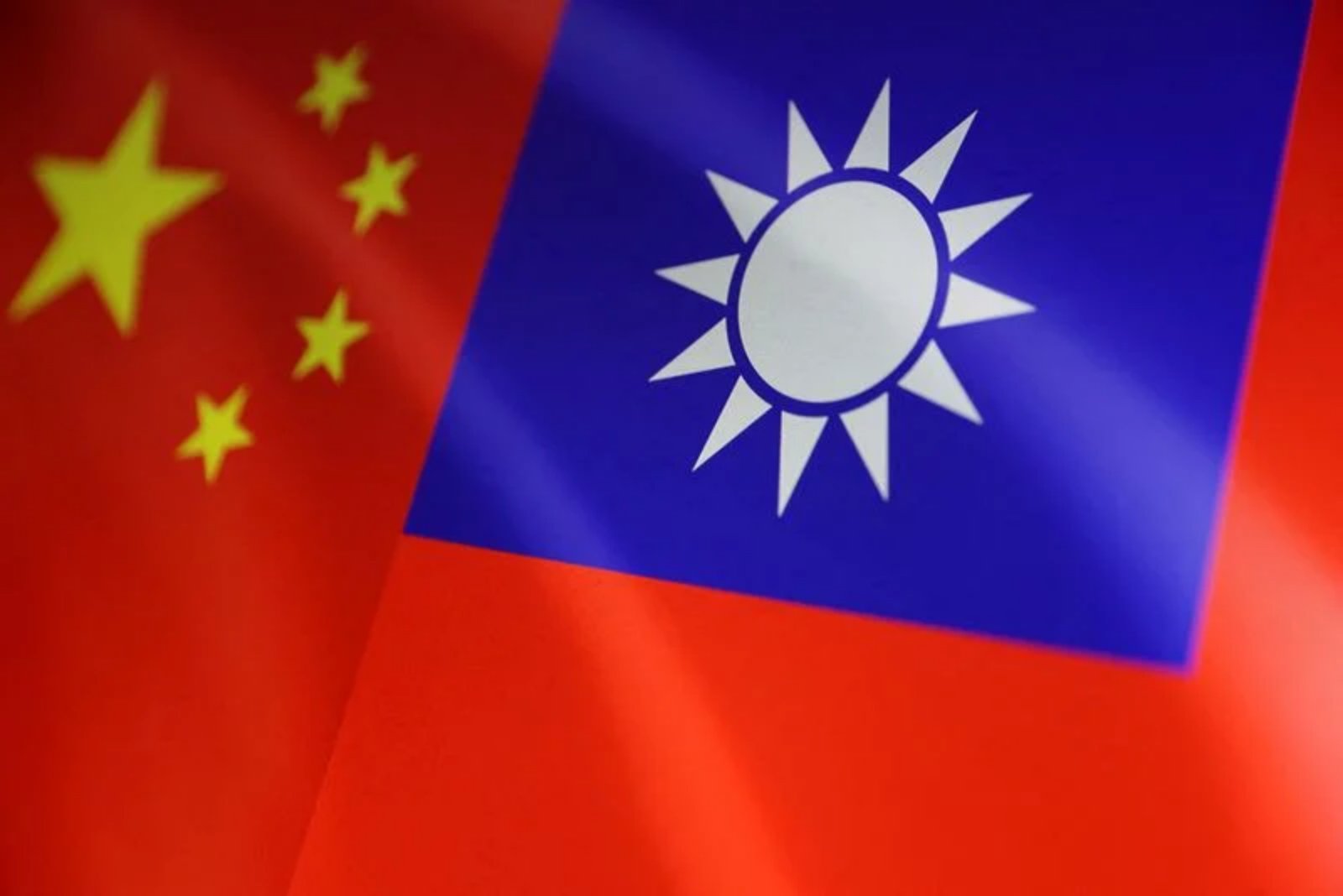
Government and military officials gathered in Taiwan's mountainous Nantou county for a two-day resilience exercise that recreated a layered crisis combining conventional military threats with natural disaster, sabotage and disruptive information operations.
The closed-door drill involved more than 370 participants from local, central government and military agencies and tested whether officials could maintain essential functions in the face of a sequence of shocks: an effective Chinese blockade, an earthquake, hijacked television broadcasts, targeted infrastructure attacks, a run on banks, public disorder and eventually a simulated invasion.
Chi Lien-cheng, the minister without portfolio charged with overseeing the exercise, framed the exercise in stark terms, saying: "Our adversary is right on our doorstep, just across the Taiwan Strait. That is very close." He added that defense ultimately depends on the islanders themselves: "If you don’t defend your own country, who else will defend you? I think people are beginning to understand that," while acknowledging resource and readiness gaps that the drill aimed to reveal: "But that’s all right. We are here to see how they carry out the exercise - whether they have the will to absorb these concepts and put them into practice."
China has not renounced the use of force to assert control over Taiwan, and Taiwan's authorities maintain that only the island's people can decide their future. As the exercise drew to a close, Taiwan reported a separate real-world Chinese "joint combat readiness patrol" around the island involving warships and at least 22 military aircraft, including nuclear-capable H-6 bombers. China's Taiwan Affairs Office accused Taiwan's president of "deliberately escalating" tensions and warned that such actions "will only push Taiwan into the dangerous situation of war and conflict," calling him "a destroyer of cross-strait peace, a creator of crises in the Taiwan Strait, and an instigator of war," according to a spokesperson, Zhu Fenglian.
The practical sequence of the exercise began with a seven-hour tabletop session and progressed to live field components. Field drills included intercepting and shooting down a drone threatening a power plant and establishing food rationing stations for displaced residents. A simulated magnitude 6.8 earthquake - incorporated into the scenario - was credited with 12 fatalities and compounded already strained response efforts by disrupting infrastructure, increasing public unease and forcing relief prioritization amid wartime contingency planning.
At the drill's response centre, large screens displayed a United States military-developed tactical mapping and communications system that provided officials with real-time locations of hostile targets. Adjacent to that were two Taiwan government platforms that used interactive mapping and icons to visualize ongoing crises, tracking ambulance movements and resource allocations. The displays reflected a central objective of the exercise this year: deeper integration between civilian authorities and military reserve commands.
Lin Fei-fan, deputy secretary-general of Taiwan’s National Security Council and the official overseeing the resilience program, said military reserve commands coordinated directly with local government bodies during the exercise. "The message to our adversary is clear: when they know Taiwan's society is prepared, they will have to think very carefully about whether to launch such a costly war against Taiwan - one that may not succeed," he said.
Organizers said recent conflicts such as those in Ukraine and the Middle East informed changes to the exercises, which were made more realistic and stressful for emergency responders, hospital operators and infrastructure managers. Practical measures included testing underground hospital operations and inviting professional hackers to attack and stress-test government networks and websites.
One simulated attack targeted the response centre itself, with a drone strike that left the fate of 75 officials unknown and forced authorities to practice switching operations to a backup centre. A military participant in the drill, speaking anonymously because of the sensitivity of the subject, said: "We can’t actually put them through a real war, so we can only use scenarios to help them understand that war is extremely cruel - all situations will be severe and urgent. If you have not made these preparations in peacetime, you will not be able to respond."
Nantou, the island’s only landlocked county, was tasked with a crucial strategic role in the exercise: transforming into a "rear area" capable of sheltering people fleeing frontline counties and serving as a fallback operational hub as frontline forces engaged an invading adversary. Dozens of grassroots government units across the country participated remotely by livestream, responding to fast-moving scenarios and rapid-fire questions from commanders in the response centre.
Local officials were pressed on detailed contingencies ranging from how many draft-age men could be mobilized overnight to the county's current inventory of essentials such as baby formula. Those operational details tested capacities far beyond routine administrative duties for many local staff, including utilities workers and household registration officers.
As the scenarios became more severe, the atmosphere in the response centre intensified. Exchanges between commanders and subordinates grew tense at times as some participants struggled to provide immediate answers about readiness and resource status.
Countering information warfare was another core component of the exercise. Organized disinformation and sabotage featured heavily: broadcasts on local television were simulated as hijacked and replaced with Beijing-produced propaganda, while misinformation flyers were scattered in public areas. The media-manipulation scenario mirrored themes also explored in contemporary Taiwanese fiction, and prompted officials to conduct mock press briefings and teach participants to identify and rebut false narratives.
Lee I-yuan, a 75-year-old borough chief who led a community response team during the drill, said the training was valuable for distinguishing real information from fabrications. "If the other side attacks, they will definitely use AI to spread false information," he observed.
The exercise displayed an intensified focus on integrating military assets with civilian emergency systems, testing redundancies, and exposing gaps in planning and supplies. By simulating simultaneous shocks - kinetic threats, a significant earthquake, infrastructure hits, cyberattacks and information warfare - organizers sought to pressure-test command chains, logistics, communications and public information protocols under the strain of layered crises.
Officials and participants repeatedly emphasized the limits of training scenarios: they cannot fully replicate the chaos of an actual conflict or disaster. Still, authorities argued that these more demanding and realistic drills are necessary to reveal vulnerabilities and to build the habit of rapid, coordinated response across civil and military institutions.
The exercise also underscored how non-military sectors could be affected by escalatory scenarios: banking systems might face runs or operational disruptions; utilities and power infrastructure could be targeted; hospitals and health services may need to operate in degraded conditions; and broadcast and digital media channels could be exploited to seed confusion. Local governments were tested across that spectrum, from mobilization and logistics to information management and community-level leadership.
Participants said the drill's intensity and realism were intended not only to improve tactical and logistical responses, but also to convey a strategic signal. If Taiwan's society and systems demonstrate higher resilience, officials reasoned, potential adversaries may reconsider the costs and likelihood of success of aggressive action.
As Taiwan continues to expand such exercises, the Nantou event represents a notable example of the island's effort to bring together civilian administrators, reserve military commands and emergency services under stressed, multi-domain scenarios. Organizers said the tests revealed both strengths and weaknesses that will inform future planning and resourcing decisions.