
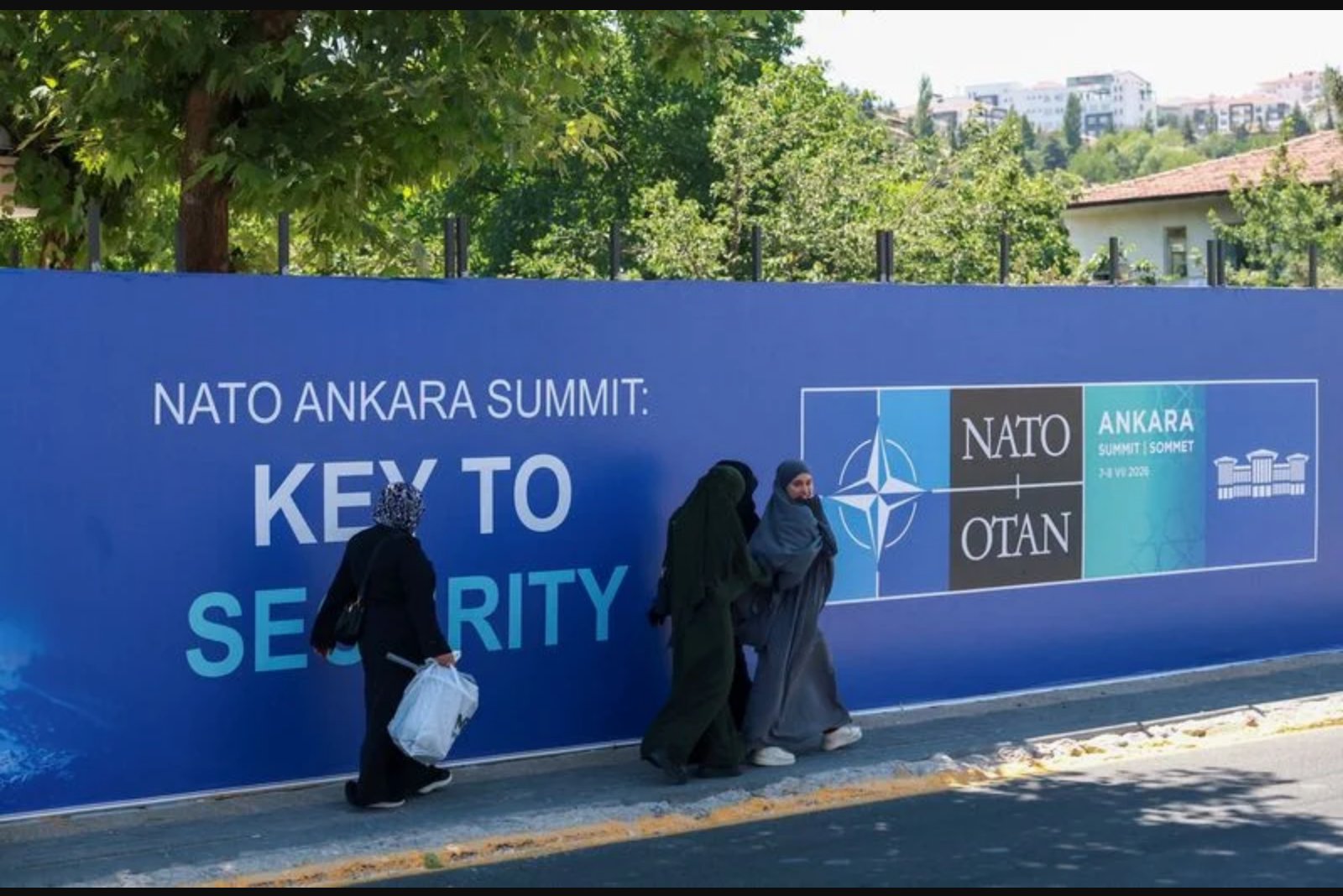
NATO leaders are scheduled to meet next Tuesday and Wednesday in Ankara, where European allies plan to emphasize that they are taking on greater responsibility for the continent's defence even as tensions with U.S. President Donald Trump persist.
European officials expect the summit to demonstrate follow-through on pledges to raise defence spending and to show tangible results in the form of combat-ready capabilities and a scaled-up defence industrial base. NATO Secretary General Mark Rutte has framed the gathering as an opportunity to convert recent spending increases into concrete military capacity, saying the summit will focus on turning extra spending into combat-ready capabilities and significantly scaling up defence industries.
Rutte, speaking in Berlin, reiterated that NATO remains a transatlantic alliance but argued that the balance needs adjustment so that European allies and Canada assume greater responsibility for conventional defence in Europe while continuing to work closely with the United States. He highlighted recent figures showing that European members and Canada increased defence spending by $90 billion in 2025 compared with the prior year, pushing total allied defence expenditure above $570 billion.
Leaders are expected to sign arms deals worth tens of billions of dollars and to pledge ongoing funding for weapons destined for Ukraine as it fights Russia's invasion. Ukrainian President Volodymyr Zelenskiy is due to attend a dinner hosted by Turkish President Tayyip Erdogan. Erdogan is also scheduled to hold bilateral talks with Trump during the summit.
European diplomats say they are hopeful that Trump’s personal rapport with Erdogan and with Rutte will help ensure a smooth summit, but they acknowledge uncertainty given the recent strains in transatlantic relations. Relations have been tested by multiple episodes, including Mr. Trump’s public suggestion about acquiring Greenland from Denmark and the U.S. military campaign in Iran that unsettled the global economy and was conducted without prior consultation with many European partners.
In a Truth Social post on Thursday, President Trump complained that the United States was spending money to protect NATO members "without getting any benefit from so doing". European leaders have pushed back, arguing that the alliance serves U.S. security interests as well as European ones and noting that they are heeding longstanding calls from the U.S. president to increase their defence budgets.
Last year in The Hague, NATO leaders agreed to a revised spending target: 3.5% of GDP on core defence items such as weapons and troops by 2035, up from a previous target of 2% of GDP. They also committed to an additional 1.5% of GDP dedicated to broader defence-related investments, including measures to enhance cybersecurity. Rutte noted these commitments as part of the push to make European spending more operative and to strengthen defence supply chains.
At the same time, NATO has seen concrete reductions in U.S. military resources assigned to collective defence plans. Washington has announced troop withdrawals from Europe and cuts to forces earmarked for NATO defence planning, including an aircraft carrier, refuelling aircraft, fighter jets and drones. The United States has also initiated a six-month review of its military posture in Europe.
Those moves, together with the diplomatic disputes and the Iran operation, have left the alliance "alive and kicking but a bit bruised," according to a European diplomat who spoke on condition of anonymity.
European officials are particularly wary that the war with Iran could dominate the talks if the fragile ceasefire breaks down or if renewed military action prompts Trump to rebuke European partners for not doing more to support U.S. military operations. NATO officials note, however, that the majority of allies did permit U.S. use of their airspace and bases during the Iran campaign, even where the intervention was unpopular and not broadly endorsed by European governments.
The Iran conflict has also strained personal ties between Trump and some European leaders, including Italian Prime Minister Giorgia Meloni and outgoing British Prime Minister Keir Starmer, raising the prospect that interpersonal frictions could surface at the summit. Yet a senior NATO diplomat expressed optimism that leaders understand what is at stake and suggested that Secretary General Rutte could play a mediating role should tensions flare.
As the meeting approaches, European officials are focused on translating higher headline defence budgets into deployable forces, weapons procurements and strengthened industrial capacity. They are preparing to showcase new contracts and investments that officials say will total tens of billions of dollars, and to reaffirm commitments to sustain Ukraine's defence needs.
Officials also underline that NATO remains a transatlantic institution despite frictions, and that European moves to step up spending and industry investment are intended to rebalance burden-sharing rather than to replace the United States. How effectively the alliance can achieve that recalibration while managing disputes with President Trump and the ongoing uncertainties tied to the Iran conflict will be among the core questions addressed in Ankara.
Summary
NATO leaders will meet in Ankara next week to highlight European defence spending increases and industrial commitments, to sign major arms deals, and to pledge continued support for Ukraine, while seeking to manage tensions with U.S. President Donald Trump over recent disputes and U.S. force reductions in Europe.
Key points
- European allies plan to demonstrate they are converting increased defence spending into combat-ready capabilities and expanding defence industry output - sectors impacted include defence manufacturing and aerospace.
- Leaders are expected to sign arms contracts worth tens of billions of dollars and reaffirm weapon support for Ukraine - implications for defence contractors and procurement markets.
- Diplomatic strains with the United States, driven by disputes over Iran, Greenland and U.S. troop withdrawals, create political uncertainty that could affect defence planning and broader market confidence.
Risks and uncertainties
- A flare-up in the Iran conflict could overshadow the summit and disrupt allied cooperation, with potential consequences for energy and global markets if the conflict escalates.
- Persistent tensions between President Trump and several European leaders may limit consensus at the summit and complicate joint decisions on defence posture and procurement.
- U.S. reductions in forces assigned to NATO and an ongoing U.S. review of its European military presence introduce uncertainty into alliance planning and NATO's operational calculations.