
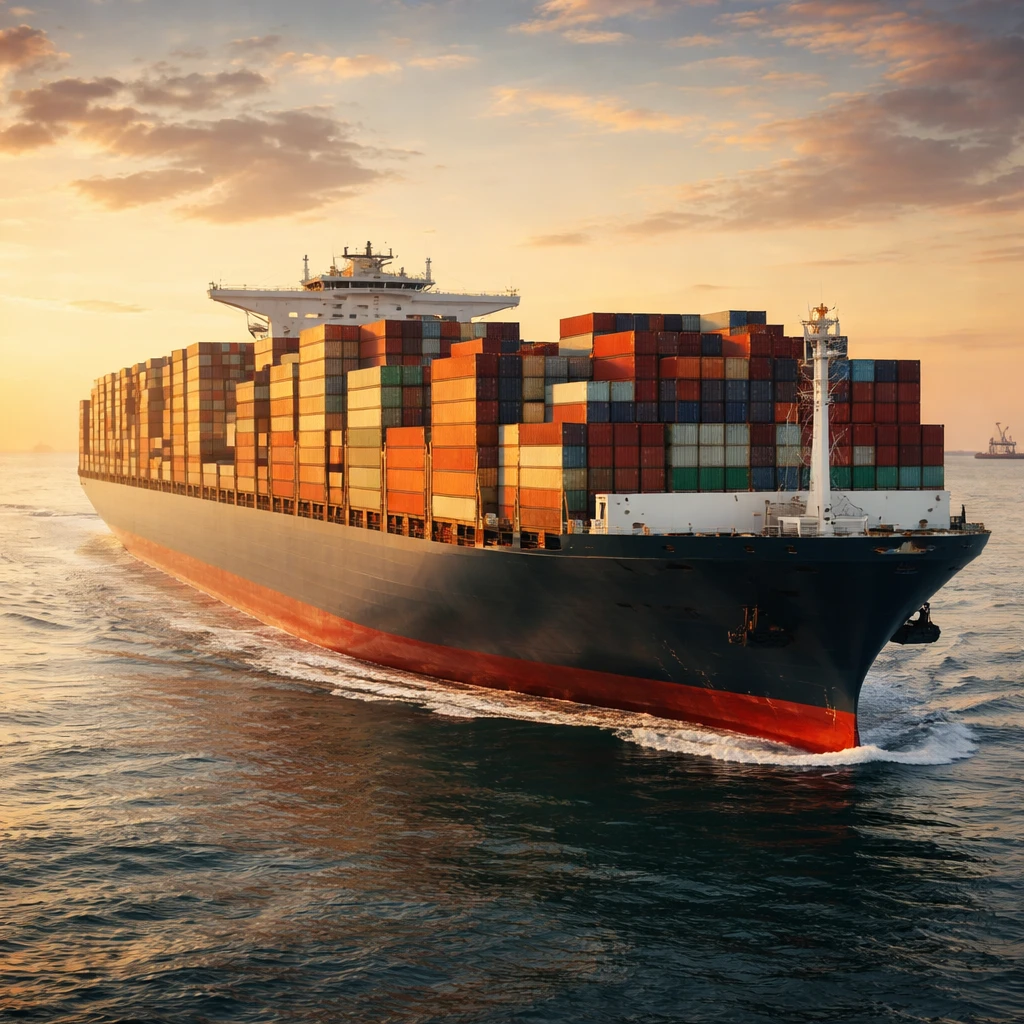
Goldman Sachs on Friday adjusted its recommendation on A.P. Moeller-Maersk to "neutral" from "sell," and increased its 12-month price target to 16,000 Danish crowns from 13,000 crowns. The broker said the change reflects a shallower-than-expected deterioration in container shipping supply-demand conditions as the industry moves into 2027.
The analysts explained that the upgrade was driven in part by a lower projected free cash flow burn over the coming years, which raised their dividend discount model-based valuation. Since Maersk was placed on the "sell" list on Jan. 14, the stock has been essentially flat while the FTSE World Europe index has climbed about 5 percent. Maersk shares were trading at 16,335 crowns as of July 2, implying about 2.1 percent downside to Goldman Sachs' new target.
Earnings and cash flow outlook
Goldman Sachs raised its 2026 EBITDA estimate for Maersk to $9.98 billion from $7.68 billion and boosted its 2027 EBITDA forecast to $8.31 billion from $7.26 billion. Both forecasts sit well above Visible Alpha consensus, which the bank said is roughly $6 billion for 2027.
$6 billion EBITDA "would imply a full-blown price war, on par with some of the low points seen in 2009/11/16."
The broker kept its full-year 2026 free cash flow estimate modestly positive at $267 million. That contrasts with Bloomberg consensus figures that imply a cumulative cash burn of $2.00 billion to $3.00 billion across 2026-27.
Supply-side revision and causes
The central driver behind Goldman Sachs' revision to the supply outlook is a higher rate of vessel delivery slippage. The bank now expects net new container deliveries in 2027 to amount to 7.9 percent of the global fleet, down from its prior estimate of 8.5 percent. Goldman Sachs said that, on a net effective basis, this equates to supply growth of around 4 percent year-on-year.
Part of the reason for slower deliveries is pressure in diesel engine supply chains. Goldman Sachs attributed this to surging datacenter demand, estimating datacenter-related demand for heavy-duty diesel generators could exceed global marine demand. The analysts warned that further increases in datacenter-related demand "could imply a double digit % impact on planned vessel deliveries, depending on engine maker supply expansion."
Near-term trading conditions
On trading conditions into 2026, Goldman Sachs said North-South freight rates have recovered strongly and called third-quarter dynamics "ideal," with rates rising while bunker fuel costs have fallen. The bank expects spot rates to peak in August and then ease toward the end of the year. Its Q3 EBITDA estimate for Maersk is $3.90 billion, about 40 percent above Visible Alpha consensus.
Goldman Sachs reiterated that it expects Maersk to reduce its annual net capital expenditure to roughly $4 billion from the current budget of more than $5.00 billion, noting the current pace of vessel purchases occurs "at historically elevated prices into a medium-term oversupplied market" and characterizing such capital allocation as suboptimal.
Downside risks
The broker highlighted several risks that could weaken the outlook. A full reopening of Red Sea shipping lanes would, in Goldman Sachs' view, release about 10 percent of global effective capacity. Weaker-than-expected global trade growth was also cited as a material downside risk.
In sum, Goldman Sachs' upgrade to neutral and the higher target reflect a combination of slower net fleet growth driven by delivery slippage, improved near-term freight rate dynamics, and a smaller projected cash burn than previously modeled. Nonetheless, the bank continues to flag meaningful risks tied to capacity shifts and global trade activity.