
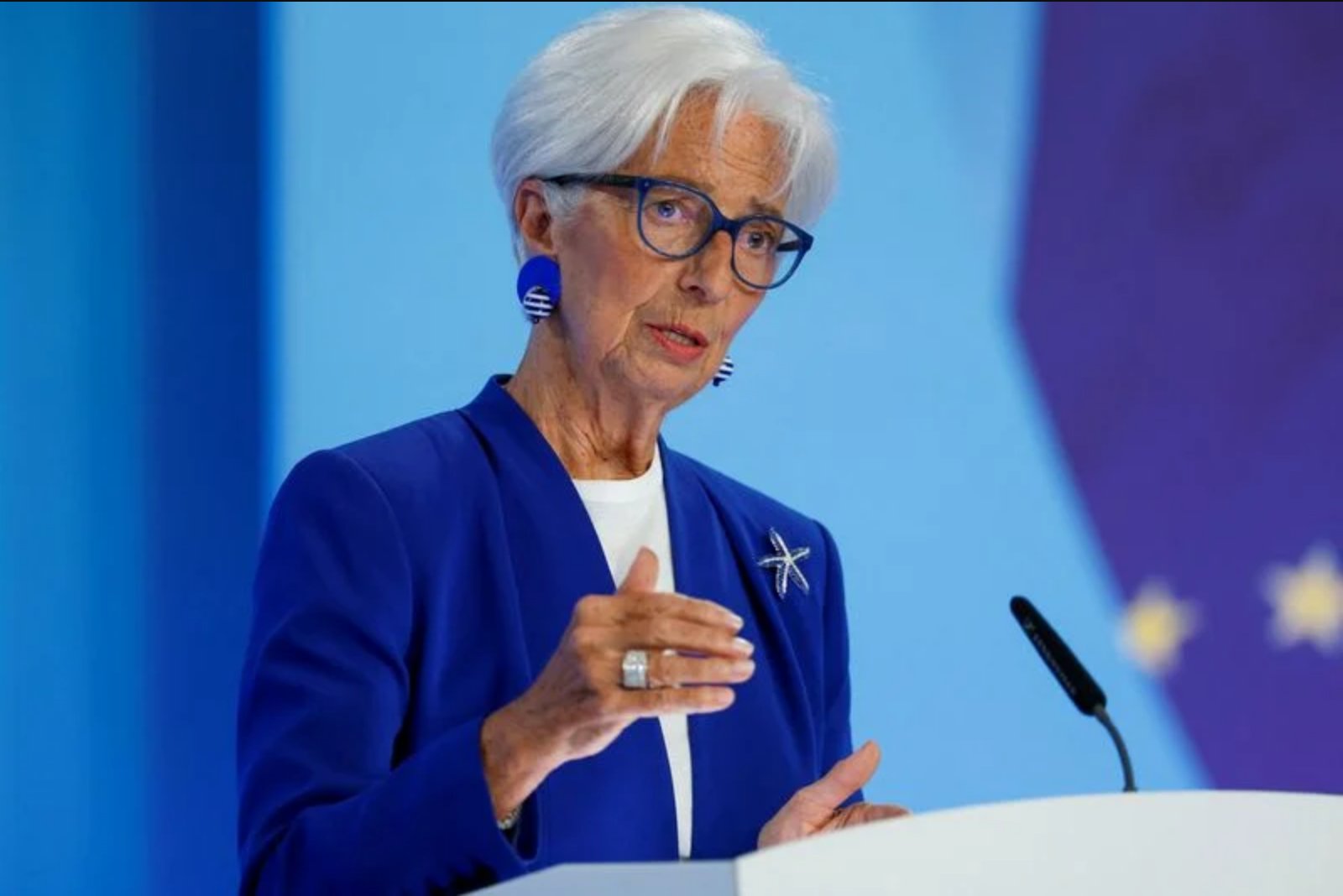
European Central Bank President Christine Lagarde on Friday acknowledged that an early departure from her role remains a possibility as she considers engaging in the debate surrounding next year’s French presidential election.
Answering a question from French newspaper Les Échos about whether she would rule out leaving the ECB ahead of the scheduled end of her mandate, Lagarde replied: "It’s possible. I believe that a European voice needs to be heard in the French presidential debate."
Lagarde has previously downplayed rumours that she might resign, invoking a maritime metaphor during a period of elevated inflation linked to an oil-price surge related to the Iran conflict. At that time she said "a ship’s captain would not leave during turbulent times" and described her baseline intention as remaining in office until the end of her term in October 2027. In the recent interview she did not repeat that exact formulation.
She was explicit, however, in dismissing the idea that she will stand as a candidate next spring. "This was not on the agenda," she said when asked whether running in the French election was under consideration.
On the role she might play in the election without being a candidate, Lagarde said she would address French voters speaking with both national and continental perspectives. "I would speak with a French and a European voice, because I am profoundly both," she said. "I would tell them that France must play a decisive role in the economic future of our continent. And that without this European environment and anchoring, our economic prospects would, at the very least, be unclear."
The comments leave open the prospect that Lagarde could step down from the central bank before her mandate formally concludes in late 2027 in order to take part in public debate, while she simultaneously rejected the notion of entering the election as a candidate.
Context and implications
Lagarde’s remarks highlight a tension between continuing to lead the ECB through an uncertain economic period and the possibility of becoming directly involved in national political discourse. She reiterated her dual perspective as both French and European and framed France’s role as central to the economic trajectory of the continent.