
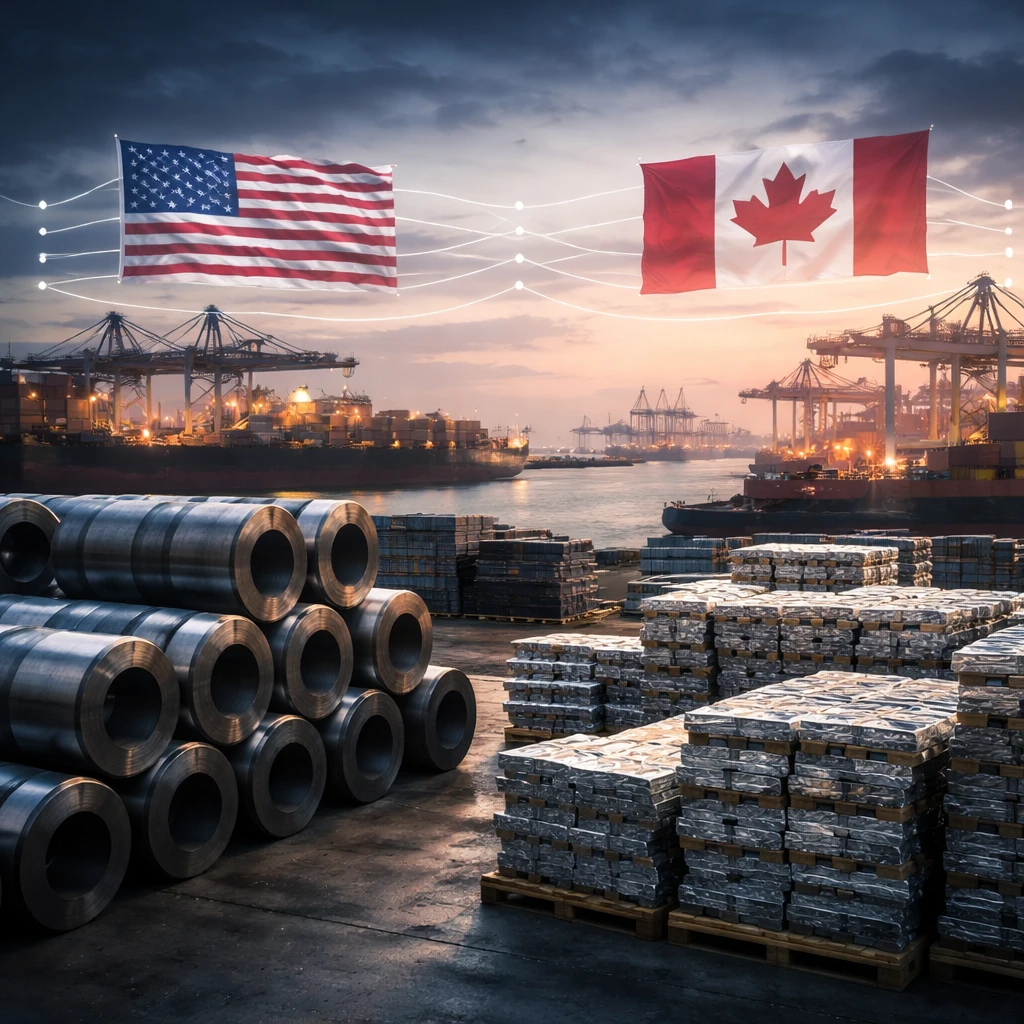
Trade officials from the United States and Canada are engaged in intensive negotiations to establish a framework for steel and aluminum imports ahead of an impending midnight deadline. Reports indicate that Washington and Ottawa are currently evaluating tariff-rate quotas as a central mechanism to manage the dispute. Under this proposed structure, a portion of Canadian metal shipments would be subject to a reduced 25% levy, while any imports exceeding the agreed-upon threshold would face the standard 50% tariff.
The analytical framework for these discussions reveals a shift from earlier administration positions. U.S. negotiators initially signaled willingness to halve the 50% tariffs on select Canadian metals. However, sustained lobbying from domestic industrial groups has compelled officials to reconsider the scope of tariff relief, resulting in tighter proposed limits on exemptions. Potential product exclusions and complementary trade measures remain under active review as both sides work to align their respective economic priorities.
The urgency of the current talks stems from an impending $20 billion tariff event. Washington was scheduled to begin collecting the full 50% duties on Canadian metal exports, but President Donald Trump granted a three-day extension to allow negotiations to continue. Originally, the measures were set to take effect on Wednesday. Addressing reporters Friday, President Trump noted that progress is being made, stating the agreement is moving along and expressing confidence that the final terms will be more favorable to the United States.
Beyond metals, the broader negotiation agenda encompasses automotive manufacturing, dairy products, wine, and spirits. U.S. trade representatives are pursuing greater access for agricultural and beverage exports, while Canadian officials are simultaneously seeking concessions for lumber and other resource-based commodities. These interconnected sectors highlight the complex web of industrial dependencies that any bilateral agreement must address.
Domestic industrial sentiment remains a critical variable in the valuation and capital allocation calculus for U.S. manufacturing firms. American metal producers have publicly opposed reducing the levies, arguing that lower duties could jeopardize domestic employment and deter long-term investment in heavy industry. Industry representatives are actively pushing the administration to retain the 50% duty on downstream aluminum products, even if base metal tariffs are adjusted. This distinction matters significantly for industrial supply chains, as processed goods often carry different margin profiles and compliance requirements than raw materials.
The tariffs themselves operate under Section 232 of the Trade Expansion Act, which authorizes trade restrictions on national security grounds. In a related development highlighting domestic industrial policy, Cleveland-Cliffs Inc. (NYSE: CLF) announced a $1 billion capital investment. The announcement coincided with Vice President JD Vance visiting a steel facility in Ohio to underscore federal backing for domestic manufacturing. Despite these domestic developments, the final parameters of a bilateral agreement remain undefined. Market participants and industrial stakeholders are closely monitoring whether negotiators can finalize terms before the deadline expires, with significant implications for cross-border trade flows and industrial input costs.
Trade officials from the United States and Canada are engaged in intensive negotiations to establish a framework for steel and aluminum imports ahead of an impending midnight deadline. The discussion centers on implementing tariff-rate quotas that would apply a 25% levy on a portion of shipments while maintaining a 50% duty on volumes exceeding agreed thresholds. Washington is leveraging its position to secure broader market access for agricultural and beverage exports, while Ottawa seeks reciprocal concessions for lumber and other primary commodities.
Summarize with
Key Points
- Implementation of tariff-rate quotas that differentiate between baseline and excess import volumes, directly impacting the steel and aluminum sectors and their downstream industrial supply chains.
- Broader trade leverage involving automotive manufacturing, dairy products, wine, and spirits, which could reshape cross-border market access and alter capital allocation for export-focused industries.
- Domestic policy alignment highlighted by Cleveland-Cliffs Inc. committing $1 billion to Ohio operations, signaling continued capital expenditure toward domestic manufacturing amid federal industrial policy support.
Risks
- Potential failure to finalize terms before the deadline, which would immediately trigger the full 50% tariff on approximately $20 billion in Canadian imports, disrupting industrial input pricing and compressing margins for downstream manufacturers.
- Strong opposition from U.S. metal producers who warn that reduced levies could undermine domestic job stability and deter long-term investment in heavy industry, creating headwinds for sector valuations.
- Disparity in treatment between raw materials and processed goods, as industry advocates push to maintain the 50% duty on downstream aluminum products even if base metal tariffs are adjusted, creating complex compliance and pricing challenges for industrial firms.