
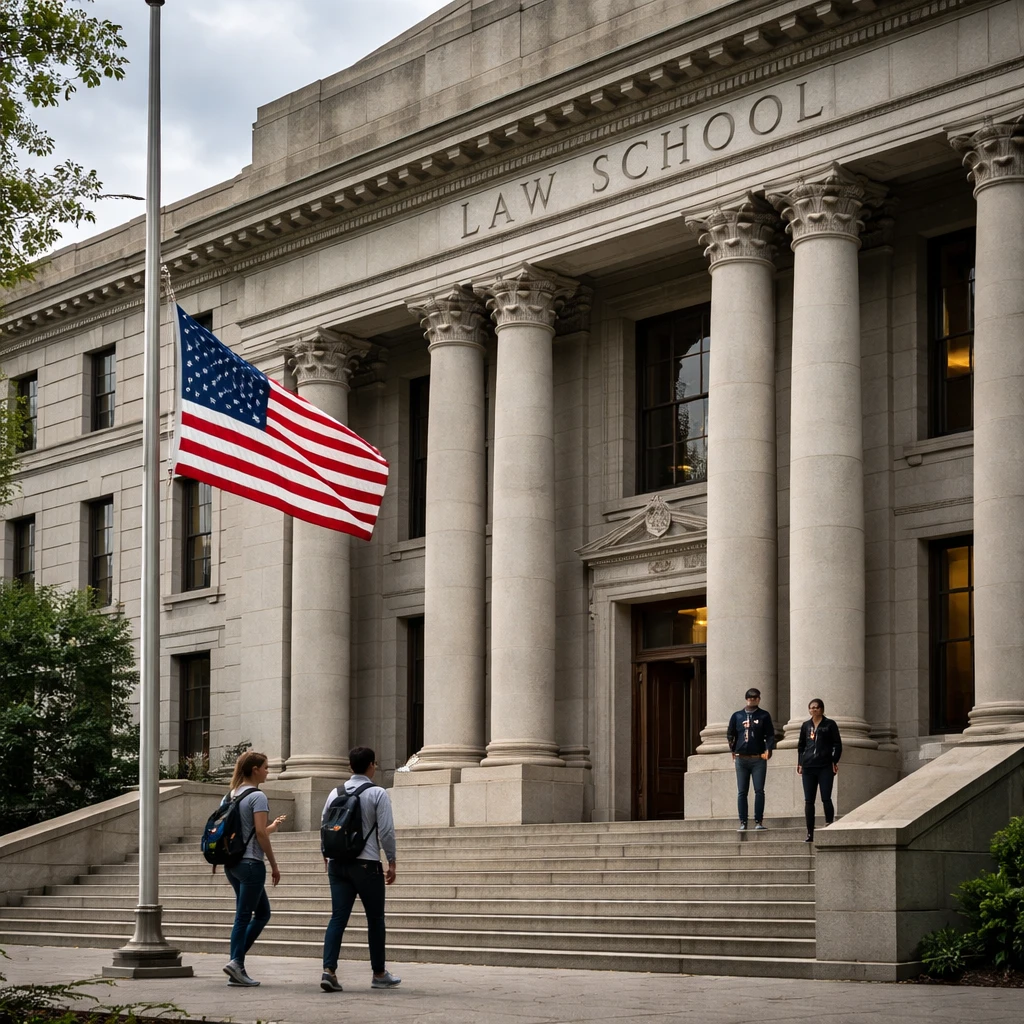
On Friday, the U.S. Department of Education advanced a recommendation to revoke the American Bar Association's status as the federally recognized accreditor of law schools in the United States. The department said its review found defects in the ABA’s governance and in its accreditation rules.
The ABA has served as the recognized accreditor for U.S. law schools since 1952. The Education Department staff report released on Friday concluded that the ABA’s Council of the Section of Legal Education and Admissions to the Bar "does not meet requirements for being 'separate and independent' from the larger ABA." The report additionally faulted the ABA for delays in updating a rule that requires law schools to meet certain diversity standards.
An Education Department spokesperson said the review determined the ABA’s accreditation rules were "out of compliance with the agency’s accreditation regulations and recognition standards." The department’s actions follow earlier public criticism of the ABA by the administration, which in 2025 described the organization through a White House spokesperson as a group of "leftist lawyers."
Officials and stakeholders have warned that removal of the ABA’s accreditor status could create immediate practical problems. Some law schools might face interruptions in eligibility for federal student loans if the ABA is no longer the recognized accreditor. Students also could encounter obstacles in sitting for bar examinations or in securing state licenses to practice law across different jurisdictions.
The next step in the process is review by a bipartisan accreditation advisory committee, which is scheduled to examine the department’s recommendation in September. The department has indicated that a final decision on recognition of the ABA will come several months after that review.
As the process unfolds, law schools, current students, and prospective applicants will be watching for further guidance from both the Education Department and state bar authorities about how any change in accreditor recognition would affect access to federal aid and professional licensing. The department’s move marks a significant escalation in a dispute between the federal agency and a professional organization that has overseen legal education for more than seven decades.