
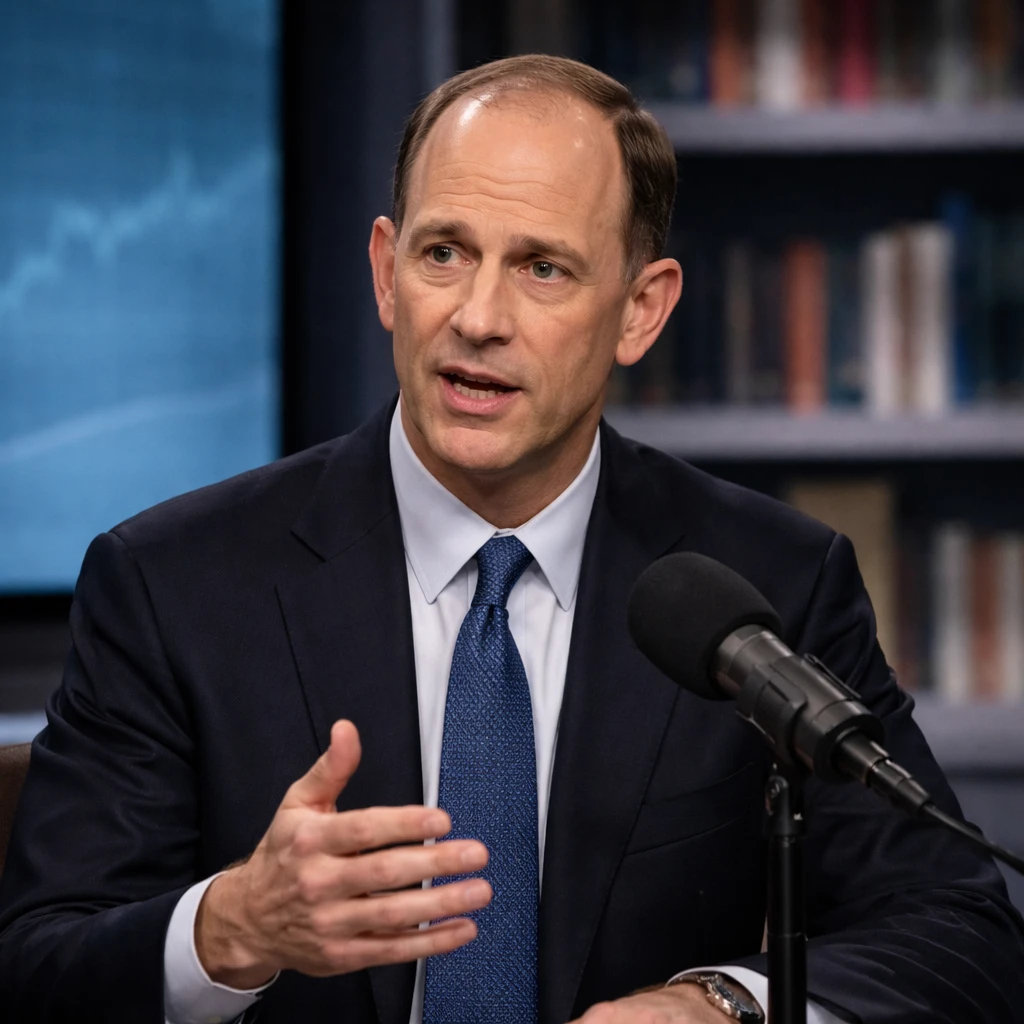
Chicago Federal Reserve President Austan Goolsbee said on Saturday that recent inflation data amount to "bad news" for policymakers and underscore the need for continued caution on interest-rate cuts.
Speaking on Fox News' "The Journal Editorial Report," Goolsbee emphasized that the Fed needs clearer confirmation that inflation is moving back toward its 2% goal before it begins easing policy. He made his comments in the wake of government data showing the Personal Consumption Expenditures price index - the Fed's preferred inflation gauge - rose at a 3.5% annual rate in March.
Goolsbee warned that price pressures are now appearing in parts of the economy that have typically been less vulnerable to shocks. He said inflation is turning up in service sectors that are normally more insulated from disruptions such as tariffs. Describing the makeup of recent inflation, he added it "doesn't look good."
In his remarks, Goolsbee also pointed to rising oil prices and geopolitical tensions involving Iran as factors that could further complicate the inflation outlook, reinforcing the case for a cautious approach to policy adjustments.
Fed dynamics and the policy outlook
Goolsbee's dovish-caution label on potential easing aligns with a central bank that is currently navigating internal divisions over the path ahead. At the Fed's most recent meeting, officials left the policy rate unchanged in a 3.5% to 3.75% range. The decision was reached in an 8-4 vote - the most divided outcome at the Fed since 1992.
The split reflected disagreement over "forward guidance." Several officials resisted language that could suggest the next move would likely be a rate cut, producing a more fractured public posture on the short-term policy trajectory.
Leadership transition and personal endorsements
The policy debate is unfolding as the Fed prepares for a leadership change. Kevin Warsh is awaiting Senate confirmation to replace Jerome Powell as Chair. Goolsbee said he welcomed both the prospective new leadership and Powell's decision to stay on the Board of Governors.
Commenting on Powell, Goolsbee said, "He has been judicious and he has insights," and added that he is "excited" to see the effect Warsh will have on the central bank's direction.
Implications
Goolsbee's comments underscore the Fed's current emphasis on getting firmer evidence of disinflation before moving to ease policy, a stance shaped by recent PCE readings and developments in energy markets and geopolitics.