
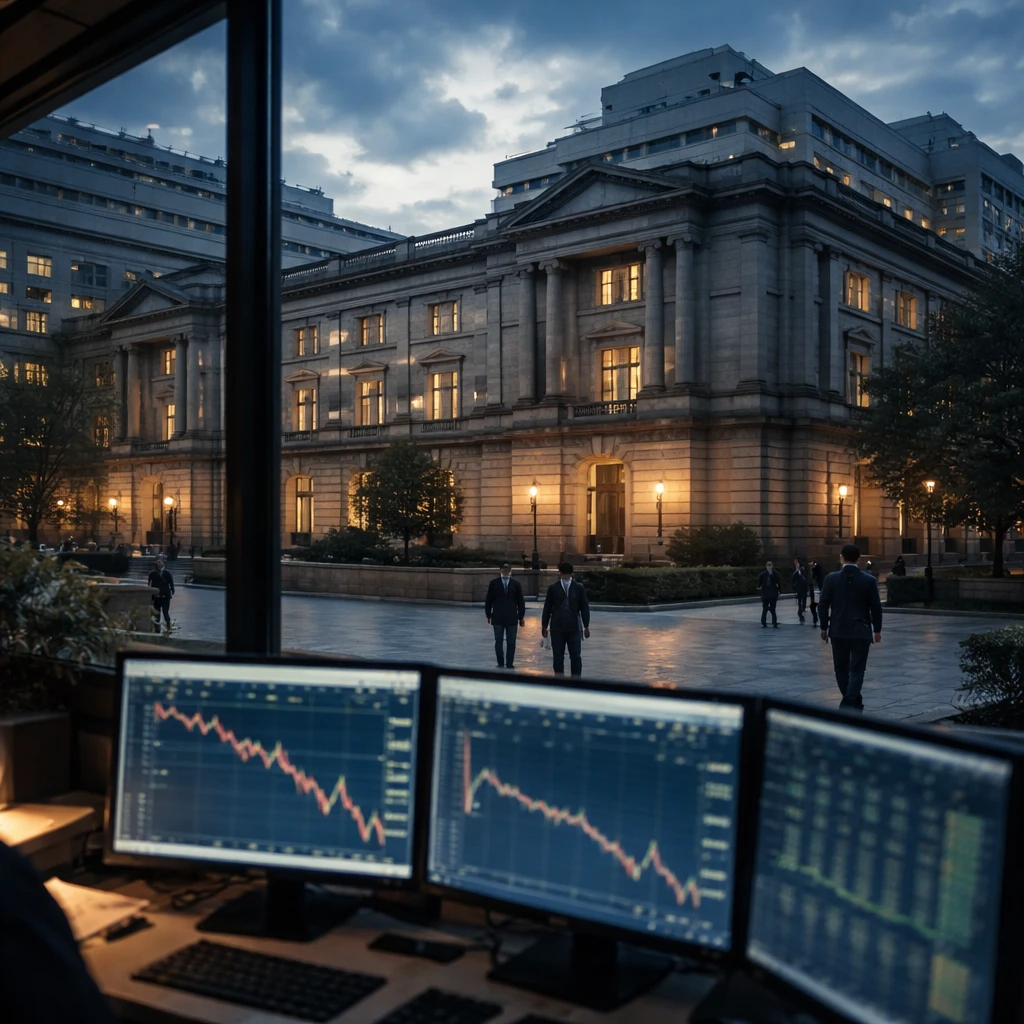
The Bank of Japan on Friday raised its policy rate to a level not seen in 31 years and signalled it is prepared to press on with increases in borrowing costs. The decision, aimed at addressing persistent inflationary pressures linked to rising oil prices, did not produce the expected lift for the yen; instead, the currency weakened as market participants focused on the absence of explicitly hawkish guidance and the fact that two dissenting policymakers urged greater patience.
Below are excerpts from Governor Kazuo Ueda's remarks at his post-meeting news conference, which was conducted in Japanese and translated into English:
FINANCIAL CONDITIONS:
"Financial conditions are becoming less accommodative as we raise rates ... It’s important to avoid financial conditions from tightening too much, or to cause a big adjustment in asset prices, by raising rates too sharply."
NEUTRAL RATE UNCERTAIN:
"It is hard to pinpoint where the neutral rate is, and therefore the terminal rate. It might be the case that as we adjust policy as appropriate, we will know where those rates sit ex-ante."
ON FUTURE RATE HIKES:
"As for the pace of future rate hikes, we don’t have any pre-set idea in mind such as once every three months. We will determine at each policy meeting how best to ensure underlying inflation stabilises at 2%."
ON INFLATION:
"Up till now, our short-term policy focus was to push up underlying inflation from levels below 2%. Now, underlying inflation is approaching 2%. If risks of underlying inflation overshooting 2% materialise, that could have a negative impact on Japan’s economy. It’s important to stabilise underlying inflation at 2%. Our policy phase has changed."
Market markers reported moves in currency and government bond instruments following the announcement: USD/JPY +0.54%, JPY/USD -0.54%, JGB +0.08%.
The governor framed the policy shift as a transition - from a short-term emphasis on raising underlying inflation from below-target levels, to a phase focused on holding inflation steady at the 2% objective. At the same time, he flagged the difficulty of identifying the neutral rate and the terminal rate ex-ante, a source of uncertainty for future policy calibration.
On the mechanics of further tightening, Ueda was explicit that there is no predetermined tempo. Instead, the Bank will make decisions at each policy meeting based on circumstances and on how best to secure stable 2% underlying inflation. He also cautioned that overly rapid rate increases could cause financial conditions to tighten excessively and spark pronounced adjustments in asset prices.
Investors parsed the statement for signs of resolve and forward guidance. The presence of two dissenters advocating patience, combined with the governor's avoidance of a preset hiking schedule, helped explain why the currency did not rally in the immediate aftermath of the rate rise.