
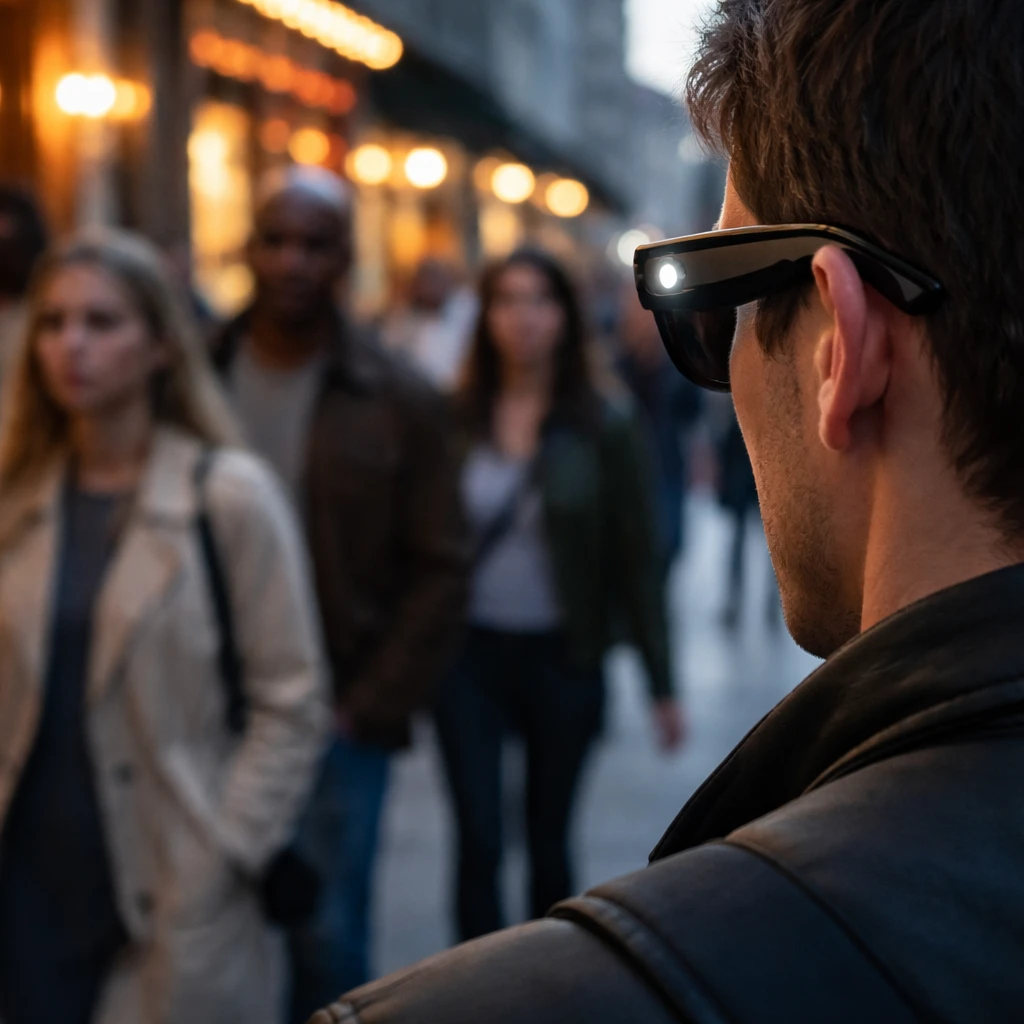
Paris prosecutors have opened a criminal inquiry into suspected sexual harassment involving smart glasses, and France’s data protection regulator has received complaints relating to workplace use of the devices, underscoring growing unease about the social effects of AI-enabled eyewear.
Several smart glasses models are on the market, but devices produced by Meta in collaboration with EssilorLuxottica hold the largest share worldwide - about 76% - and have become the sector’s most prominent product. Meta’s AI-enabled glasses include a small, embedded camera that allows a wearer to record discreetly. The company sold 7 million units last year, and EssilorLuxottica’s most recent sales figures indicate what the company described as "exponential growth" in 2026.
That commercial success has attracted attention from prosecutors, regulators, advocacy groups and businesses across multiple jurisdictions, who cite concerns including sexual harassment, corporate misconduct and unauthorized surveillance.
In the United Kingdom, a number of cinemas have banned smart glasses from their premises. In Germany, a consumer advocacy organisation filed a criminal complaint naming Meta and other firms involved in selling such devices in Germany, invoking the country’s privacy rules.
The Paris prosecutor’s office told Reuters it had recently opened at least one criminal probe after receiving sexual harassment complaints linked to a social media trend in which people used smart glasses to film women on the street without their consent and then posted the videos online. The prosecutors did not identify the brand of the devices said to have been used.
The office declined to provide further details, but it said its cybercrime unit conducted tests on smart glasses two weeks ago to better understand how such devices might be used in criminal activity.
A Meta spokesperson said the company had "built privacy into our AI glasses from the ground up," and added that "we will keep strengthening our protections as our glasses become even more capable." EssilorLuxottica declined to comment when asked.
France’s data protection authority, CNIL, reported it had received fewer than 10 complaints concerning the use of smart glasses in workplace settings. CNIL did not name any brands connected to those complaints. The regulator also said an increasing number of companies have been contacting it to inquire whether smart glasses can be banned at work.
Australia said on Thursday it is considering barring the use of camera-equipped smart glasses in government workplaces because of privacy and security worries, a move that officials described as potentially the first ban of its kind.
CNIL’s head of economic affairs, Nacera Bekhat, said smart glasses create "real challenges" when it comes to informing people they are being filmed and securing consent where required.
Wearable devices that incorporate artificial intelligence fall under European Union rules such as the AI Act as well as the General Data Protection Regulation, or GDPR, both of which establish requirements for handling people’s personal data.
French law provides privacy protections that include penalties for recording a person’s image in a private place without consent. Those penalties can reach up to a year in prison or a fine of 45,000 ($51,700), legal sources and CNIL noted, but they also said enforcement can be difficult, especially when recordings are rapidly shared online.
Smart glasses typically include a small light embedded in the frame that indicates filming is taking place. Rights groups say that visible indicator shifts responsibility onto potential victims to avoid being recorded rather than addressing the device’s potential for misuse.
"Seeing a light come on doesn’t mean that you consent to being filmed, nor to have your image distributed to thousands of people afterwards," said Ines Legendre, a legal expert at internet safety organisation e-Enfance.
Advocacy groups report that women are disproportionately targeted by abusive or non-consensual filming carried out with smart glasses. Ines Girard, who manages projects on technology-facilitated gender-based violence at the feminist organisation Hubertine Auclert, said the tech industry must do more to limit opportunities for abuse.
"We can’t respond to a surveillance technology by telling the people being surveilled that they should be more vigilant," Girard said. "This places an additional burden on these individuals, particularly women, gender minorities and people already exposed to violence, online abuse and scrutiny in public spaces."
Observers of the market note that the devices’ market dominance and rapid sales growth have made them a focal point for legal and policy debates about consent, privacy and public safety. Authorities, rights groups and companies continue to debate how best to balance technological capabilities with protections for individuals’ rights and dignity.
($1 = 0.8704 euros)
Summary
Paris prosecutors opened a criminal probe into alleged sexual harassment involving smart glasses, and CNIL has received workplace-related complaints; Meta-supplied devices are market leaders and have sold millions of units, drawing regulatory and public scrutiny in several countries.
Key points
- Meta’s AI-enabled glasses, produced with EssilorLuxottica, hold roughly 76% of the global market and sold 7 million units last year - significant market concentration that shapes regulatory focus (impacts consumer tech and retail sectors).
- French prosecutors and CNIL are investigating complaints linked to covert filming and workplace use, while other countries and bodies have taken or considered restrictive steps (impacts legal, public sector employment, and privacy compliance functions).
- Rights groups argue that visible recording indicators are insufficient to protect privacy and that women and other vulnerable groups are primary targets of misuse (impacts social and public safety policy discussions and corporate compliance programs).
Risks and uncertainties
- Enforcement challenges - although French law allows penalties of up to a year in prison or a 45,000 fine for recording someone in a private place without consent, applying those penalties can be difficult when content spreads rapidly online (affects legal and content-moderation enforcement sectors).
- Regulatory action - countries and public bodies are considering or implementing restrictions, such as Australia’s possible ban in government workplaces and UK cinema bans, creating uncertainty for employers and suppliers of smart glasses (affects public-sector procurement and workplace policy).
- Reputational and legal exposure for manufacturers and sellers - complaints, criminal probes and civil suits in multiple jurisdictions could increase legal and compliance costs for companies involved in the industry (affects corporate legal teams and consumer electronics producers).