
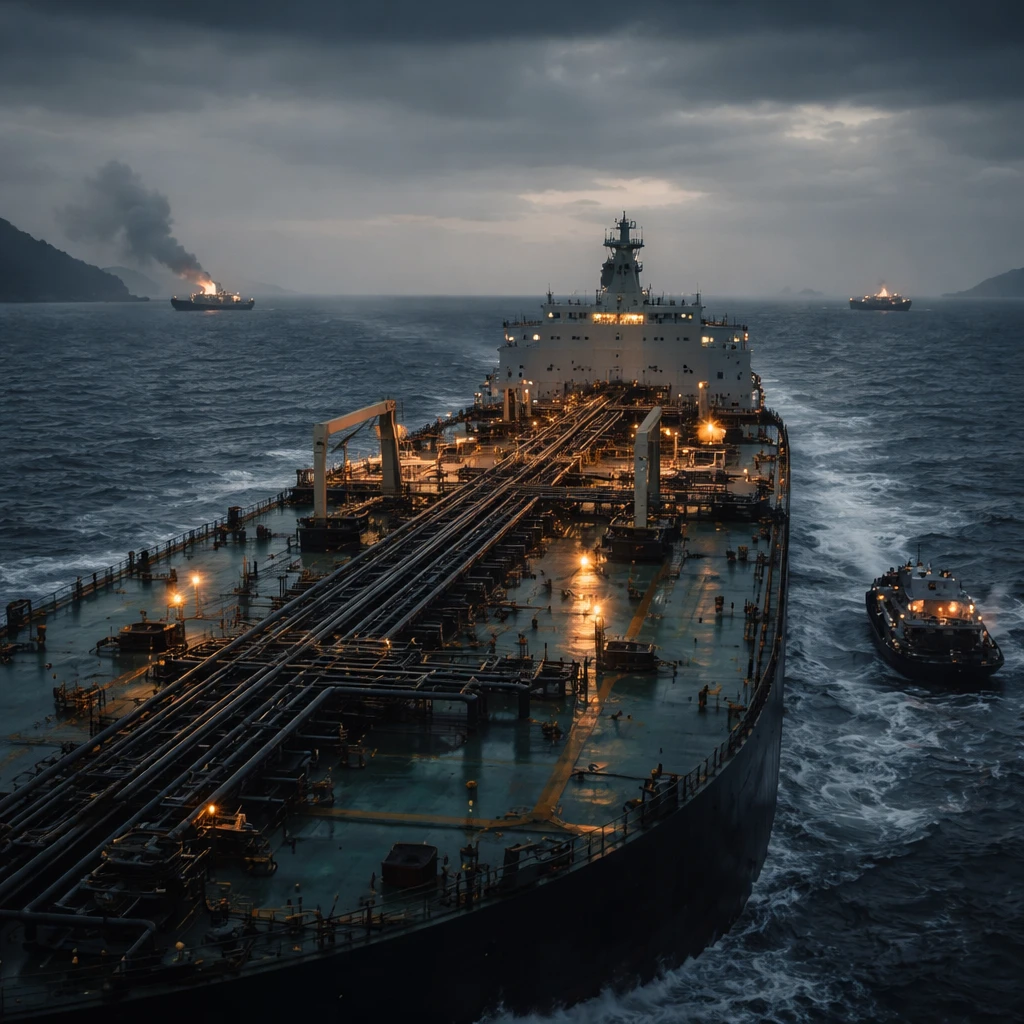
Oil futures rose in Asian trading on Friday as new incidents involving tankers in the Middle East renewed fears of interruptions to maritime flows, though the market remained on course for sizable weekly losses as participants reevaluate the outlook around the U.S.-Israeli war with Iran.
As of 19:43 ET (00:43 GMT), U.S. West Texas Intermediate (WTI) crude futures were up 0.7% at $91.14 per barrel.
Midweek volatility has left benchmarks swinging: Brent crude futures settled nearly 4% higher on Thursday, while WTI gained 2.7% that day. The partial rebound followed a sharp sell-off on Wednesday when both benchmarks plunged more than 8% to their lowest closing levels since Aug. 31. That rout was triggered in part by initial market optimism after U.S. midterm election results that raised hopes of increased diplomatic pressure to reduce regional hostilities.
Even with Thursday’s bounce, the weekly picture remained weak. Brent was positioned for a decline of more than 15% for the week, while WTI was headed for roughly a 12% slide.
The recovery in prices reflected ongoing uncertainty about whether recent political developments would quickly produce a durable diplomatic settlement or a reliable return of oil shipments through the Strait of Hormuz - a crucial chokepoint for global energy transport. Market participants signaled persistent doubt that electoral outcomes would immediately translate into sustained de-escalation and the reopening of shipping routes.
Security incidents at sea contributed to those concerns. The United Kingdom Maritime Trade Operations (UKMTO) reported that at least five vessels had recorded incidents since Sunday, a pace that approaches October’s record of 35 reported vessel incidents over that month. Separately, the Islamic Revolutionary Guard Corps said two oil tankers and a tugboat caught fire in separate occurrences after attempting to use unauthorised routes through the Strait of Hormuz.
Regional warnings added to the risk backdrop. Saudi authorities issued alerts about potential danger near Yanbu, a Red Sea oil export hub, as Yemen’s Iran-aligned Houthi militants continued to carry out attacks on the kingdom.
The broader geopolitical landscape remained unsettled following the U.S. midterm elections, in which Democrats captured control of both houses of Congress from President Donald Trump's Republicans. That outcome briefly elevated expectations that political pressure could accelerate diplomatic efforts to end the conflict that has disrupted energy supplies and raised fuel costs. However, market observers noted that the election result did not guarantee a diplomatic breakthrough.
At the same time, diplomatic channels showed signs of activity. Iran’s Foreign Minister Abbas Araqchi held separate telephone conversations with his Saudi and Qatari counterparts to discuss recent progress in efforts to promote regional stability, indicating talks were ongoing.
Supply-side worries were not limited to the Middle East. Fighting in Europe also weighed on energy infrastructure: Ukraine resumed strikes on Russian oil refinery targets, and the Ryazan refinery - one of Russia’s largest - appeared to have been hit in an overnight drone attack, according to Reuters video analysis.
The mix of renewed maritime incidents, regional warnings and continuing attacks on energy facilities left traders balancing short-term supply disruption risk against the larger momentum that had driven prices sharply lower earlier in the week.