
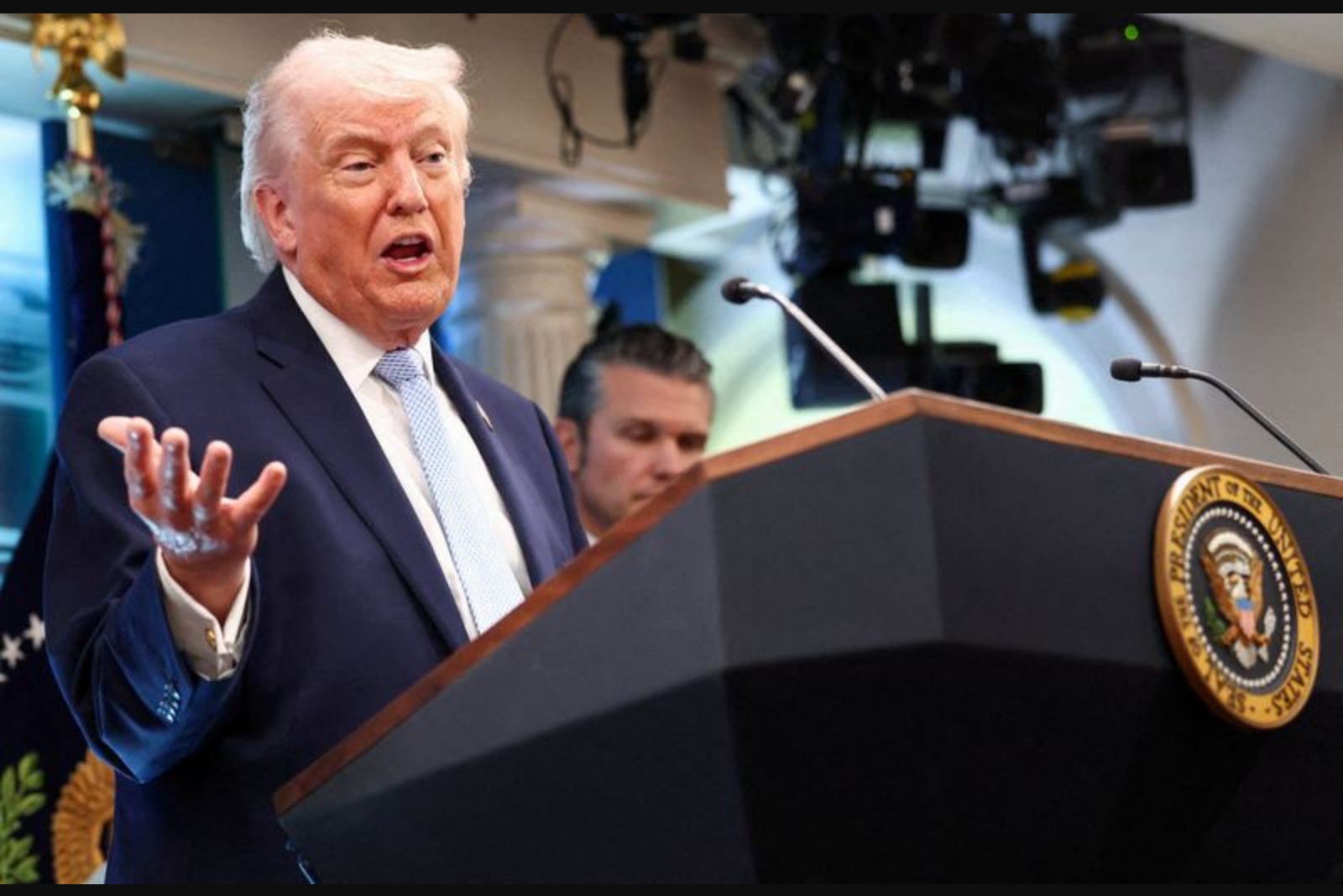
Washington and Islamabad - President Donald Trump told reporters outside the White House that he believes a settlement to the conflict with Iran could be imminent and said the next meeting between U.S. and Iranian negotiators could take place at the weekend. He suggested an extension of a two-week ceasefire might be possible but added it may not be necessary because Tehran desired a deal.
Trump said negotiators were "very close to making a deal with Iran," and that if an agreement were reached and signed in Islamabad he might travel there for the occasion. Later, while in Las Vegas, he said the war "should be ending pretty soon." He also urged the Iran-aligned Hezbollah group to respect a ceasefire that went into effect between Lebanon and Israel.
Pakistan-mediated talks and back-channel progress - A Pakistani source involved in mediation between the United States and Iran said there had been progress in behind-the-scenes diplomacy and that an imminent meeting could lead to the signing of an agreement. According to that source, the two sides would first sign a memorandum of understanding followed by a comprehensive agreement within 60 days. The source spoke on condition of anonymity and described the comprehensive accord as a later step, with the parties agreeing in principle and technical details to be resolved subsequently.
A separate diplomatic source said Pakistan’s army chief, Field Marshal Asim Munir, had been in Tehran since Wednesday and had achieved a breakthrough on what were described as "sticky issues." Iranian media, citing a foreign ministry spokesperson, reported that the ceasefire in Lebanon formed part of an understanding reached with the United States and mediated by Pakistan.
Ceasefire in Lebanon - The ceasefire between Lebanon and Israel became effective on Thursday, prompting celebratory gunfire in parts of Beirut at midnight and reports of rockets fired in celebration. The Lebanese Army issued safety warnings and threatened arrests over celebratory fire. Yet the pause in hostilities was fragile: the Lebanese Army reported that Israel had already violated the ceasefire with intermittent shelling of several southern villages early on Friday. There was no immediate comment from the Israeli military, which earlier said its forces remained deployed in the area in response to continued militant activity by Hezbollah.
Hezbollah, which opened fire in support of Tehran on March 2 in the wider conflict, released a detailed statement on Thursday listing its last attack as occurring 10 minutes before the ceasefire took effect. Senior Hezbollah official Bilal Lakkiss told NBC News that the truce was "essential, urgently needed and a demand shared by all," but he said the group would not comply with Israel’s demand to disarm "except within a framework tied to a broader national security vision."
Conflict between Israel and Hezbollah was rekindled by the U.S.-Israeli offensive against Iran that began on February 28. Authorities have said the Israeli offensive in Lebanon has killed 2,000 people, an escalation occurring 15 months after the last major conflict between the parties.
Market reactions and oil movement - Financial markets responded to signs of potential diplomatic progress. Oil prices fell in early trade on Friday and Asian shares posted further gains, with the region's strong performance over the month prompting some investors to take profits. The MSCI index of Asia-Pacific shares outside Japan was down 0.8% as investors locked in gains after a sharp rally, leaving the index near its high since the conflict began.
Japan’s Nikkei slipped 1% after hitting a record high earlier in the week, and most equity markets returned to levels seen before the war started. In energy markets, Brent crude futures were trading at $98.17 a barrel at 0434 GMT, while U.S. West Texas Intermediate crude futures fell to $93.47 a barrel, trimming gains from the previous session.
The U.S.-Israeli attack on Iran that started on February 28 has produced what has been described as the worst oil price shock in history and prompted an International Monetary Fund downgrade of the global economic outlook, with a warning that a prolonged conflict could push the world toward recession.
Strait of Hormuz and shipping disruptions - The strategic Strait of Hormuz, an artery for about a fifth of the world’s oil and gas supply, remains effectively closed to most international shipping. Iran has largely restricted passage through the strait to its own vessels, and the United States this week imposed a blockade on ships entering or leaving Iranian ports. Analysts said the blockade could prevent roughly 2 million barrels per day of Iranian crude from reaching its main buyer, China. Since the onset of the war, only a trickle of vessels have passed through the strait compared with an average of more than 130 ships each day before the conflict.
In parallel diplomatic activity, France and Britain planned to co-chair a meeting of around 40 countries intended to demonstrate to the United States that some close allies are prepared to assist in restoring freedom of navigation in the Strait of Hormuz when conditions permit.
Diplomatic negotiating positions and nuclear issues - Nuclear ambitions remained a key point of contention in the Islamabad talks last weekend. U.S. negotiators proposed a 20-year suspension of all Iranian nuclear activity, while Iranian negotiators countered with a proposal for a suspension of three to five years, according to people familiar with the proposals. President Trump said on Thursday that Iran had offered not to possess nuclear weapons for more than 20 years.
Iran has demanded that international sanctions be lifted, while Washington has pushed for the removal of any highly enriched uranium (HEU) from Iran. Two Iranian sources said there were indications of a potential compromise on the HEU stockpile, with Tehran reportedly considering shipping part of it out of the country.
Political and diplomatic outreach - Trump said he had spoken with Israeli Prime Minister Benjamin Netanyahu and Lebanese President Joseph Aoun and planned to invite them to the White House for "meaningful talks" that could occur within a week or two. Earlier on social media he described the truce as possibly "a historic day for Lebanon" and urged Hezbollah to respect the ceasefire, saying: "I hope Hezbollah acts nicely and well during this important period of time. It will be an GREAT moment for them if they do. No more killing. Must finally have PEACE!"
Throughout the unfolding diplomacy, Pakistani mediators and other intermediaries were cited as playing central roles in brokering understandings and pushing toward agreements that negotiators said could involve staged signings and further technical work to finalize details.
Context and remaining fragility - While officials and mediators described tangible progress in negotiations and a fragile pause in parts of the region took hold, the situation on the ground retained elements of volatility. The Lebanese Army’s early reports of ceasefire violations, continued deployments by Israeli forces, and public statements by Hezbollah making clear conditions on disarmament underscore the tentative nature of the current lull in fighting.
Markets and policymakers remain attentive to developments, with oil and shipping routes particularly sensitive to any shifts in the security and diplomatic environment. Mediators described a sequence of agreements - an initial memorandum of understanding followed by a full agreement within 60 days - but said detailed technical work would follow any political commitment.
For now, participants and intermediaries say talks could resume at short notice, with a potential meeting over the coming weekend flagged by the U.S. president. Whether those discussions lead to a signed accord and whether any signed accord brings a sustained reduction in regional tensions remain contingent on the parties resolving outstanding technical and political differences.