
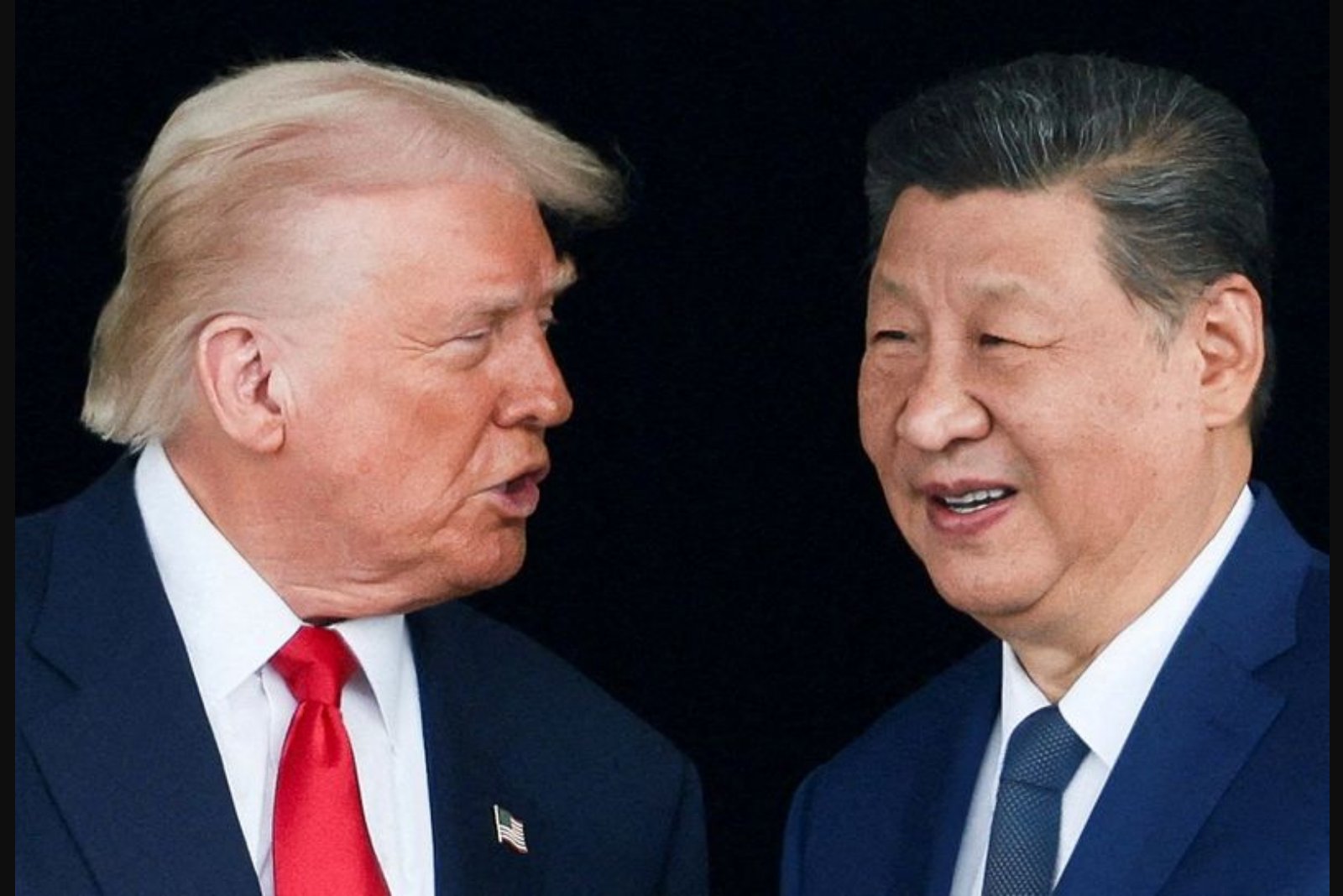
China is accelerating a delicate diplomatic campaign to help bring the Iran war to a close, manoeuvring carefully so as not to alienate Tehran as it readies for a summit with U.S. President Donald Trump in mid-May. Beijing’s posture is being shaped by the upcoming meeting, energy security concerns and a calculus about how far to press Iran without jeopardising ties with Washington.
Analysts note that President Xi Jinping’s May meeting with Trump is a major factor in how China approaches the Middle East conflict. As the world’s largest crude oil importer, China relies on the Middle East for roughly half of its fuel and has an incentive to limit disruptions to energy supplies. That dependency, coupled with the strategic importance of the upcoming summit, underpins a restrained diplomatic line.
Trump has publicly credited China with helping persuade Iran to take part in recent peace talks in Pakistan, a recognition of Beijing’s back-channel influence even if China was not an official party to the negotiations. "You’ve heard President Trump repeatedly mention how the Chinese talked to the Iranians," said Eric Olander, editor-in-chief of the China-Global South Project. "That puts them in the room with negotiators, even if it’s not a seat at the table."
People familiar with Chinese planning told Reuters that Beijing views the summit through a transactional lens, aiming to advance trade objectives and pressing its claims on Taiwan while avoiding steps that might derail the meeting. The approach, according to one source, is to "butter him up, give him a red-carpet welcome and preserve strategic stability." China did not respond to requests for comment on its diplomacy ahead of a visit that Trump says will occur on May 14 and 15.
China’s outward restraint has included shying away from sharp public rebukes of Trump’s conduct of the war. After Trump warned Iran that "the entire country can be taken out in one night," Foreign Ministry spokesperson Mao Ning stopped short of condemnation, saying only that China was "deeply concerned" and urging all parties to play a "constructive role in de-escalating the situation."
Xi himself broke a period of silence on the crisis with a four-point peace plan earlier this week. The plan calls for upholding peaceful coexistence, respecting national sovereignty, adhering to the international rule of law and balancing development with security. Xi announced the outline during a meeting with Abu Dhabi’s crown prince, Sheikh Khaled bin Mohamed bin Zayed Al Nahyan, an encounter that also signalled Chinese efforts to deepen ties with a regional rival to Iran while encouraging Tehran to engage in dialogue.
China’s foreign policy apparatus has been unusually active. Foreign Minister Wang Yi has conducted nearly 30 calls and meetings with counterparts pressing for a ceasefire, according to a Reuters count, while special envoy Zhai Jun has visited five Gulf and Arab capitals. Zhai at one point travelled by road to avoid contested airspace and reported hearing air-raid sirens, illustrating the operational challenges Chinese diplomats have faced in the region.
Beijing’s actions reflect a tight balancing act: it seeks to preserve leverage with Iran by remaining an interlocutor while limiting public friction with the United States so the Xi-Trump summit can proceed without being overshadowed by the conflict. "China’s sense of urgency and the mode of intervention at the tactical level are shifting" as the war, which the U.S. and Israel launched on February 28, continues to unfold, said Cui Shoujun, a professor of international affairs at Renmin University.
Some analysts argue the balance favours China in the short term because Iran needs Beijing’s connections more than China needs Iran. That asymmetry allows Beijing to press for a ceasefire while protecting the summit with Trump. "Beijing’s ideal outcome," said Drew Thompson, a senior fellow at Singapore’s S. Rajaratnam School of International Studies, "is the maintenance of no-strings-attached relationships with anti-Western countries like Iran but also preserving its opportunity to achieve some form of modus vivendi with the U.S."
Despite Chinese diplomatic activity, observers note Beijing’s ability to shape on-the-ground decisions in the Middle East is constrained by the absence of a significant Chinese military presence in the region. This limited hard-power capacity reduces the extent to which China can backstop its diplomatic efforts, and some view parts of the diplomacy as more performative than substantive. "While the Iranians are keen to play up their relationship with China and have asked Beijing to serve as a guarantor of a ceasefire, Beijing has shown zero interest in assuming such a role," said Patricia Kim of the Brookings Institution. "Beijing appears content to remain on the sidelines as the United States bears the brunt of the pressure."
For the Xi-Trump summit itself, sources and analysts expect discussions to be tightly scoped. Potential areas of agreement that could be announced at the meeting include large-scale commercial deals such as purchases of Boeing aircraft and major agricultural buys. A tentatively discussed Boeing order has been held up for years over regulatory concerns and could become the largest such commercial aircraft deal in history, according to the reporting.
Even so, analysts say the summit is likely to avoid sweeping, high-conflict topics. Subjects like AI governance, deep market access negotiations and industrial overcapacity in manufacturing are expected to be off the table. "There is zero chance China will reach some sort of grand bargain with the United States," said Scott Kennedy, trustee chair in Chinese business and economics at the Center for Strategic and International Studies in Washington.
China’s push to manage the Iran conflict reflects both pragmatic self-interest and a diplomatic calculation aimed at preserving space for a carefully staged engagement with the United States. How effectively Beijing can convert back-channel influence into a durable reduction in hostilities remains uncertain, bounded by its limited military leverage and by the diplomatic compromises required to keep the Xi-Trump summit on course.