
Overview
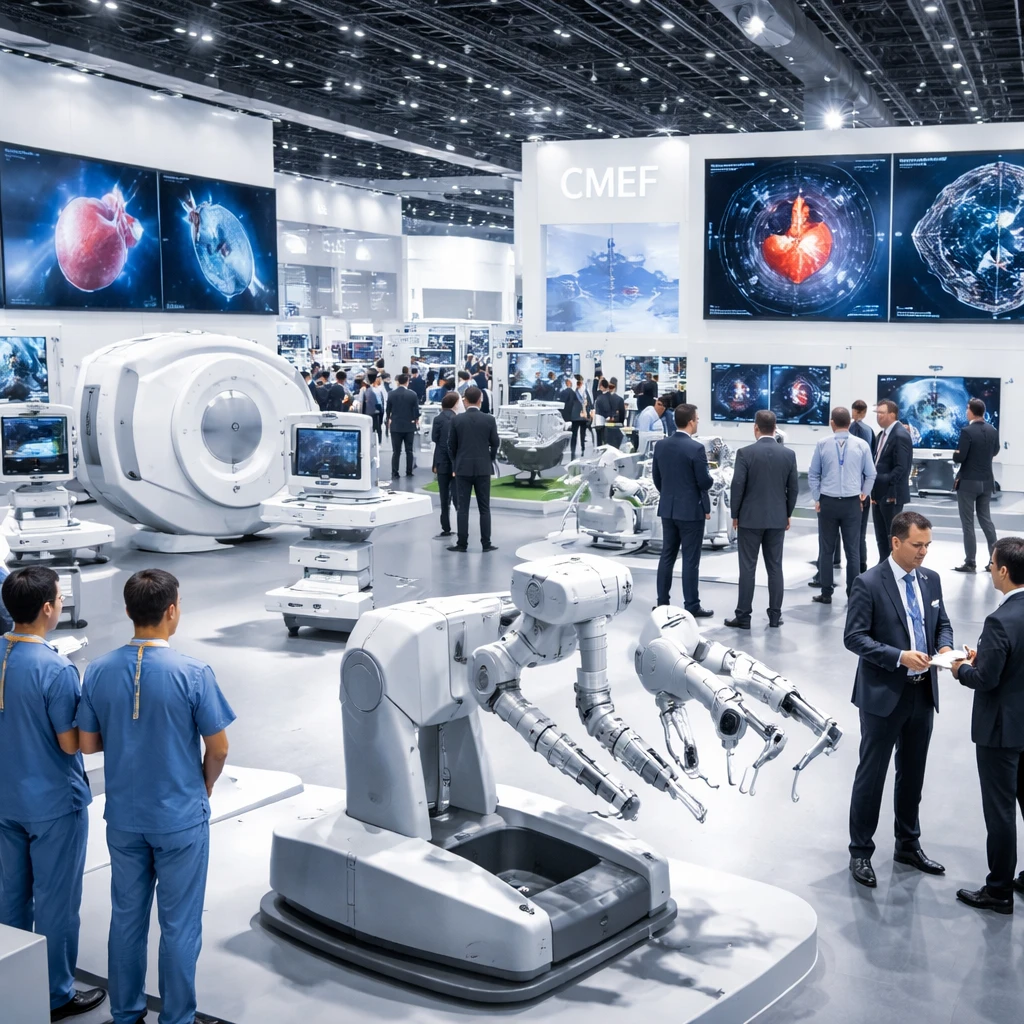
Morgan Stanley released a thematic read of company positioning after the China Medical Equipment Fair, where large medical device manufacturers displayed new technologies and product introductions across imaging, surgical robotics, orthopedics, and in-vitro diagnostics. The broker's work focuses on how firms are commercializing pipelines, leveraging software and consumables, and rolling out integrated platforms that target hospitals' purchasing and workflow needs.
Mindray (300760.SZ)
At CMEF, Mindray signaled a deliberate pivot toward AI-enabled offerings and businesses tied to consumables, stepping back from sole emphasis on traditional capital equipment. The company showcased tailored large language model deployments across its patient monitoring and life support, in-vitro diagnostics, and imaging divisions. According to the note, Mindray is already monetizing large language models for critical care management and imaging, and plans to position its IVD large language model as a value-added service bundled with analyzers and reagents. In minimally invasive surgery, recently approved ultrasonic shear and stapler devices are expected to contribute to near-term revenue. The orthopedics business recorded roughly Rmb600 million in sales in 2025 and has reached profitability, with Morgan Stanley noting expected growth from spine volume-based procurement expansion and contributions from an ultrasonic osteotome.
United Imaging (688271.SS)
United Imaging occupied one of the larger stands at CMEF and introduced its full uSONIQUE ultrasound platform, which spans ultra-high-end systems for obstetrics and gynecology, general imaging, and cardiology. The portfolio includes a 50MHz ultra-high-frequency probe, 10-micron 3D microvascular imaging, and real-time high-frame-rate 3D cardiac imaging. The firm's AIStream workflow was highlighted for reducing single-slice scan time by 88% to 10 seconds. In CT, United Imaging presented the uSiriux dual-source system and the uCT Ultima photon-counting CT, which management positions as comparable to leading multinational competitor offerings. On the interventional side, United Imaging Surgical unveiled the uInterv C550 percutaneous interventional robot, described as the first system supporting real-time CT guidance.
Weigao (1066.HK)
Weigao Holding displayed a broad product mix covering general consumables, endoscopy, intervention devices, surgical robotics, in-vitro diagnostics, blood purification, and orthopedics. The company received approval for the AUS3600 Bone Tissue Surgical System, which integrates five core functions into a single platform and is priced at about Rmb1 million per system. Support for the product includes a dedicated 100-person salesforce, and Weigao expects the system to drive growth in 2026. The firm's blood purification subsidiary also exhibited the DBB-EXA S hemodialysis machine along with related consumables.
MicroPort (0853.HK)
MicroPort presented a cross-specialty portfolio that covers vascular intervention, orthopedics, cardiac rhythm management, heart valves, and endoscopy, underpinned by a commercialized surgical robotics platform designed for multiple specialties. Featured systems include the Toumai multi-port laparoscopic robot with 5G-enabled telesurgery capabilities, the SkyWalker joint replacement robot, and the newly approved UniPath Robotic Bronchoscopy System. MicroPort also launched the Medus Vision edge-computing telemedicine platform to enable low-latency remote procedures across different device modalities.
Edge Medical (2675.HK)
Edge Medical showcased its suite of surgical robots, including the MSP2000 Single & Multi-Port Integration Robotic Surgical System. The MSP2000 offers a shared surgeon console and vision system across different configurations, and its modular design can reduce procurement costs by approximately 50% and lower maintenance spending. Combined with the Edge Cloud telesurgery platform, the firm positions this integrated architecture as a point of differentiation, particularly for hospitals facing budget constraints.
Implications for markets and customers
The companies highlighted by Morgan Stanley demonstrate several commercial themes: migration to software and consumables-driven revenue models, expansion of surgical robotics and telesurgery to address hospital workflows and budgets, and the bundling of AI services with capital equipment or consumables. These approaches aim to strengthen recurring revenue, improve price value propositions, and support broader commercialization across imaging, interventional, and surgical specialties.
Methodological note
The brokerage's observations derive from product launches and demonstrations at CMEF, focusing on pipeline visibility and commercialization strategy rather than forward-looking sales forecasts. The note emphasizes product-level details, regulatory approvals, and go-to-market support such as dedicated salesforces and platform bundling.