
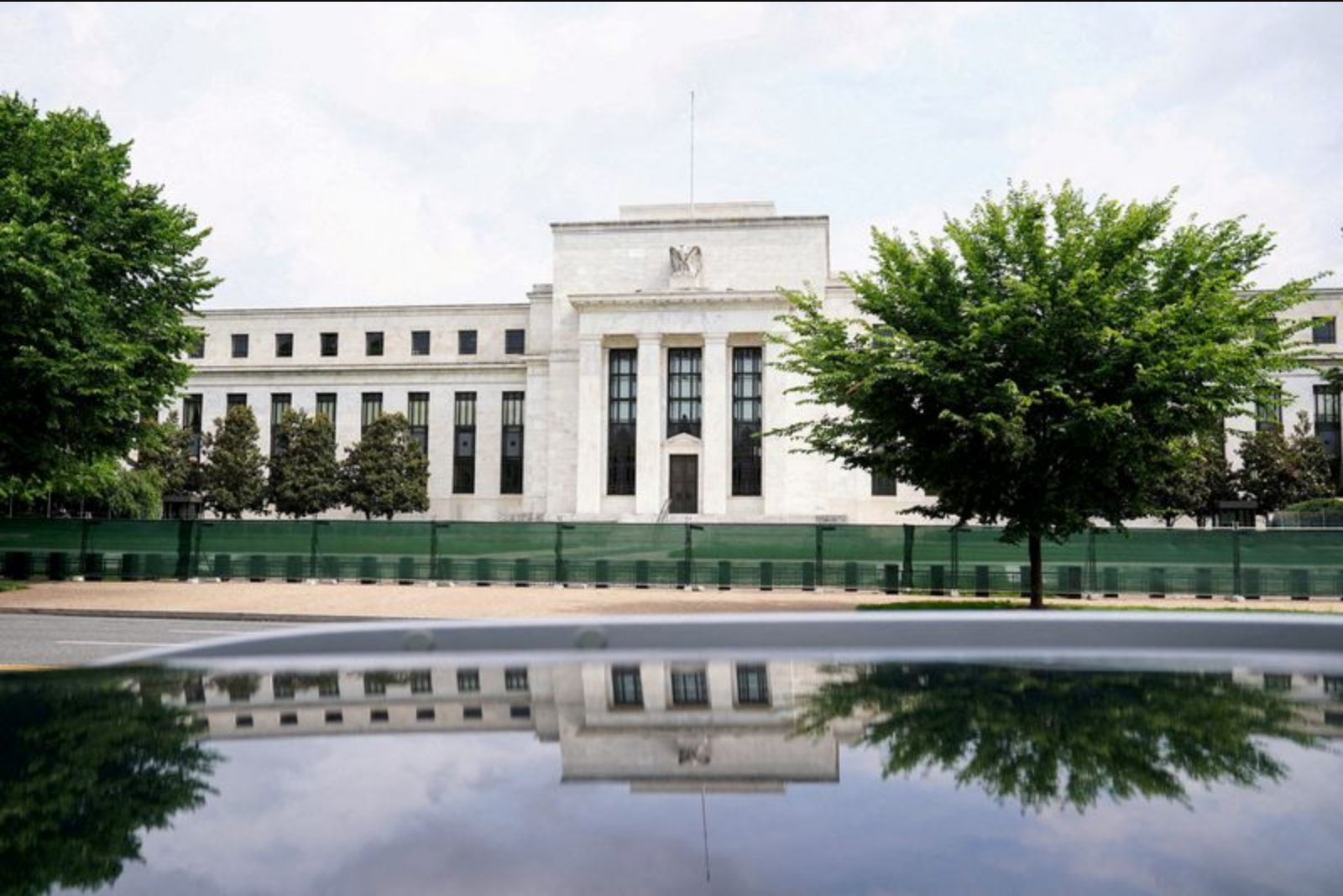
Deutsche Bank has revised its outlook and now anticipates the Federal Reserve will keep policy rates unchanged in 2026, highlighting oil-driven inflation risks connected to the Middle East war alongside resilient economic growth and a tight labour market that together leave little room for rate cuts.
The bank had earlier projected a 25-basis-point reduction in September, but strategists signalled a change in view in a note released on Thursday. They said that any easing this year would depend on both a moderation in inflation and a weakening in labour market conditions.
Deutsche Bank's assessment places it among a range of market views. Some large brokerages, including J.P. Morgan and HSBC, have already ruled out any rate cuts this year. By contrast, other peers such as Goldman Sachs, Morgan Stanley and BofA Global Research continue to expect the central bank to lower rates twice, beginning in September.
In recent comments, several Federal Reserve officials have warned that the war in the Middle East has already contributed to inflationary pressures. Officials have also said that heightened uncertainty from the conflict constrains how precisely the Fed can signal its future monetary policy steps.
The Fed maintained its target federal funds rate range at 3.5% to 3.75% at its mid-March policy meeting, and its forecasts at that meeting indicated the possibility of one further easing at some point later in the year. The central bank is scheduled to meet next on April 28 to 29.
Market-derived expectations reflect a notable probability that cuts will not materialise: money market pricing shows a nearly 69% chance that the Federal Reserve will not reduce rates by the end of 2026, according to LSEG data.
Deutsche Bank also noted the prospect of a near-term rate increase is no longer negligible. "A rate hike this year is no longer a trivial possibility, but we do not expect such conditions to manifest in 2026," the bank said.
Context and implications
The upgrade to a no-cut 2026 scenario rests on three central observations from Deutsche Bank: heightened oil-linked inflation risks due to the Middle East conflict, ongoing economic resilience, and a tight labour market. The strategists emphasised that easing would require clear softening in both inflation and employment data.
Across the financial sector, views remain split on the timing and scale of potential rate cuts. While some institutions have discounted cuts this year entirely, others continue to look for multiple reductions starting as soon as September.
The Fed's policy path and the evolution of inflation and labour market indicators will be watched closely in the run-up to the April 28-29 meeting and throughout the remainder of the year.