
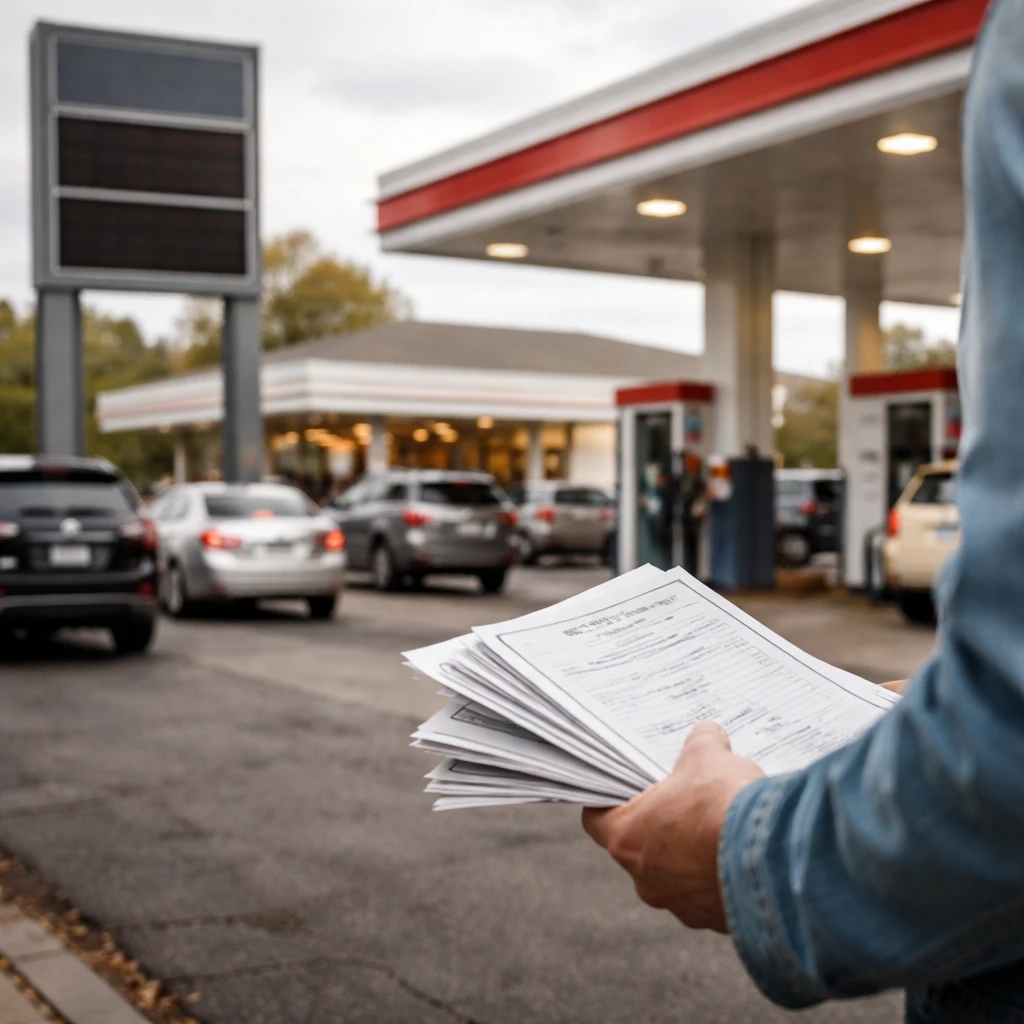
The tax season is wrapping up with a mixed picture for U.S. consumers. Refunds are running well ahead of last year even as tax receipts show broadly unchanged liabilities year-over-year. But gains from larger refunds are being substantially eroded by higher gasoline prices, and Goldman Sachs expects subdued real consumption growth in the months ahead.
Tax flows and fiscal offsets
Refunds this season are 17% higher than a year earlier. At the same time, current tax payments are likely to finish the season $40-55 billion above last year’s level. That increase, however, remains $25-40 billion below the $80 billion escalation that would have occurred without the fiscal effects of last year’s One Big Beautiful Bill Act - OBBBA.
Goldman Sachs notes that receipts tied to non-withheld taxes are below what a simple model would predict. Using variables such as stock market returns, home sales, and flow of funds data, the model suggests non-withheld payments should be 14% higher than a year ago - roughly $80 billion through mid-May. In practice, the observed tax payments are lower than that model’s estimate.
The bank also estimates that the implied total benefit from OBBBA sits in the $75-90 billion range. Taken together, the boost consumers would have experienced from lower effective tax liabilities stemming from last year’s fiscal package is approximately offset by larger capital gains tax payments this year. As a result, the net effect on household spending from these tax developments is negligible.
Energy costs erode purchasing power
Energy inflation is doing much of the heavy lifting on the downside. Since the start of the conflict referenced in these calculations, gasoline prices have risen about 40%. Goldman Sachs translates that increase into an approximate $140 billion annualised hit to U.S. household incomes at current price levels.
The firm projects that this annualised headwind will shrink to about $60 billion by year-end, and it expects gasoline-related income pressure to total roughly $70 billion across the whole of 2026. The burden from higher pump prices is not evenly distributed: households in the lowest income quintile devote about four times more of their after-tax income to gasoline than those in the top quintile. That concentration of burden means discretionary spending categories are likely to see the most pressure.
Outlook for income and consumption
Using its oil price forecast, Goldman Sachs projects real disposable personal income to expand 1.6% on a Q4/Q4 basis, and 1.2% for the full year. Real consumption growth is expected to be 1.2% Q4/Q4 and 1.5% for the year as a whole.
In short, while tax relief tied to last year’s package initially provided a tailwind, that effect has been largely absorbed by the surge in gasoline prices. The combined outcome is a limited net boost to consumer spending, with the largest strains falling on lower-income households and discretionary spending categories.