
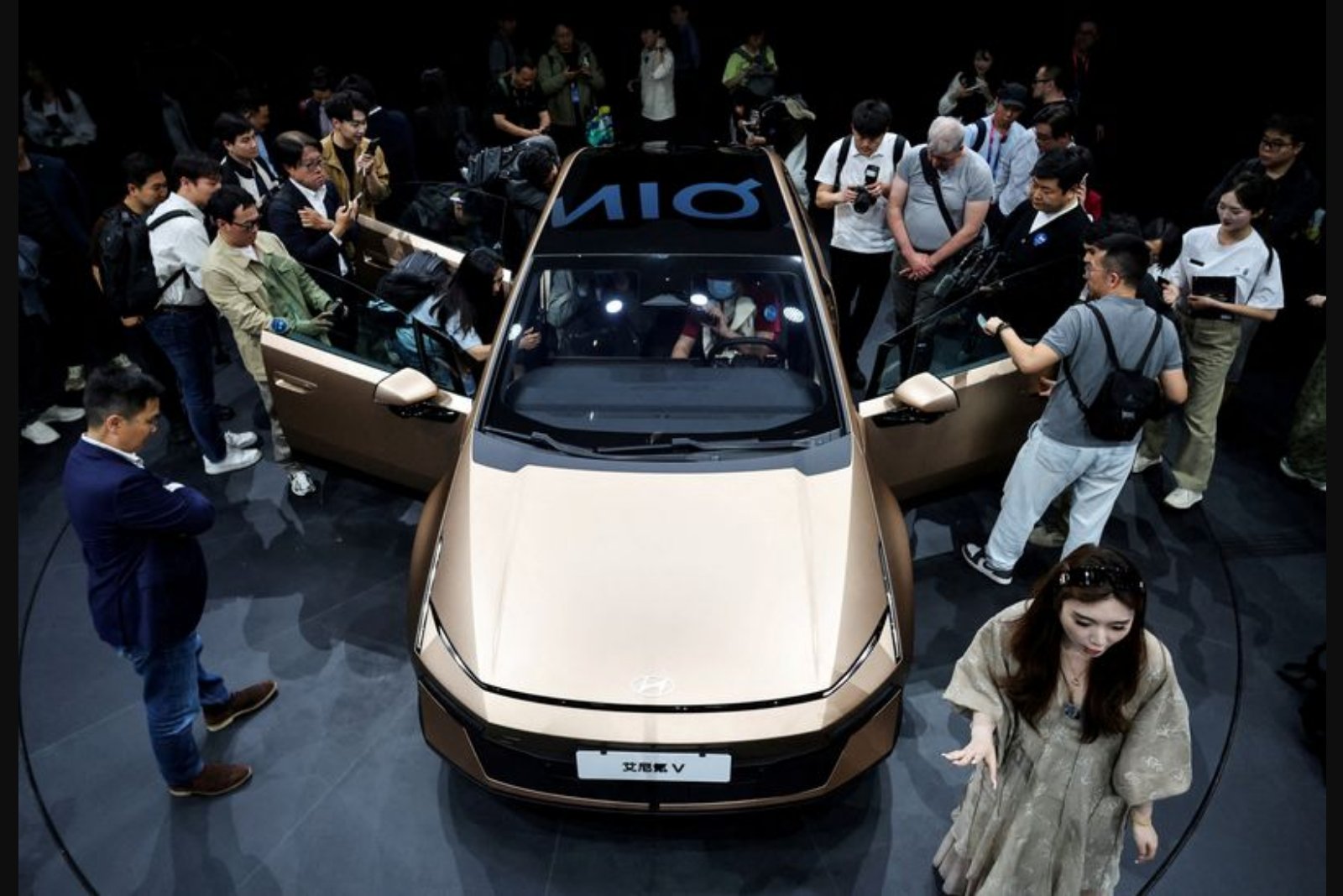
Hyundai Motor said it will introduce 20 new models into the Chinese market over the coming five years in a bid to improve its position in the world's largest auto market. The South Korean automaker acknowledged that it has faced years of weak market share and strong competition from domestic electric-vehicle manufacturers.
Speaking at an event in Beijing, Hyundai used the auto show to outline a refreshed effort in China. The company debuted a China-specific, all-electric model called the IONIQ V, which the company says is powered by technology from Chinese autonomous driving developer Momenta. Hyundai also confirmed plans to bring another SUV to the market in the first half of next year.
The 20-model rollout will be carried out with Hyundai's joint venture partner, Beijing Automotive Group. Hyundai described the initiative as its "most ambitious product expansion" in China. The company set a target of achieving annual sales of 500,000 vehicles in China by 2030, a figure that includes exports and could represent more than a doubling of its current volumes.
At the event, CEO Jose Munoz was quoted as saying: "We want to really export to other markets from China, but we want to be successful here first," and he listed Britain, Europe and the Middle East as possible destinations for cars manufactured in China. The company also stated, using the phrasing presented at the event, "We don’t want China to be just an export hub, but also an export hub."
Hyundai said it is pursuing a localisation strategy that expands cooperation with technology partner Momenta and battery supplier CATL. The company said this mirrors steps taken by other foreign automakers seeking to compete more effectively in China's competitive market.
Beijing officials of the company indicated that Hyundai will target younger Chinese consumers with its upcoming lineups, which will include plug-in hybrid models. They said this approach is intended to differentiate Hyundai from other foreign brands that are also forming local partnerships.
Context and implications
The move represents an effort to reverse an extended period of underperformance in China for Hyundai, a group that, together with affiliate Kia Corp, is the world's third-largest automaking group by sales. The plan couples product expansion with deeper local ties in technology and battery supply as part of a strategy to compete with domestic EV makers.
What remains to be seen
The company has outlined its targets and partners, but the ultimate market reception, execution of joint-venture production plans, and ability to achieve the stated 2030 sales goal will depend on future developments in the Chinese market.