
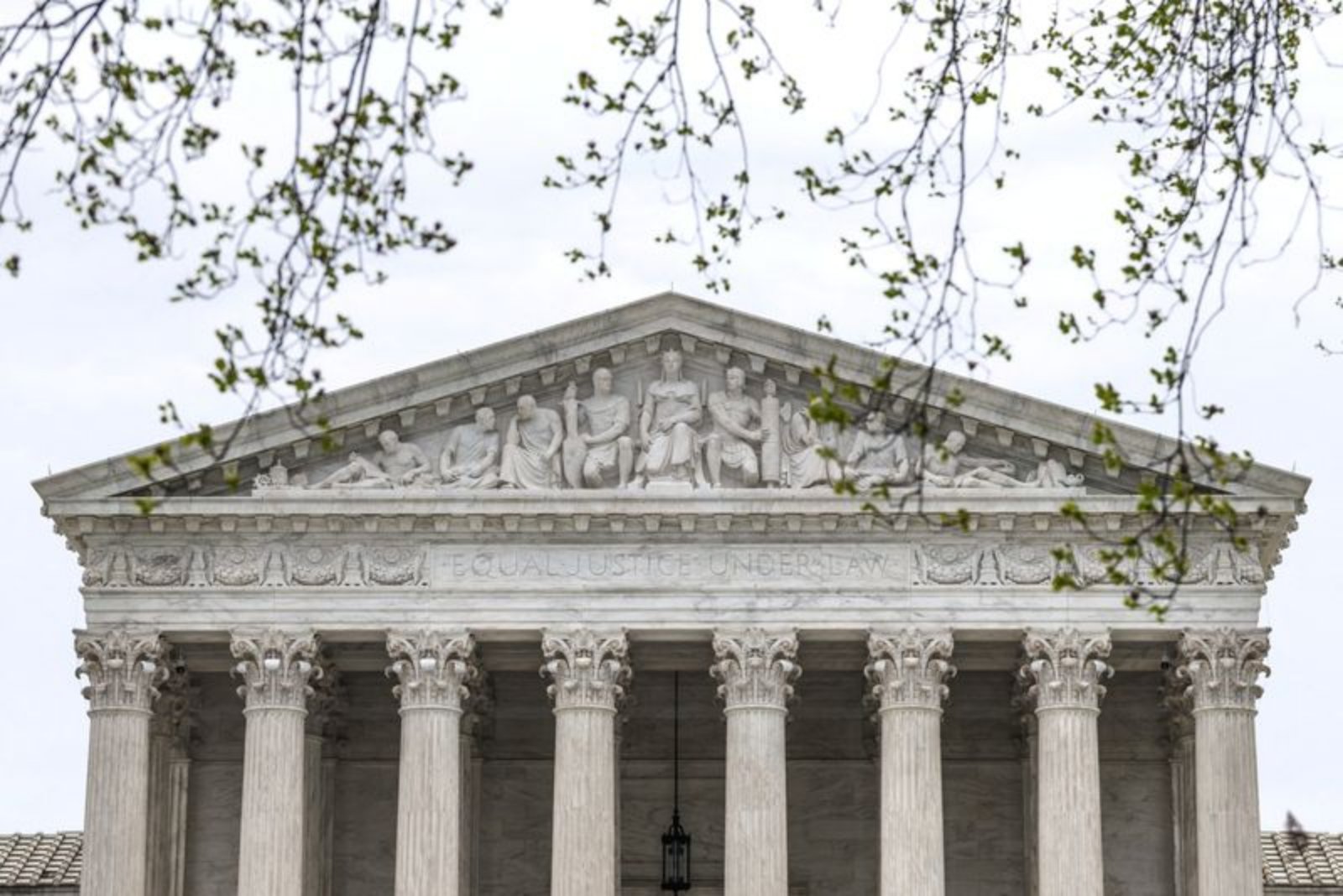
The U.S. Supreme Court is set to hear arguments in a challenge to the administration's moves to strip Temporary Protected Status from nationals of Haiti and Syria, a dispute that centers on whether federal courts may review the executive branch's determinations in this area at all.
Federal judges in New York and Washington, D.C. blocked action by the administration that would remove TPS for more than 350,000 Haitians and roughly 6,000 Syrians. The administration, which currently warns against travel to both countries citing widespread violence, crime, terrorism and kidnapping, has asked the high court to accept an expansive legal position: that the TPS statute forbids courts from reviewing either the substance or the procedures the executive used to reach its decisions.
At issue is the scope of judicial review under the Immigration Act of 1990, the statute that creates TPS. The law permits people from countries affected by war, natural disaster or other catastrophic conditions to remain and work in the United States while it remains unsafe for them to return home. Plaintiffs in the lawsuits argue the dispute could have broad reach, potentially affecting an estimated 1.3 million immigrants from all 17 countries that have received TPS designations. The administration has sought to rescind protections for 13 of those countries so far.
Lower courts that have ruled against the administration's efforts found officials did not follow the procedural requirements mandated by the Immigration Act when assessing country conditions prior to terminating a TPS designation. The Justice Department disputes those findings. In its Supreme Court filing, the department framed a broader legal defense, asserting that congressional language in the statute precludes judicial review of TPS determinations in the first place.
"The TPS statute unambiguously bars judicial review of claims that attack the secretary's TPS determinations, including the procedures and analysis underlying those determinations," the Justice Department wrote.
That contention, if accepted, would mean courts could not evaluate whether the agency complied with statutory consultation or decisionmaking protocols that the plaintiffs say are required. The department warned that allowing courts to probe those processes would amount to "installing district courts as the ultimate foreign-policy superintendents of temporary status."
Lawyers for the TPS recipients say the stakes are high. Ahilan Arulanantham, who represents Syrian TPS holders in the challenge, said in a briefing that the administration's position would render the statutory procedural safeguards meaningless.
"A huge amount is at stake," Arulanantham said. "If the government is correct, then they can terminate TPS without conducting any country conditions review at all - they can do it for reasons that are completely arbitrary."
Arulanantham, co-director of the UCLA School of Law's Center for Immigration Law and Policy, told reporters the administration's actions "do not reflect a federal agency's reasoned decision-making but rather a concerted effort to end TPS entirely." He added, "This really is about a war on this congressional statute."
The dispute arrives amid a broader set of immigration policies the administration has pursued since returning to office in January 2025. Officials have moved to rescind protections and implement tighter enforcement in both lawful and unlawful migration channels. When the Supreme Court took up the matter relating to Haiti and Syria, it declined the administration's request to immediately terminate TPS for those groups while litigation proceeds. By contrast, the court allowed the administration to end TPS for Venezuelans under similar circumstances last year.
Temporary Protected Status was first granted to Haitians in 2010 after a devastating earthquake and to Syrians in 2012 following the onset of civil war. In both cases the U.S. government extended the designations repeatedly as crises in each country persisted. The administration's former Homeland Security Secretary moved to revoke TPS for Syria last September and for Haiti last November, stating the designations were contrary to U.S. national interest in part because of difficulties screening and vetting migrants from those countries. Those TPS decisions by the former secretary were among the actions challenged in court; the same decisions are now at the center of the Supreme Court appeal.
Plaintiffs filed class action suits claiming that the termination notices were a pretext for an effort to end existing designations and that the agency failed to meet the law's procedural requirements. The lawsuits say the mandated consultation with other federal agencies concerning conditions in the countries at issue amounted to little more than an email exchange in which a State Department official replied to a Homeland Security official to say there were "no foreign policy concerns" with ending the designations. The plaintiffs say that record did not satisfy the statute's procedural mandate.
The Justice Department criticized the lower-court rulings for what it described as inviting intrusive judicial oversight into interagency discussions. "The rulings are an invitation for courts to referee interagency discussions, demand agency verbosity and gauge how much consultation is enough," the department said.
Beyond the procedural dispute, plaintiffs also raised constitutional claims. In the Haiti case, U.S. District Judge Ana Reyes concluded the administration's action likely was motivated in part by "racial animus," finding that such motivation would violate the Fifth Amendment's guarantee of equal protection. Judge Reyes referenced public statements by the president and the former homeland security secretary, including social media posts, to support that assessment.
"Plaintiffs charge that Secretary Noem preordained her termination decision and did so because of hostility to nonwhite immigrants. This seems substantially likely," Reyes wrote.
The Justice Department rejects claims of racial discrimination, noting that neither the president's nor the former secretary's statements expressly mention race. The department has urged the Supreme Court to apply established precedents that call for judicial deference to the executive branch on matters touching immigration, foreign policy and national security.
The legal question the high court will confront is whether the statutory phrase that precludes "judicial review" of "any determination" about TPS extends only to the ultimate grant, extension or termination of TPS or whether it also blocks judicial examination of the internal procedures and reasoning that led to those determinations. The Justice Department argues the language is unambiguous and bars review of both outcomes and the analytic steps behind them; plaintiffs counter that the statute permits courts to ensure federal officials comply with procedural statutory requirements when making those decisions.
Plaintiffs point to prior Supreme Court decisions in which the court scrutinized the administration's stated reasons for policy choices, arguing that precedent supports a role for courts in detecting pretextual explanations. They cite a 2019 ruling in which the court reviewed the administration's stated rationale for adding a citizenship question to the census and found the given reasons to be pretextual and contrived.
The U.S. Supreme Court has a conservative majority and in recent cases has granted the administration permission to implement some of its tougher immigration policies while litigation continues. Observers note the justices' prior willingness to temporarily allow enforcement measures to proceed in contested circumstances.
For TPS recipients, some of whom have lived and worked in the United States for years, losing the protections could lead to separation from jobs and family and risk exposure to dangerous conditions in their countries of origin. Supporters of the program and recipients have characterized termination of TPS protections as a harsh outcome that could place vulnerable people at great risk.
"Temporary Protected Status is, by definition, temporary. It was never intended to be a pathway to permanent status or legal residency, no matter how badly left-wing organizations want it to be," White House spokesperson Abigail Jackson said in a statement to Reuters.
The Supreme Court heard arguments in the consolidated appeals and is expected to issue a ruling by around the end of June. The outcome will determine not only the status of Haitian and Syrian TPS recipients whose protections remain enjoined by lower courts but could also shape whether judicial oversight of the administration's TPS decisions is permitted in future disputes.