
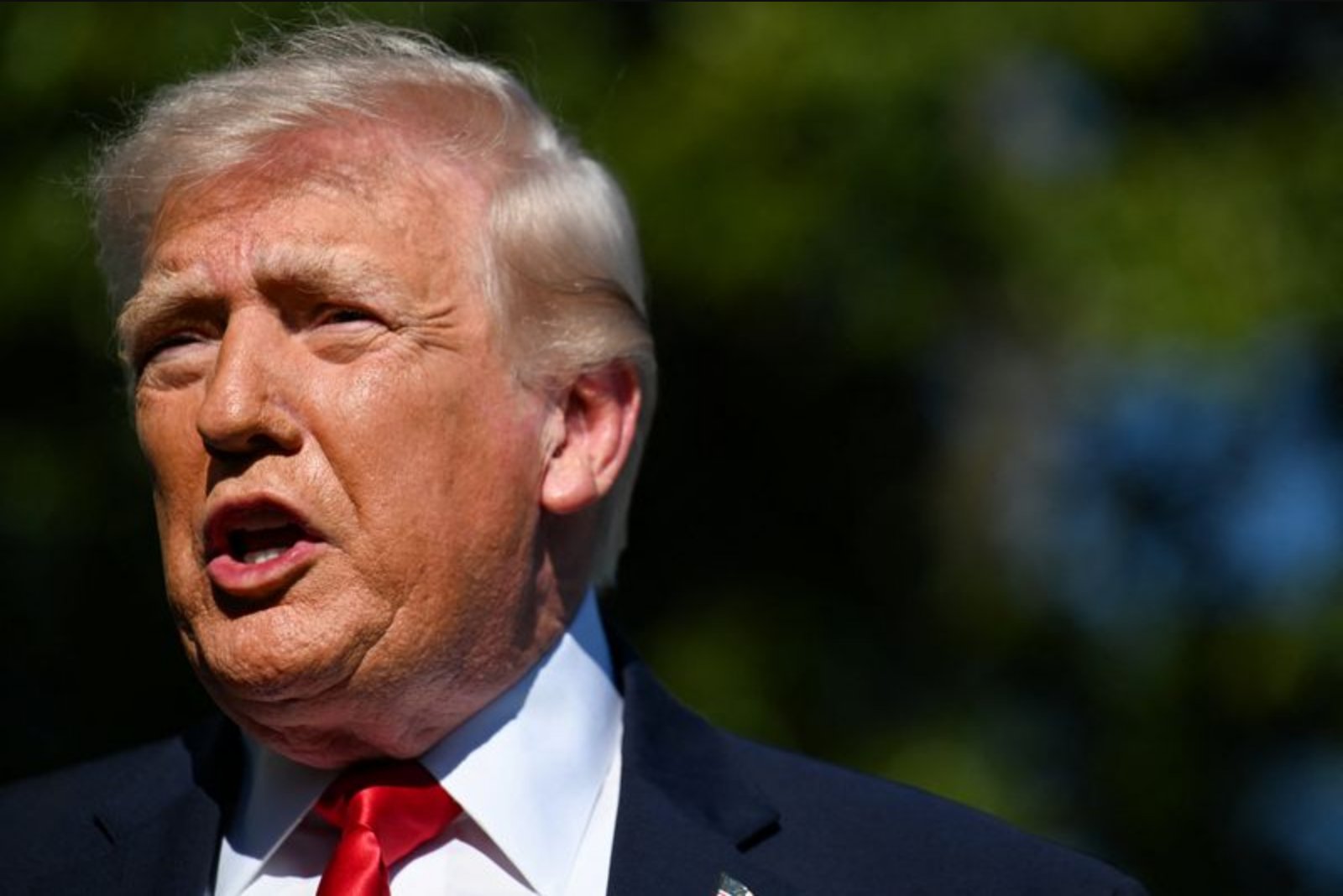
President Donald Trump will attend the White House Correspondents’ Association Dinner on Saturday, his first appearance at the event as president. The WHCA has traditionally invited sitting presidents to the annual celebration of press freedom; until now, Trump has been the exception to the pattern of presidential attendance.
Trump refused invitations and skipped the black-tie dinner during his first term and again in 2025. His decision to accept this year has stirred surprise and anticipation in Washington, where his confrontational relationship with reporters remains a central feature of political coverage.
The president’s public clashes with the media are well documented in his presidency. He has filed lawsuits against media outlets, labelled unfavorable reporting as "fake news," and launched personal attacks on reporters. Administration actions cited by critics include banning the Associated Press from the White House press pool and imposing tighter constraints on reporters covering Pentagon activities. At the same time, White House access under Trump has taken a different shape than under recent predecessors: he routinely speaks with journalists on his cell phone and answers questions during frequent press appearances, providing a form of access that some reporters say is greater than recent norms.
Not everyone in the press corps welcomes Trump’s attendance. In a column explaining her outlet’s decision to skip the event, HuffPost Editor-in-Chief Whitney Snyder wrote, "Trump’s entire presidency is, of course, an affront to a free press." More than 350 current and former journalists, among them former network anchor Dan Rather, and organizations including the Society of Professional Journalists, signed a letter urging the WHCA to use the dinner to "forcefully demonstrate opposition to President Trump’s efforts to trample freedom of the press." The letter also noted that some journalists plan to wear pocket handkerchiefs or lapel pins bearing words from the U.S. Constitution’s First Amendment, the provision that protects freedom of speech.
The WHCA has defended the dinner’s role. In a statement, WHCA President Weijia Jiang said: "As we mark America’s 250th birthday, our choice to gather as journalists, newsmakers and the president in the same room is a reminder of what a free press means to this country and why it must endure." Jiang added, "Not for the media or the president, but for the people who depend on it."
A White House spokesperson directed Reuters to a March 2 post on Truth Social from the president in which he explained his prior refusals and his decision to accept this year’s invitation. In that post the president wrote that he previously skipped the event because the press was "extraordinarily bad" to him, but would attend in honor of the nation’s 250th birthday. He wrote: "In honor of our Nation’s 250th Birthday, and the fact that these "Correspondents" now admit that I am truly one of the Greatest Presidents in the History of our Country, the G.O.A.T., according to many, it will be my Honor to accept their invitation, and work to make it the GREATEST, HOTTEST, and MOST SPECTACULAR DINNER, OF ANY KIND, EVER!"
For observers who follow Trump’s trajectory, the correspondents’ dinner carries a particular narrative weight. As a private citizen in 2011, Trump attended when President Barack Obama used the platform to roast him. Accounts of that evening say Trump did not seem to take the jokes well, and some have pointed to the episode as part of a wider narrative that helped crystallize his decision to run for president in 2016 - a theory the president has denied.
Trump is scheduled to speak for roughly 40 minutes at Saturday’s dinner. His remarks will come in the context of a string of tensions between his administration and media organizations. The White House’s relationship with the press has included confrontations and legal actions: the president’s Federal Communications Commission chair, Brendan Carr, publicly threatened to investigate ABC late-night host Jimmy Kimmel over on-air comments and urged stations to drop the program or risk potential fines and license revocations. The New York Times reported this week that the FBI had begun investigating a New York Times reporter following a critical story about the bureau’s director; the FBI said the New York Times story is not true.
Trump has also pursued legal avenues against media companies. He filed and later settled lawsuits with ABC and the parent company of CBS over their coverage, and he sued the Wall Street Journal over an article that described a birthday card bearing his signature addressed to the late Jeffrey Epstein. A federal judge dismissed that defamation suit earlier this month. The birthday card story is among several Wall Street Journal pieces being recognized at Saturday’s dinner.
Friday’s schedule information for the event notes that the evening will begin with red carpet arrivals at 5 p.m. ET (2100 GMT), and that Trump is expected to take the podium after 10 p.m.
Key points
- President Trump will attend the WHCA Dinner for the first time as president after boycotting the event in his first term and in 2025 - this affects political coverage and media relations.
- There is a sharp divide in the press corps: some journalists and groups are protesting his attendance while the WHCA argues the event underscores press freedom during the nation's 250th year - this has implications for news organizations and public perception of media independence.
- Trump’s contentious actions toward news outlets - lawsuits, public attacks and restrictions on access - sit alongside practices that some view as increased informal access, such as phone conversations with reporters - these dynamics influence how political news is produced and consumed.
Risks and uncertainties
- Potential reputational risk for media organizations and the WHCA if the dinner is seen as normalizing confrontational behavior toward the press - this risk is particularly relevant for journalism institutions and public trust in news.
- Possible escalation in regulatory or legal pressure on broadcasters following public statements by FCC officials - this affects broadcast media and could influence station-level decisions.
- Heightened tensions between federal agencies and news organizations, as indicated by reports of investigations and disputed reporting, create uncertainty for reporters covering national security and law enforcement beats.