
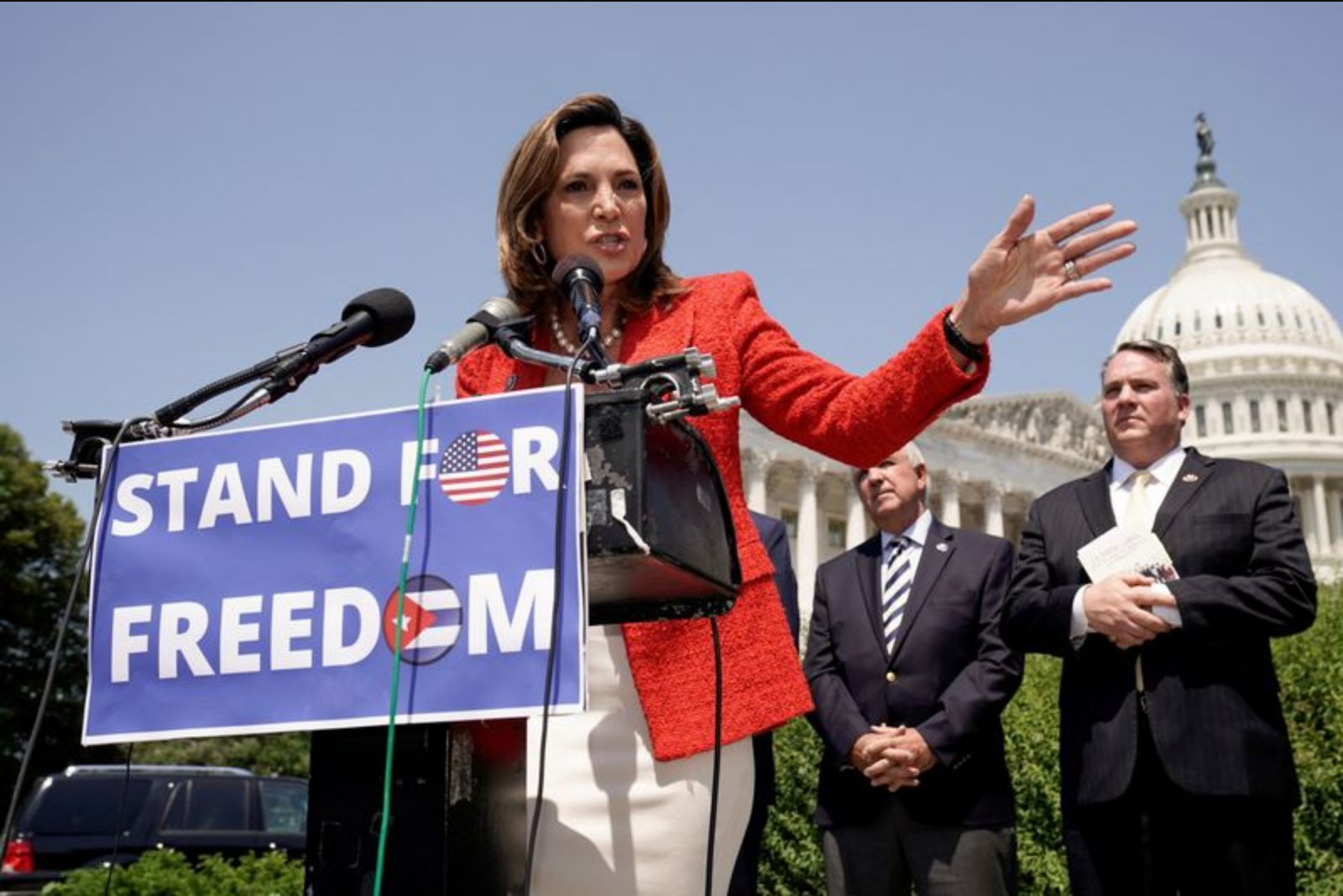
A conservative super PAC called the Homeland Political Action Committee is preparing to press House Republicans who back a comprehensive immigration reform package known as the DIGNIDAD Act, the group's founder said. The PAC's initial objective is to unseat or pressure Republicans who voted for or publicly support the bill, according to Ryan Girdusky, who founded the group.
Girdusky said he views the DIGNIDAD Act as a betrayal of both the president and traditional party principles, and indicated his new effort will focus on creating electoral accountability for lawmakers who support that legislation. "We're not here to burn the party down," he said. "It's to challenge pro-amnesty Republicans in safe Republican seats and to defend Republicans in challenging seats or in swing districts that need support."
The DIGNIDAD Act, authored by Representative María Elvira Salazar, a Republican from Florida, is backed by 19 Republican co-sponsors. The bill would permit immigrants without legal status to remain, work and live in the United States unless they have a criminal record. It includes an annual fine on those present unlawfully and does not create a path to citizenship. The legislation also proposes billions in Department of Homeland Security funding to bolster border security through advanced technology.
Girdusky is an established political organizer who previously founded the 1776 Project PAC. Federal filings show that 1776 Project PAC raised more than $5 million, largely from small donors, beginning in early 2025 to support conservative local school board candidates. Girdusky also hosts a political podcast called "It's a Numbers Game with Ryan Girdusky." He drew controversy in 2024 when, according to public accounts, he was banned from CNN after making a remark directed at journalist Mehdi Hasan that he has described as a joke.
With the Homeland PAC, Girdusky aims to put House Republicans in a difficult position: either publicly defend the president's immigration policy or face a primary challenger supported by his group. He named Representative Salazar among his targets, and also pointed to other Republicans in safely held GOP districts who voted for or support the DIGNIDAD Act, including Representatives Lloyd Smucker of Pennsylvania, Marlin Stutzman of Indiana and Jim Baird of Indiana.
Each of the lawmakers Girdusky cited has at least one primary opponent in their respective races. Girdusky said he has not yet formally endorsed or backed any challenger in those contests, but plans to if prospective challengers match the PAC's values.
Other Republican supporters of the DIGNIDAD Act include lawmakers who are retiring, such as Representatives Dan Newhouse of Washington and Neal Dunn of Florida, or those engaged in tight general-election fights, including Representatives Young Kim and David Valadao of California. Representatives for the named Republicans did not reply to requests for comment.
Girdusky said he believes Homeland PAC will resonate with conservative voters who list immigration enforcement or border security as their top concern. The campaign against the bill highlights a strategic fault line inside the Republican Party - balancing pressure from supporters of an assertive immigration agenda with the risk of alienating Latino voters whose preferences are politically consequential.
Girdusky added that Homeland PAC has not secured the endorsement of House Speaker Mike Johnson. He said this conclusion is based on conversations he has had with Johnson and Johnson's political team. A spokesperson for Johnson's political operations did not respond to a request for comment.
The political calculus around immigration is complicated by recent shifts in Latino voting patterns. Latino voters moved more toward Donald Trump in 2024, with an estimated 48% voting for him that year, up from 36% in 2020, according to the Pew Research Center. At the same time, a nationwide poll of 2,413 Latinos by the civic participation group Voto Latino, conducted in late March and early April of this year, found that a majority said it has become harder to afford everyday expenses in recent years.
Public opinion polling also suggests potential electoral consequences for candidates who embrace aggressive deportation policies. A Reuters/Ipsos poll released this week found that roughly 52% of Americans said they would be less likely to support a candidate who endorses the Trump administration's approach to deportations.
Salazar, the bill's sponsor, said she is not concerned about strains within the bipartisan coalition that has formed around the DIGNIDAD Act - which includes 20 Democrats - but she did express concern about the broader political stakes for Republicans in the November elections. "There is a very important coalition of Hispanics, the largest and fastest growing minority in the country," she said. "These people feel targeted, and they feel that they are not welcome in the Republican Party and that concerns me."
Voices in the media and business community warn Republicans not to underestimate Hispanic voters. Daniel Alegre, the CEO of the Spanish-language media company TelevisaUnivision, said Latinos have not been monolithic in their voting behavior, but that in recent cycles they have prioritized economic issues over party loyalty. "Ignore the Hispanic vote at your own peril," Alegre said. "It's the Hispanic vote in so many of the key races that will determine the control of Congress."
Analysis - Political and electoral implications
Homeland PAC's strategy to selectively target pro-DIGNIDAD Republicans in safe GOP districts while defending Republicans in vulnerable districts underscores a targeted primary approach rather than an all-out intra-party purge. That tactic reflects the party's narrow House majority and an intention to influence policy positions on immigration without jeopardizing fragile general-election prospects.
The DIGNIDAD Act's mix of enforcement measures - including fines for unauthorized presence and expanded DHS funding for border technology - aligns it with a hybrid approach to immigration that mixes legal regularization with stronger border security investments. That combination may complicate messaging for Republicans who must weigh the bill's provisions against party base expectations and electoral calculations in districts with significant Hispanic populations.
How this dispute plays out - whether through primary defeats, strengthened incumbents, or shifting alliances - will be a variable in the broader question of who controls the House after the 2026 midterms.