
European natural gas benchmarks rose on Friday as market participants assessed a cluster of geopolitical and operational developments that have tightened global supply expectations. By 06:37 ET (10:37 GMT), the Dutch front-month contract at the TTF hub had increased 0.9% to 44.83 euros per megawatt hour, according to data from the Intercontinental Exchange.
Diplomatic and military frictions in the Middle East are a central factor contributing to the price uptick. U.S. President Donald Trump said on Thursday that a ceasefire between Israel and Lebanon would be extended for three weeks after a meeting with diplomats from both countries. Notably, representatives from Hezbollah were absent from those talks, leaving questions about the endurance of the truce. Additional reports indicated firing between Israel and Hezbollah in the hours prior to the president's announcement.
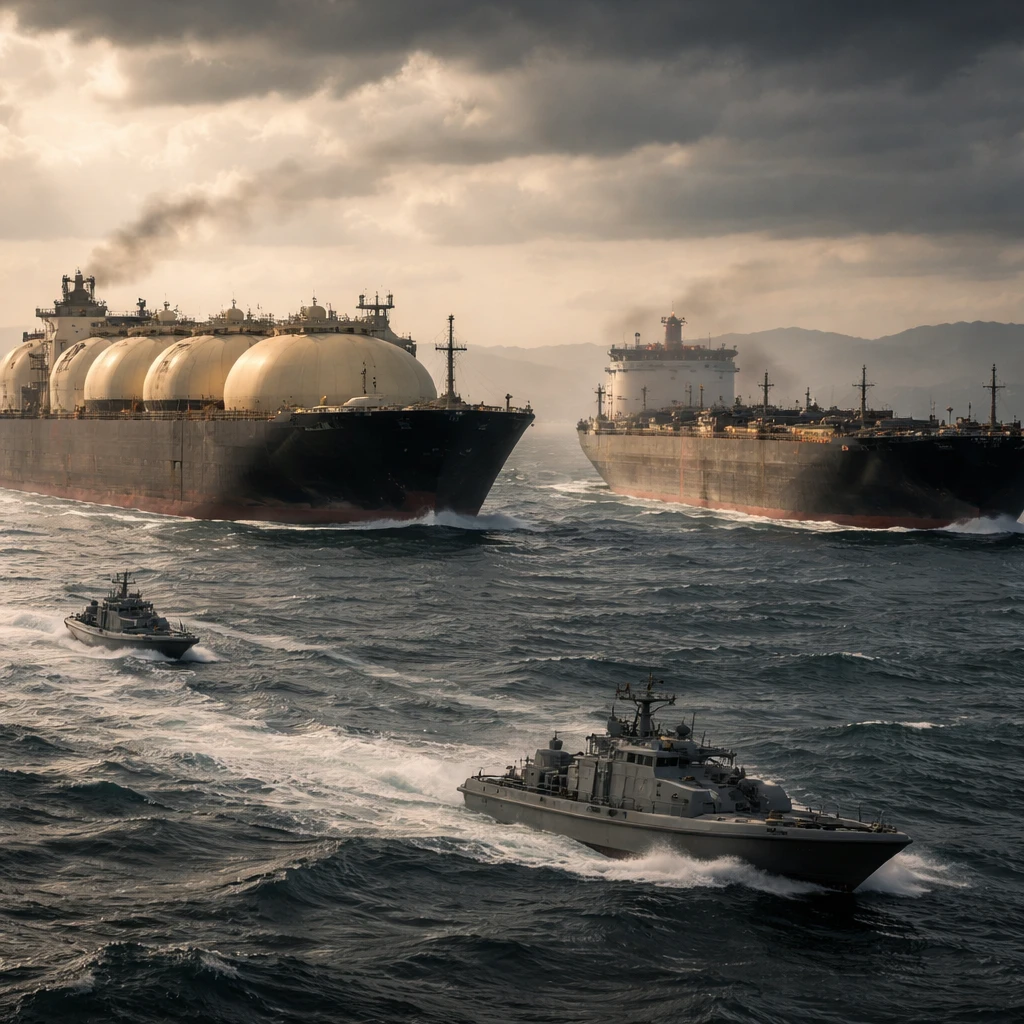
Earlier in the week, President Trump announced an indefinite ceasefire between the U.S. and Iran, but he also kept an American blockade in place on Iranian ports. That blockade prompted Tehran to take actions intended to demonstrate control over the Strait of Hormuz - including attacks on and the seizing of ships in the strategic waterway, which handles roughly a fifth of the world's oil and liquefied natural gas. The U.S. has responded by seizing Iranian-flagged vessels, and President Trump said he had ordered the Navy to "shoot and kill" Iranian boats attempting to lay mines in the strait.
Physical supply channels to Europe have felt the strain. Market participants cited the effective closure of the Strait of Hormuz and attacks on key production infrastructure in the Persian Gulf, particularly in Qatar, as elements that have dented European gas supply flows. Those disruptions have kept the TTF benchmark consistently above pre-war levels for several weeks.
Near-term demand-side factors may add further upward pressure. Analysts cited by Reuters, using LSEG data, said an expected drop in wind generation on Monday could prompt power generators to burn more gas to meet electricity demand, a shift that would raise consumption from the power sector and support higher gas prices.
Additionally, a strike at a liquefied natural gas facility in Australia was flagged as another potential headwind for already tight global energy supplies. Together, these supply-side incidents and weather-related demand shifts create a market environment where European gas prices remain sensitive to short-term shocks.
Market outlook
With supply flows affected by Gulf incidents and with the potential for higher gas-fired power demand linked to lower wind output, traders and utilities are likely to monitor both geopolitical developments in the Middle East and near-term weather-driven generation forecasts closely. Labor actions at distant LNG facilities add an additional layer of uncertainty to an already constrained market.