
Syria's Interior Ministry said on Friday that authorities had detained the principal suspect in the Tadamon massacre, a mass killing in 2013 that left 288 civilians dead. The ministry released video footage showing the arrest of Amjad Yousef in the Al-Ghab Plain area of Hama province, close to his hometown.
According to the information released by state authorities, Yousef, 40, a former member of military intelligence under the Assad government, had been sheltering in that area since the overthrow of Bashar al-Assad at the end of 2024. The ministry's footage shows him being taken into custody in the western Syrian plain.
The Tadamon killings have been among the most starkly documented acts of violence attributed to the former government during the conflict that began in 2011. The massacre has been widely referenced in reporting and investigative work because of video material and testimony that emerged years after the event.
Yousef first came to intense international attention in April 2022 when the UK newspaper the Guardian published videos that had been provided by two academics. Those recordings were presented as showing him forcing blindfolded civilians to run toward a pit in the Tadamon neighbourhood of southern Damascus before shooting them. One of the researchers involved in that documentation, Annsar Shahoud of the University of Amsterdam Holocaust and Genocide Centre, spent four years compiling evidence related to the massacre.
Shahoud has described the methods she used to obtain material from Yousef, including creating an online persona to gain his trust. She said that through that approach she secured both video and audio in which Yousef made confessions. Shahoud has said that with him now in custody she feels safer, though she warned that the wider path to justice within Syria remains uncertain and that not all alleged perpetrators are included in current detentions.
"I feel safe now, despite the distance, because I always felt for years that this person was after me," Shahoud said.
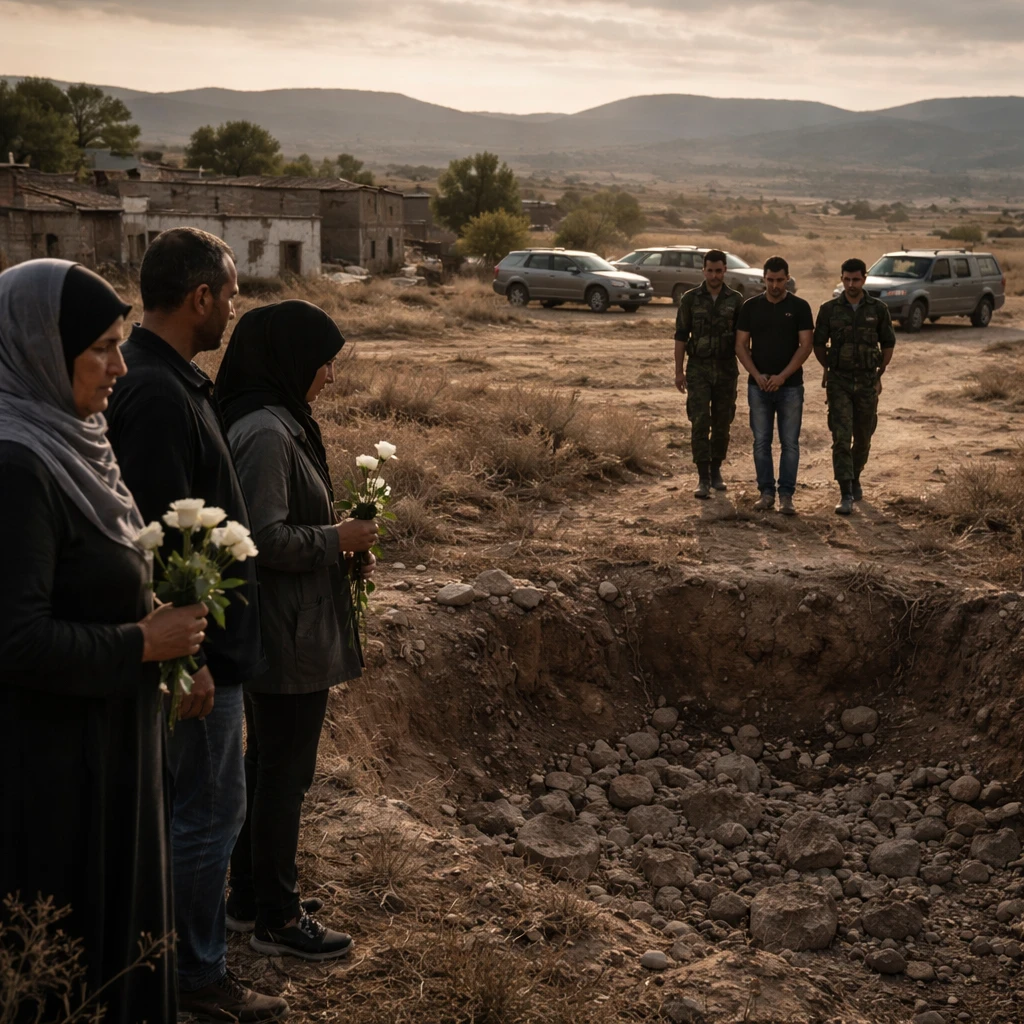
Local reaction in Tadamon was immediate. Ahmed Adra, a resident and member of the neighbourhood committee, said families of the victims had been celebrating in the streets since the morning of the arrest. He described plans to take white roses to the site of the massacre, a location residents have come to know by a name referencing Yousef, and to plant them there as a gesture to affirm that the victims' memory remains alive and that justice is being served.
After the fall of Assad at the end of 2024, civilians, media outlets and international organisations visited the site of the killings to inspect the area and interview witnesses. Locals commonly refer to the spot as "Amjad Yousef’s Pit," and it has been marked on Google Maps as "The Site of the Tadamon Massacre."
Yousef was a member of military intelligence under the former government, and is the individual identified in footage and testimony linked to the executions. He has been taken into custody and was not available for comment after his arrest.
The arrest of a figure named in documentary evidence is likely to shape the immediate public discussion about accountability for atrocities in Syria, but investigators and advocates caution that the legal and institutional pathways to comprehensive justice are unclear and may not encompass all those implicated.