
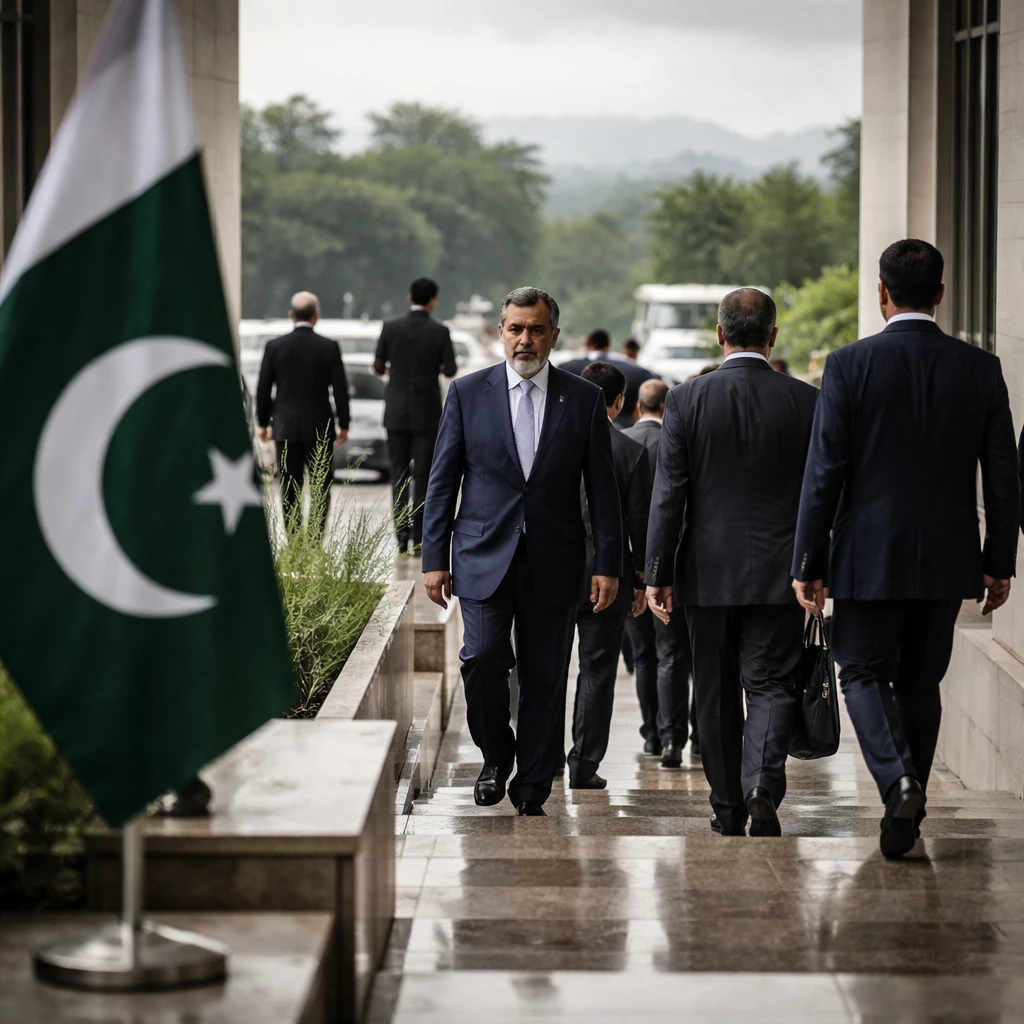
Pakistani authorities say Iran's foreign minister, Abbas Araghchi, is slated to travel to Islamabad by this weekend, accompanied by a small government delegation, with officials indicating the group could arrive as soon as Friday.
Pakistan has been acting as an intermediary in ceasefire negotiations between the United States and Iran. The planned visit follows a series of diplomatic moves and temporary halts to hostilities in the region that have left the situation unsettled.
In recent developments, the United States announced a three-week extension to a ceasefire between Israel and Lebanon following diplomatic meetings with representatives from both countries. That truce's durability was called into question because representatives from Hezbollah, the militant group engaged in Lebanon, did not attend those discussions.
Earlier in the week, the U.S. also declared an indefinite ceasefire with Iran, while simultaneously maintaining an American blockade of Iranian ports. Tehran reacted to the blockade by seeking to demonstrate its control over the Strait of Hormuz, a crucial maritime corridor through which roughly a fifth of the world’s oil flows, and reportedly attacked several ships transiting the waterway.
The U.S. has responded by seizing Iranian-flagged vessels, and the U.S. President said he had ordered the Navy to "shoot and kill" Iranian boats attempting to lay mines in the strait. Those exchanges and maritime incidents have contributed to continuing uncertainty about whether the strait will be reopened to normal traffic any time soon.
Market effects have been apparent: oil prices climbed back above $100 a barrel amid the uncertainty. Brent crude futures, the global benchmark, were last reported down 0.6% at $104.38 a barrel, trimming earlier gains.
Summary - Pakistani officials report that Iran's foreign minister, Abbas Araghchi, is expected in Islamabad by this weekend, possibly arriving Friday, as Pakistan mediates tense ceasefire talks. Recent diplomatic extensions and an ongoing U.S. blockade of Iranian ports have coincided with maritime confrontations in the Strait of Hormuz and renewed upward pressure on oil prices.
- Key points:
- Iran's foreign minister is expected to visit Pakistan this weekend with a small delegation; arrival could be as early as Friday.
- Pakistan is mediating ceasefire talks between the U.S. and Iran amid fragile truces in the region.
- Maritime incidents in the Strait of Hormuz and a U.S. blockade of Iranian ports have contributed to oil prices rising above $100 a barrel; Brent traded at $104.38 after easing 0.6%.
- Risks and uncertainties:
- The longevity of recent ceasefires is uncertain, particularly given absent participation by certain militant representatives, which could affect regional stability and defense-related markets.
- Disruptions to shipping in the Strait of Hormuz threaten oil supply routes and could sustain elevated energy prices, impacting inflation and global growth concerns.
- Continued maritime confrontations and the enforcement of a naval blockade increase the risk of further seizing of vessels or attacks, affecting shipping insurance costs and energy market volatility.