
BEIJING, April 24 - Chinese forces recently carried out military drills that included live-fire exercises in waters to the east of the Philippines' Luzon Island, the Chinese military said on Friday. The announcement coincides with the start of the annual Balikatan exercises hosted by the Philippines and the United States, which this year extend into contested areas of the South China Sea.
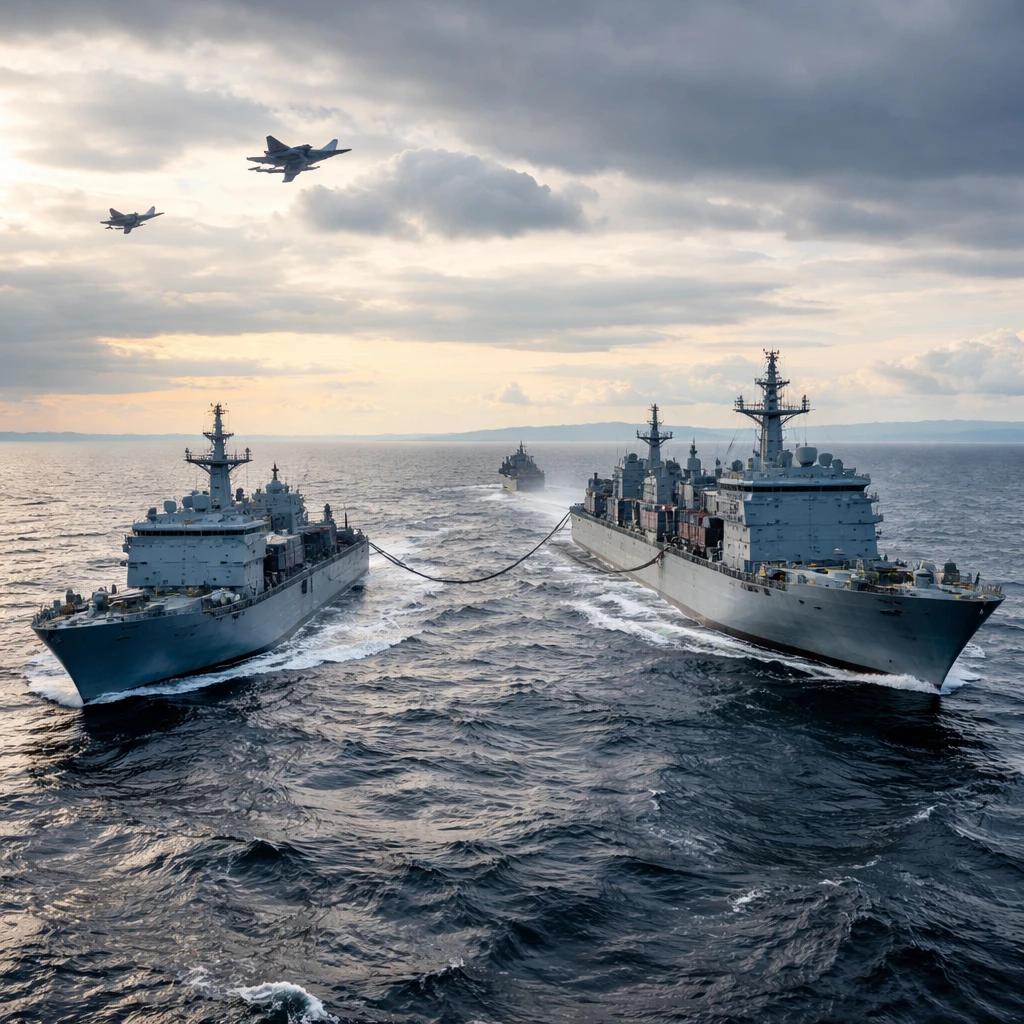
The Southern Theater Command (STC) of the Chinese military said its Naval Task Group 107 conducted operations concentrating on live-fire shooting, sea-air coordination, rapid maneuvers and maritime replenishments. According to the STC statement, the aim of those activities was to test integrated joint combat capabilities.
The statement did not supply precise timing or an exact geographic co-ordinate for the drills. It described the exercises as a "necessary operation" given the current regional situation and asserted that they were carried out in full compliance with international law and practice.
"Forces of the STC will regularly conduct corresponding military operations based on the need of the security situation to safeguard national sovereignty and security as well as regional peace and stability," the statement added.
The Balikatan exercises began this week, with over 17,000 troops from the United States, the Philippines and allied countries participating. For the first time, combat troops from Japan are joining the drills, which organizers say are part of the annual program of cooperation between Manila and Washington. The presence of Japanese combat troops arrives amid ongoing tensions between Tokyo and Beijing.
Balikatan runs from April 20 to May 8 and includes a variety of activities on Luzon. Among the new elements this year, the Philippines and the United States will for the first time conduct maritime strike drills on Itbayat, the Philippines' northernmost island, located about 155 km (96 miles) from Taiwan. The article notes that Taiwan's government rejects China's sovereignty claims.
Additional live-fire counter-landing drills are scheduled in the Philippines' Zambales province on the South China Sea, roughly 230 km (143 miles) from the strategically contested Scarborough Shoal, an atoll controlled by China. The exercises in both Luzon and maritime zones underline the geographic breadth of this year's activities.
The Philippines and China have experienced a series of maritime confrontations in recent years. China asserts claims to almost the entire South China Sea, a waterway that the article states supports more than $3 trillion of annual commerce. Beijing has continued to pursue a long-term campaign to strengthen its maritime capabilities, including policies aimed at marine economy growth and expansion of its naval forces.
At a cabinet meeting on Friday, Premier Li Qiang urged efforts to bolster China's maritime capabilities and technological innovation, and to protect maritime rights and strategic security, according to the statement referenced in the military announcement.
The Philippine embassy in Beijing had not responded immediately to a request for comment on the Chinese drills.
Context and implications
The Chinese military framed the recent activities as defensive and routine in nature, tied to what it described as prevailing security needs. The Balikatan exercises between the Philippines and the United States, now involving Japanese combat troops for the first time, represent a notable regional security development and have prompted critical statements from Chinese authorities regarding allied defence exercises.
The exercises and statements by officials underline the continued focus on maritime operations in the region, including live-fire and sea-air coordination training that tests replenishment and joint combat skills.