
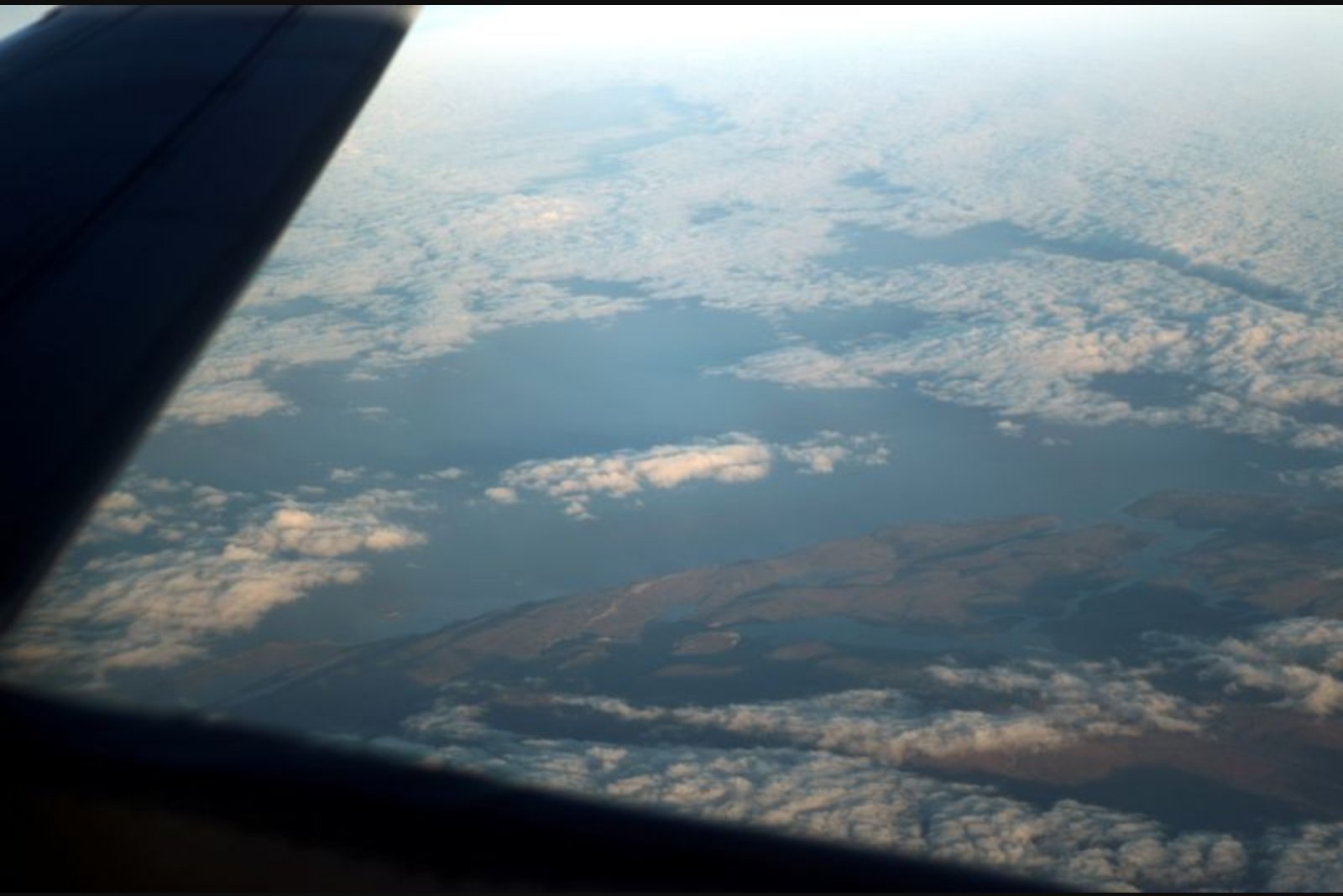
An internal Pentagon email, described by a U.S. official, sets out that the United States could consider reassessing its position on Britain’s claim to the Falkland Islands as one among several leverage options to pressure NATO allies perceived as having provided insufficient backing to U.S. military operations in the war with Iran. The proposal places the remote South Atlantic archipelago into a diplomatic calculus aimed at responding to perceived wartime slights by partners.
Where the Falklands are and what they comprise
The Falkland Islands lie in the South Atlantic Ocean roughly 500 km (300 miles) east of the coast of mainland Argentina and about 13,000 km from Britain. The territory comprises two principal islands - East Falkland and West Falkland - together with 778 smaller islands. The first recorded landing on the islands was by an English naval captain, John Strong, in 1690. Britain took official possession of West Falkland in 1765. Over time France and Spain each maintained settlements on the islands at various moments, but Britain reasserted control in 1833 and has administered the territory since that time.
Population, governance and economy
Approximately 3,660 people live on the Falklands. The islands have their own elected legislative assembly responsible for internal affairs. Most residents are of British descent, though communities also include people from Saint Helena, Chile and the Philippines. The local economy is driven mainly by fishing licences, farming and a modest tourism sector.
Origins of the sovereignty dispute
Argentina claims sovereignty over the islands, which it refers to as the Malvinas, arguing that the territory was inherited from Spain upon independence in 1816 and that Britain’s 1833 reassertion of control was an unlawful colonial seizure. Britain contests that position, arguing that the islanders have a right to determine their own future. A spokesperson for Prime Minister Keir Starmer stated that the sovereignty of the Falkland Islands rests with Britain.
The 1982 conflict
In April 1982 Argentina’s military government under Leopoldo Galtieri ordered the invasion of the islands, apparently under the belief Britain would not mount a military response. Britain’s then-prime minister, Margaret Thatcher, dispatched a naval task force and control of the islands was regained after 74 days of fighting. Argentina surrendered in June 1982; the defeat hastened the collapse of Argentina’s military junta.
The campaign was costly in lives. A total of 649 Argentine service members were killed, alongside 255 British service personnel and three Falkland islanders. The conflict was a pivotal event for Thatcher, who had been politically embattled prior to the war; the military outcome and its coverage in Britain’s tabloid press contributed to a renewed confidence in the country’s armed forces.
International roles and positions during the conflict
The United States initially sought to mediate between the two sides but later provided Britain with intelligence, logistical help and access to military facilities. France, which had supplied Argentina with missiles prior to the outbreak of hostilities, subsequently imposed an arms embargo on Buenos Aires and furnished intelligence and logistical support to Britain during the fighting.
Current status
Britain continues to assert sovereignty over the Falklands and maintains a military presence there, including an air base at Mount Pleasant. Argentina continues to press its claim through diplomatic channels and at international forums such as the United Nations, with backing from China. The two nations restored diplomatic relations after the 1982 conflict, but negotiations over sovereignty have remained stalled.
In a 2013 referendum on the islands’ political status, voters overwhelmingly backed remaining under British sovereignty - 99.8% in favour, with turnout around 92%. Britain cites the result as evidence of the islanders’ wishes and states it will not engage in sovereignty talks without their consent. Argentina rejected the referendum outcome, saying the population was implanted after Britain reasserted control in 1833.
The United Nations and the diplomatic frame
The United Nations classifies the Falklands as a non-self-governing territory and has consistently urged Britain and Argentina to resume talks to find a peaceful resolution. The U.N. has not adjudicated sovereignty and does not recognize either claim as definitive. Argentina frames the issue at the U.N. as one of decolonisation; Britain counters that the decolonisation principle does not apply because the islanders constitute a settled population.
Why the islands matter geopolitically
The Falklands retain geopolitical significance. China has expressed support for Argentina’s claim and called for negotiations. The United States has typically sought to avoid taking a definitive stance on sovereignty since the 1982 conflict; the State Department’s public guidance notes that the islands are administered by Britain while also acknowledging Argentina’s claim.
The Pentagon email discussed reviewing European "imperial possessions," explicitly mentioning the Falklands as an example, according to the description provided by the U.S. official. Argentine President Javier Milei, who is publicly pro-U.S. and has cultivated a rapport with President Trump, has reiterated Argentina’s claim while ruling out the use of force and stating that the matter should be pursued through diplomatic channels.
Implications and context
The inclusion of the Falklands in a U.S. internal discussion of leverage options underscores how long-standing territorial disputes can be drawn into broader diplomatic and military calculations. Any formal shift in Washington’s posture, however, would be a significant development and the email represents a proposal among several options being considered by the administration to press allies it believes did not sufficiently back U.S. operations in the Iran war.
Given the islands’ small population and specialized local economy, immediate economic effects would be limited in scope. The broader diplomatic and defence implications, however, touch on relations among major powers, the posture of NATO partners, and longstanding bilateral tensions between Britain and Argentina.